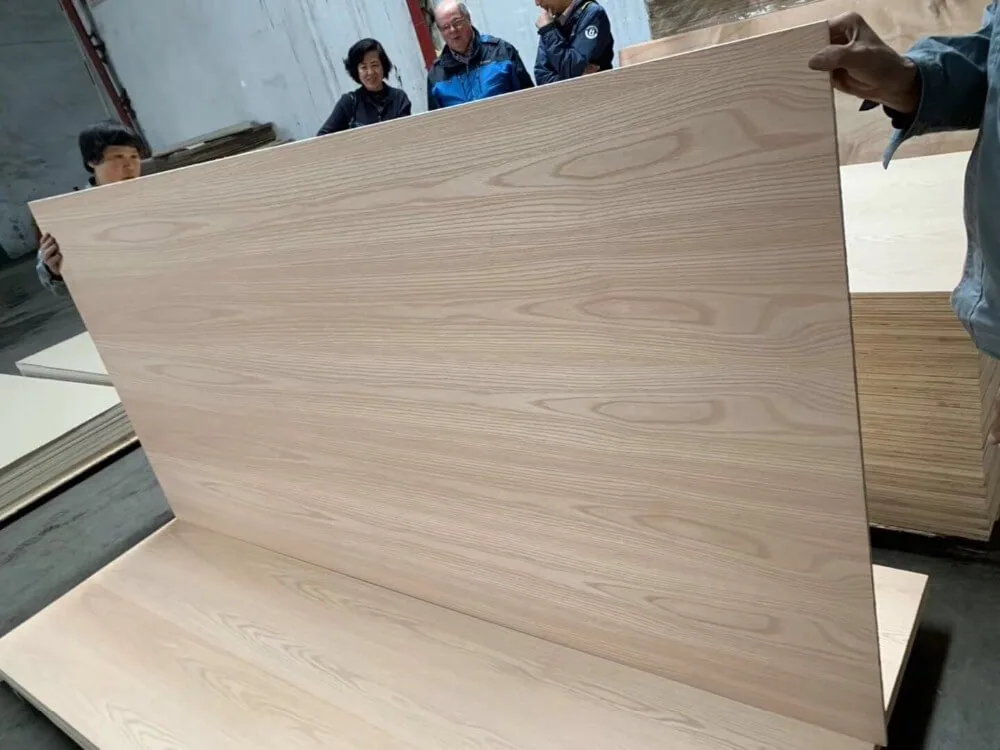
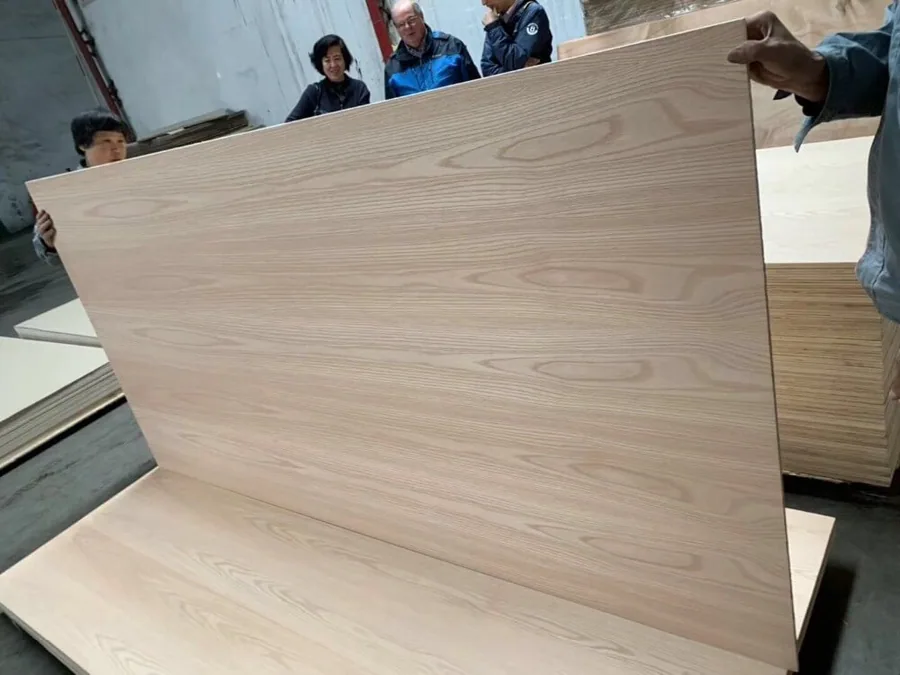
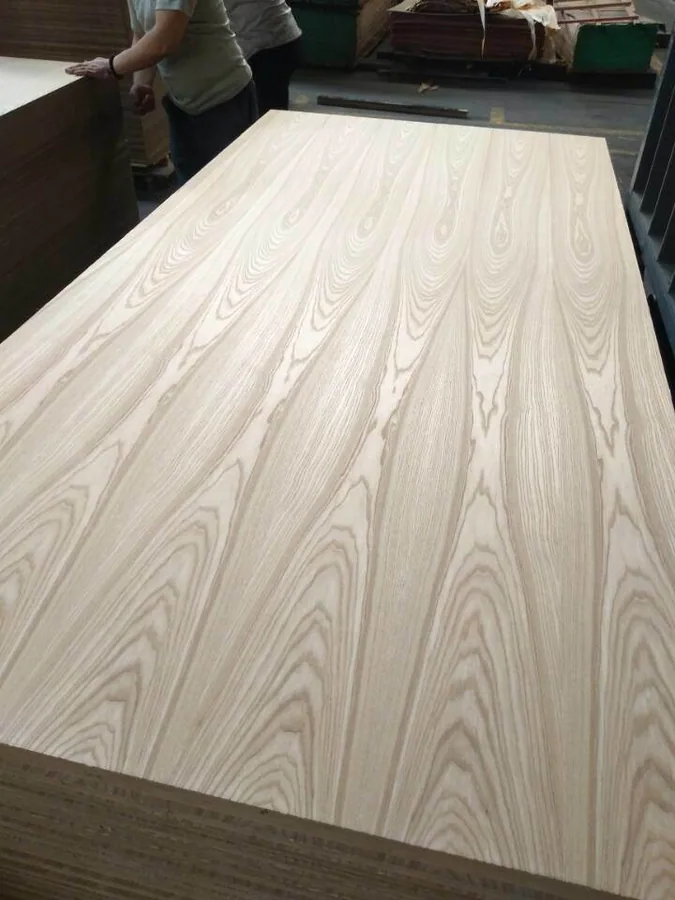
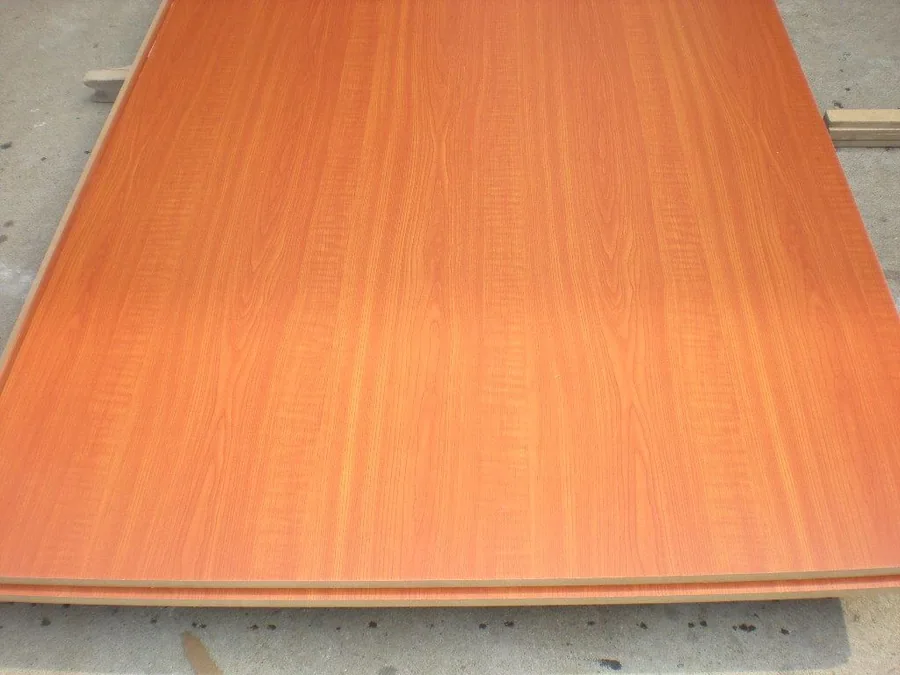
Bring real wood character to cabinets, furniture and interior panels. We manufacture MDF substrates in our own factory and supply oak, ash, cherry, beech and walnut veneer faces, with the grain matching, reverse and finished edges planned around your design.
Start with the furniture or interior you are creating. Compare the wood species, grain character and colour range, then consider how doors, drawers or wall panels will sit together. A drawing or elevation helps us discuss the face selection, matching and coating for the complete set.
Bring a finish target, sample or photograph of the look you want. Review a representative range of real wood faces with the planned coating and edge detail, together with the MDF grade and reverse. For machined parts, include the profile or fitting in the sample brief.
Scroll sideways to compare all columns.
Veneered MDF selection routes
Selection route
What to decide
Explore
Oak
Choose red or white oak, the cut and grain features for cabinets or joinery. Compare the selected face with your coating and edge reference.
Connect your selected veneer to the MDF grade, reverse, sheet format and finish. Number adjoining fronts or wall panels so the chosen grain layout stays with the parts.
Keep the visual sequence through cutting and packing.
MDF substrate
Grade, thickness and required evidence.
Select the core independently of the veneer species.
Reverse and edges
Backing arrangement, visible reverse and edging.
Account for the complete component.
Finishing
Supply condition, sanding and coating reference.
Review appearance after the intended process.
General natural-veneer sheet reference
1220 × 2440mm and a configuration-dependent 3–30mm range are listed on the Natural Veneer MDF product.
Identify the selected veneer, MDF grade, reverse and actual measurement stage; use the individual product for its format and thickness references.
Oak and walnut route references
Oak: common 3–25mm, up to 30mm by project, with 1220 × 2440mm as the common sheet. Walnut: 2–30mm, 1220 × 2440 and 1830 × 2440mm.
Keep each selected configuration separate. Walnut mechanical, density or other values are not defaults for the whole category; an engineered oak appearance is a separately identified alternative.
Thickness and finished-size stages
Identify bare MDF, veneered/sanded board or coated component, with accepted limits and measurement conditions. Mark whether part dimensions apply before or after edging.
Connect the delivered stage with hardware, fitting clearances, trimming and the net edge build on the current drawing.
Leaf matching and component sequence
Record the leaf arrangement within each face separately from numbered panels, adjoining parts, top edge, grain direction and permitted rotations. Include usable trim, cutting allowance and quantities by part/group.
Nesting should retain the agreed appearance layout. Keep reserves for individual parts, pairs or complete matching groups identifiable rather than recording extra area alone.
Retained veneer and finishing scope
Actual veneer preparation and retained decorative layer, sanding or profiling scope, exposed-MDF treatment and veneer band/timber lip or other edge section. Identify who completes sanding, coating and machining.
Review a finished face-and-edge sample using the actual process. MDF thickness does not establish the sanding allowance of the veneer face.
Keep the grain layout with the parts
Mark panel positions, joints, grain direction and any faces that should run consecutively on your elevation. Keep those position codes with the cutting list and pack labels. This helps the machining and installation teams retain the intended relationship between adjoining doors, drawers or wall panels.
Plan exposed edges and machined details
Natural wood veneer and printed woodgrain melamine are different surfaces; MDF and plywood are separate substrates. For the selected veneer-on-MDF construction, show where routing, profiling or drilling will expose the core. Include the intended finish and which edges need veneer, timber lipping or another agreed detail. Keep surface preparation within the sanding allowance for the supplied veneer.
Compare the usable material and finishing work
Compare the same veneer selection, MDF grade, reverse and delivered thickness. Include trimming, sanding, edging, machining, coating and packing so the price follows the sheets or finished parts your workshop will receive. Keep reserves for paired doors or matching panel groups identified in the schedule.
Record the veneer reference, matching, grain direction, reverse and intended coating for each visible set. Carry that sample reference into the drawing and panel order so adjacent parts follow the same appearance plan. Use the sample review worksheet.
OUR PRODUCT RANGE
Veneered MDF products
Compare 6 configurations from our range. Open a product to compare its specifications and photographs.
Oak veneer faces for cabinetry, furniture and interior panelling. Compare red or white oak, cut and grain features with the MDF grade, matching and finished edges.
Natural veneer MDF in a configuration-dependent 3–30mm range, with 1220 × 2440mm as the common format. Choose species, MDF grade, reverse, matching and finishing stage together.
Ash veneer for furniture fronts with a defined grain and colour contrast. Plan neighbouring drawers or panels and compare a coated sample that includes a veneer join.
Cherry veneer for coordinated furniture fronts and interior joinery. Choose the colour range and retain a dated coating and edge sample for the order and later replacement planning.
Natural walnut veneer MDF with a listed 2–30mm range and 1220 × 2440 or 1830 × 2440mm formats. Plan grain groups, reverse and finished edges around your furniture layout.
Coordinate paired doors and drawers with an agreed colour range. Include the reverse-face appearance where it will be seen when doors open.
Wall and reception joinery
Provide panel numbering and elevations before cutting. Discuss pack sequence so the installer can identify adjacent pieces without sorting the entire delivery.
Shelves and cabinet sides
Specify the exposed front edge, fixing arrangement and finished thickness. Veneer species does not establish shelf capacity or replace the component design.
SAMPLE THE PROPOSED PANEL
Approve the wood range, finished edge and numbered panel group.
Start with a representative range of the selected natural wood, including the leaf join and matching you want to see. Compare the supplied raw or sanded surface with the intended finish, then carry that approval into the MDF, reverse and edge detail your workshop will process.
For adjoining fronts or wall panels, review the group at the scale needed to approve the layout. Map numbered source panels to part positions and keep trimming, cutting allowance, grain direction and any reserves with the current drawing. A representative range guides acceptance; it does not make every natural face identical.
Scroll sideways to compare all columns.
Choose the assessment your team needs
Assessment
Sample or trial scope
Record to retain
Natural appearance range and face join
Representative selected veneer faces with the agreed cut, leaf arrangement, join positions, visible reverse and actual MDF construction; compare the supplied surface and intended coating.
Sample/range ID and date, natural veneer identity, accepted colour/figure/features and repairs, visible zones, preparation and coating reference, viewing light/angle and within-face matching.
Finished edge, profile or fitted component
The actual veneer edge band, timber lip or other section, with a corner, routed detail or fitting on the selected faced MDF and the intended coating.
Current drawing, sample identity, retained veneer/preparation, exposed MDF and bonding boundaries, net edge build, supplied/completed dimensions, actual process and accepted appearance or fit. Keep the fitting design with its component requirement.
Numbered adjacent panels or furniture group
A representative full-face group, paired doors or panel elevation with numbered source sheets, part positions, top edges, grain direction and the selected finishing stage.
Panel-to-part map, permitted rotations, trimming/cutting allowances, visible face/reverse, accepted group/finish reference and inspection conditions. Retain quantities by part, pair or complete group, with identified reserves and pack sequence.
Selected natural species, cut/figure, leaf arrangement, grading basis and accepted colour/features. Identify veneer bond, retained veneer/preparation, MDF grade/thickness, reverse and intended conditions; record engineered alternatives separately.
Panel-to-part layout and supplied stage
Drawing/elevation revision, source panel numbers, part/top-edge and matching-group IDs, grain direction, permitted rotations and usable sizes after trim. Identify substrate/veneered/sanded/coated measurement stage, limits, edging build, supplied operations, coating responsibilities and quantities by part/pair/group/reserve.
Appearance range and finished-detail approval
Approved range/sample IDs and dates, face/reverse join, edge/profile and coating process. Record viewing conditions, permitted variation, retained veneer and machining acceptance, dimensions/fit and the numbered adjacent group; a small face sample does not cover the complete layout or performance.
Reports and identified order records
Report identity, issuer/date, required method/limit and covered MDF or finished veneer construction, thickness, reverse, adhesive/facing and conditions. Keep required wood-source information separate. Connect approved specification, sample and layout revisions with order line, lot, panel/part/pack identity, inspection, dispatch and receiving.
Product reports for your order
Share the material, thickness and test standard your project requires. Our factory team will help you select the product reports and documents for your purchase.
Production & inspection
We can plan production and inspection around your panel specification, with dimensional checks, recorded readings and packing photographs for your order.
We prepare packing details, pack quantities and dispatch documents for your order. Share the destination and receiving requirements so our team can help plan delivery.
Can you help match veneer across doors, drawers or wall panels?
Yes. Send the elevation and mark the parts that will be seen together. We’ll help plan the veneer selection, grain direction, leaf arrangement and numbered panel groups, then review a representative finished group before production. Natural wood variation is agreed as an appearance range.
Which MDF sheet sizes and thicknesses can we order?
The general natural-veneer MDF route lists 1220 × 2440mm and a configuration-dependent 3–30mm range. Oak commonly lists 3–25mm with up to 30mm by project; walnut lists 2–30mm in 1220 × 2440 and 1830 × 2440mm. Tell us the veneer, finished thickness and usable sizes needed for your cutting plan, and we’ll quote that combination.
What is the difference between veneered MDF and woodgrain melamine MDF?
Veneered MDF has a real wood face with natural grain and colour variation. Woodgrain melamine uses a printed decor. Both can suit furniture; choose the appearance and finishing process you want, then compare the MDF grade, reverse and finished edge in a physical sample.
Can the panels arrive ready for our coating process?
Tell us whether you need unfinished, sanded or an agreed completed finish, and send the intended coating system. We’ll define the supplied surface and preparation with the selected veneer. Trial the face, join and edge together, keeping sanding and profiling within the retained veneer allowance.
What should we specify for visible edges and machined details?
Mark the exposed edges, routed features and holes on your drawing. Choose veneer banding, timber lipping or another finish for those locations, and identify the reverse if visible. The sample should include the actual corner or profile, plus completed dimensions and hardware fit where relevant.
Does book matching also give consecutive sheets?
Book or slip matching describes the leaf arrangement within a face. Sequence across neighbouring sheets and furniture parts is planned separately. Send panel positions, top edges and permitted rotations so we can keep the appearance layout connected to cutting and packing.
How do we plan repeat orders and matching reserves?
Keep a dated veneer and finish reference, drawing revision and panel-to-part layout from the accepted order. Identify whether reserves are for individual parts, pairs or complete visible groups. Share these with a repeat enquiry so we can review the new veneer selection against the finish and grouping you want to continue.
Keep the sheet sequence connected to the finished parts
Connect panel numbers and grain direction with the nesting plan, component IDs and elevation. Include pack groups and labels when parts need to remain together. Our general sheet route lists 1220 × 2440mm and a configuration-dependent 3–30mm range; individual veneer products have their own formats and thickness options to select for the order.
Approve the complete corner before finishing
Review the face, reverse, exposed MDF edge and any routed feature with the intended coating or edge treatment. Keep the specified veneer preparation and retained decorative layer with that reference. A veneer face does not cover later cut holes or profiles, and its sanding allowance differs from solid timber.
Compare usable material and the finished supply scope
Compare offers for the same natural veneer identity, appearance range, within-face matching and required panel sequence, with the MDF grade and reverse. Include usable trim, supplied thickness stage, sanding, coating, edging, machining, inspection and packing responsibilities. Reconcile sheets, finished parts, matching groups and reserves so the quote follows the material your workshop can use for the intended set.
Sheets for matched cabinet fronts
Provide the door and drawer elevation, grain direction and sequence. State whether the reverse is visible and which narrow edges need a matching treatment.
Wall-panel manufacturing
Connect sheet numbers with the installation elevation and joint layout. Include the usable size after trimming and the supplied surface condition before coating.
Furniture parts for further machining
Show recesses, holes and edge profiles. Identify where the MDF substrate will become exposed and how the finished component will protect or cover it.
Why specify a reverse when only one side is visible?
The reverse remains part of the panel construction. We agree its material and supplied condition even when it is concealed, rather than omitting it from the quotation.
Can the sheets arrive with consecutive grain?
Send the required arrangement and elevation. We discuss the available matching and sequence reference before production; a species name by itself does not promise consecutive appearance.
Is a woodgrain melamine sample enough to order veneer MDF?
No. Printed decor and real veneer are different faces. Use a representative veneer sample and finish reference for the natural wood order.
Does book or slip matching mean every sheet has consecutive grain?
Book and slip matching describe how veneer leaves are arranged within a face. Sequence across sheets and neighbouring components is a separate requirement. Provide the elevation, panel numbers, part positions, top edges and permitted rotations, then approve the intended group; record trimming and cutting allowances with the layout.
Which thickness and size should go on our component drawing?
Identify whether thickness describes bare MDF, the veneered and sanded board or the coated component. State whether part sizes apply before or after edging, and add usable trim, net edge build, accepted limits and measurement conditions. Keep the same stages in the quote, cutting list and receiving checks.
How much can we sand or profile a natural veneer MDF face?
Base the preparation on the actual retained veneer and agreed process, not the overall MDF thickness. Specify sanding, brushing or profiling and any exposed substrate or edge treatment, then review a representative finished detail. The veneer face has a different preparation allowance from solid timber.
How should we plan matching reserves or later replacements?
Identify whether a reserve must cover an individual part, a pair or a complete visible group. Retain the panel-to-part layout and dated natural-wood/finish reference with its position and pack IDs. A later veneer selection or coating revision needs the matching scope reviewed; a species name alone does not promise the same grain or tone.
WORK DIRECTLY WITH OUR FACTORY
Let’s quote the veneer panels for your design.
Show us the wood look you want and the parts it will cover. Send an elevation, cutting list or finish reference if you have one. If the species or matching is still open, we can help you compare the faces and plan a useful sample.
Selected veneer, matching and face/reverse
MDF grade and finished thickness
Sheet dimensions, trim and grain sequence
Sanding, pack labels, quantity and destination
Panel-to-part and finish/sample revisions, complete groups and identified reserves
Required report scope and actual supplied measurement stage
Have an elevation, drawing or finish photograph? Email it to sales@plywoodsupplier.cn. Add your company name and project reference so we can connect it with your enquiry.
Your quotation sets out the selected veneer and MDF construction, matching groups, supply condition, sample arrangements, order quantity and production timing.
CONTINUE YOUR PANEL SELECTION
Wood veneer on MDF
Compare our panels
Browse the material range and compare the configurations for your order.
Optional Google Analytics and Ads cookies measure visits and enquiries. Reject keeps these cookies off; basic cookieless measurement continues. Enquiry details are never sent to Google. Privacy details.