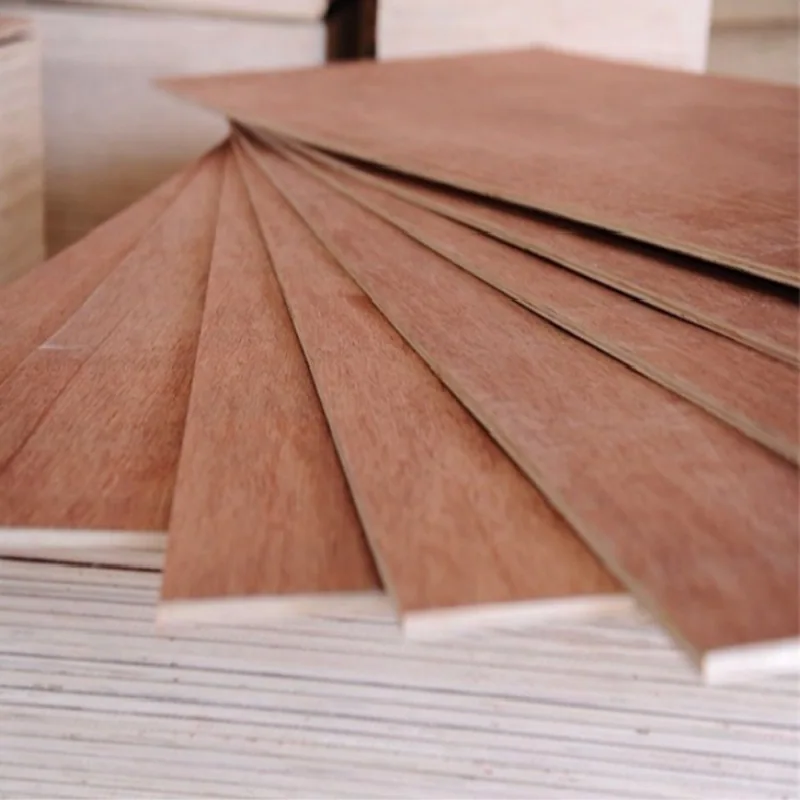
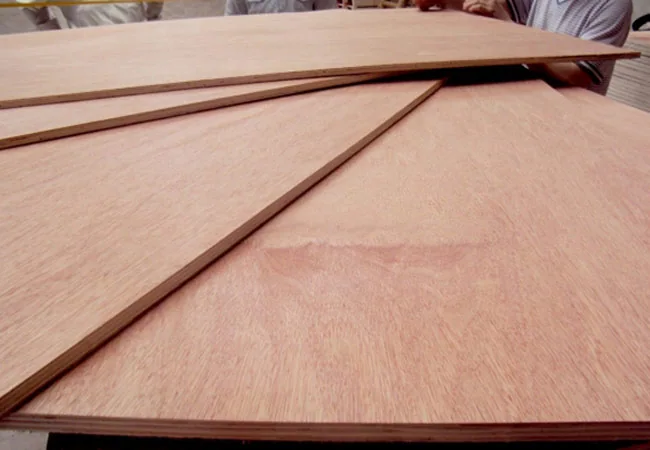
Furniture faces and protective panels, made around your cutting list.
Bring warm wood faces to furniture interiors and practical protection to packed goods. We manufacture Bintangor plywood as full sheets or cut components, with poplar or eucalyptus core options. Share the part, case or display you want to make; our factory helps choose the construction, prepare useful samples and quote your complete cutting list.
Available to order · 10–15 days production · Container shipping
CONSTRUCTION & SUPPLY CONDITION
Bintangor Plywood Sheets specification
Our product configuration and order requirements
Sheet size and supply
1220 × 2440mm full sheets; cut panels and components to the supplied drawing.
Listed thicknesses
3, 9, 12, 15 and 18mm. Separate 4mm and 6mm configurations are available through the linked product pages.
Inner construction
Predominantly poplar or eucalyptus veneers; select the core and layup for each part or order line.
Decorative face
Bintangor wood veneer, approximately 0.35mm for this range. Choose the supplied sanding and finish around that face.
Face and reverse selection
Colour, grain, permitted repairs, veneer joints and surface preparation for the visible or contact areas.
Thickness tolerance
±0.5mm for this range: a nominal 9mm panel is 8.5–9.5mm. Specify tighter finished-part limits with the component drawing.
Squareness and part dimensions
Squareness reference ±2mm, with its measuring method and reference edge. Agree sheet/cut-part length and width tolerances separately.
Density range
520–900kg/m³ across configurations. Keep the selected construction and its weight information with the handling and loading plan.
Supply moisture
6–12%; measuring method and receiving condition specified with the order.
Bonding options
MR, melamine or phenolic WBP. Select the required bond performance for the component and exposure; the face remains Bintangor veneer.
Factory processing
Cut list, grain direction, openings, edge work, supplied surface and finished tolerances by drawing.
Packing and identification
Full-sheet or component quantities, set grouping, separators, edge protection and pack labels.
Documents for the order
Selected core, layup, bond, sample and drawing references, with the destination and required performance or emission documents.
Choose the construction, finish and size for your project. We’ll bring the selected options and finished tolerances together in your quotation.
BINTANGOR FACE · SPECIFIED PLYWOOD CORE
Choose Bintangor sheets for the part you need to make
Source warm-toned Bintangor plywood for furniture interiors, display components and protective packaging from our factory in Xuzhou, China. Choose full sheets for your workshop or cut components for assembly. We can help combine the face, predominantly poplar or eucalyptus core, thickness and bond around the job and your budget.
For packaging, start with the goods and contact surface
Tell us what the sheet protects or encloses, its support and the required fit. Select clean faces, tidy cut edges and the core around insertion, fixing and handling. Include the contact layer for delicate goods.
For furniture, start with the visible finish
Choose the face colour, grain, repairs and preparation around your coating or overlay. Mark the reverse and exposed edges too. The core, machining and joint detail can then follow the component's role.
Keep the accepted face, reverse, selected core and supplied condition with the product reference. That reference helps us plan another thickness, a new cutting list or the next production order with you.
TWO BUYING ROUTES · ONE CLEAR ORDER BRIEF
Put the surface and construction requirements in the right place
Use the route below to identify which features belong in the quotation. A packaging contact surface, a case wall and a visible furniture part have different priorities.
Choose the requirements that affect the finished component
Use
Priority
What to include in the order
Cargo protection and separators
Clean contact surfaces, dimensions, edge condition and support.
Goods being protected, contact layer, handling method and whether the panel carries any load.
Packing-case sides or lids
The complete panel-and-frame assembly, joints and closure.
Case drawing, contents, stacking and handling requirements, battens, fasteners and exposure.
Visible furniture interiors
Colour, grain, repairs and surface preparation after finishing.
Show face, reverse, coating, acceptable range sample and adjoining components.
Painted or covered furniture parts
Surface uniformity, substrate preparation and edge treatment.
Paint or overlay system, repaired areas, machining and the reverse treatment.
Mark the visible areas and the working surfaces
A sketch can show where repairs, filler, veneer joints or colour changes fit the appearance brief. Give a concealed reverse the selection it needs for contact, coating or bonding. For furniture and displays, review adjacent finished parts together and keep their grain, coating and colour range with the sample reference.
Compare quotations for the same supplied stage: full sheets, rough blanks or processed components. Include any sorting, surface preparation and edge work needed by your workshop when comparing the cost per usable part.
FULL SHEETS AND CUT-TO-SIZE SUPPLY
Build the schedule from thickness and finished dimensions
This range lists 1220 × 2440mm sheets in 3, 9, 12, 15 and 18mm, with cut-to-size supply. Send the quantity for each size and identify whether the drawing describes a rough blank, a machined component or the finished size after coating and edge treatment.
Thin skins and supported parts
Use the 3mm Bintangor page for thin components, showing the backing or frame with the part. Our separate 4mm and 6mm configurations provide their own sizes and construction details when an intermediate section suits the component.
9mm and thicker components
Select the 9mm configuration with its core and panel role. Compare 12mm, 15mm and 18mm against the joint, internal space, support and handling weight. Include the required performance for any load-bearing part with that assembly brief.
For a mixed order, label each thickness and part separately. Keep grain direction, face selection, cutting tolerances and the supplied stage with the same line in the schedule.
PACKAGING, FURNITURE AND DISPLAYS
Give each panel a clear role in the finished job
Protective sheets and separators
Show the contact area, support and insertion or removal route. Focus on clean surfaces, loose fibres, cut edges and the finish of the protected goods. Include the protective contact layer in the packing sample, and tell us about any sensitive-contact requirement when making the enquiry.
Packing-case walls and removable lids
Send the outside envelope and required inside space with the frame, overlaps, battens, closures and lifting arrangement. A corner-and-lid trial can check fastening, handling and opening at destination. Keep stacking, impact and transport conditions with the complete package brief.
Furniture backs and partitions
Mark the visible face, captured edges, slots, fixings and support. For a panel sliding into a groove, plan the finished thickness and clearance together. Compare the finished Bintangor colour beside the adjoining frame or door, including a machined edge where the core remains visible.
Displays and shopfitting parts
Locate customer-facing areas, access openings and repeated parts on the cutting drawing. Keep grain direction and accepted repairs with the appearance reference. Send the project fire, emission and installation document requirements with the chosen component and destination.
THICKNESS LIMITS AND THE SPACE INSIDE
Plan the case clearance around the selected wall thickness
This range uses a ±0.5mm thickness tolerance, giving 8.5–9.5mm for a nominal 9mm panel. With a fixed outside case size, the internal space changes with the opposing wall thicknesses. Include this before adding wraps, lining and restraints.
Read the worked detail and calculations
The dimensions below use a 1000 × 600mm outside plan and a centred 970 × 570mm item. Opposing walls have equal thickness and project inward from the outside envelope. The internal plan is outside size minus two wall thicknesses; battens, hardware and coatings are separate additions to the case drawing.
1000 × 600mm outside plan; centred 970 × 570mm item; 5mm lining per side
Wall thickness
Internal plan
Gap per side
After 5mm lining
8.5mm
983 × 583mm
6.5mm
1.5mm
9.0mm
982 × 582mm
6.0mm
1.0mm
9.5mm
981 × 581mm
5.5mm
0.5mm
8.5mm wall8.5mm wall + 5mm uncompressed lining + 1.5mm gap, with the item and outside envelope fixed.9.5mm wall9.5mm wall + 5mm uncompressed lining + 0.5mm gap in the same outside envelope.
Both drawings use the same scale for the wall, lining and gap, with the goods shown as a cropped section. The 5mm lining is an input for this clearance calculation. Build the complete packing brief from the goods' maximum dimensions, chosen cushioning and restraints, joint projections and assembly tolerances. If an end panel fits between the sides, calculate its cut length from those side thicknesses.
Specify squareness with its measuring reference
The listed squareness reference is ±2mm. Record the measuring method, reference edge, sheet or part size and accepted limit with the order. Set cut-part width, length and squareness as separate requirements around the case joint or furniture assembly.
TRIM, KERF AND THE COMPLETE CUTTING LIST
Calculate protective-panel yield from the usable sheet
For a 1200 × 800mm protective blank, place 1200mm across the sheet's 1220mm width and 800mm along its 2440mm length. With 10mm edge trim on all four sides and a 3mm kerf, the usable rectangle is 1200 × 2420mm.
Three blanks use the full trimmed width
Along the length, 800 × 3 + 3 × 2 = 2406mm, leaving 14mm within the usable length. Across the width, the blank uses all 1200mm. Three blanks total 2.88m² from a 2.9768m² sheet, an area ratio of 96.7%.
This layout counts the rectangular blanks before face selection, machining or damage allowance. The remaining area includes trim, kerf and the residual strip; identify any useful offcut separately in the cutting schedule.
With 11mm trim at each edge, usable width becomes 1198mm. If the application and grain permit rotation, put 800mm across the sheet and 1200mm along it: 1200 × 2 + 3 = 2403mm fits the 2418mm usable length, giving two blanks.
For 120 blanks, the two layouts therefore need 40 sheets at three per sheet or 60 sheets at two per sheet, before further production allowance. Use the supplied sheet dimensions and actual edge-trim requirement when setting the order quantity.
For factory cutting, send every part in the list with quantity, grain, edge treatment and kit grouping. Our custom-size service can help compare full-sheet supply with the cut components your workshop needs.
CONSTRUCTION, HANDLING AND FREIGHT
Use the density of the configuration you are ordering
The 520–900kg/m³ range covers different configurations. The table shows how that range affects nominal bare-sheet mass; select the actual core and construction when preparing the handling and loading plan.
1220 × 2440mm sheet; nominal thickness and density range
Thickness
Nominal volume
Calculated mass
3mm
0.0089304m³
4.6–8.0kg
9mm
0.0267912m³
13.9–24.1kg
12mm
0.0357216m³
18.6–32.1kg
15mm
0.0446520m³
23.2–40.2kg
18mm
0.0535824m³
27.9–48.2kg
Calculated mass is sheet area × thickness in metres × density. The table uses nominal thickness and excludes added finishes, wrapping, pallets and other protection. Complete the shipment plan with the ordered configuration, sheet count, measured packed weights and handling dimensions.
At the same size and density, 12mm contains one-third more nominal wood volume than 9mm. Use this volume and mass comparison alongside the selected support, joint and package or component requirements.
CUTTING, EDGES AND FINISHED FACES
Prepare the surface without losing the decorative veneer
Plan preparation around the face veneer
The surface veneer is approximately 0.35mm. Choose the supplied preparation for your finish, then use a representative piece to set the abrasives and sanding sequence. Include a veneer joint or permitted repair in the coating sample and preserve the face through the final preparation.
Control cut edges and fixing areas
Use the intended tool setup with support at the cut. Check show-face and exit-face quality on a cross-grain cut and drilled feature. Include the exposed core at a routed edge, handle opening or fixing hole; choose covering, sealing, pilot holes and fastening around that selected core and joint.
Review the finished surface with its reverse and edges
For clear or stained work, compare the natural colour range, filled areas and joints after finishing. For opaque paint, review repairs through the complete preparation and coating sequence. For an overlay, trial the selected surface, adhesive and pressing process as one assembly.
Include the reverse and edge treatment with the finish, especially where cleaning or moisture affects use. Keep coating and adhesive instructions with the workshop process. Our surfaces, finishes and OEM guide helps organise the complete finishing brief.
BOND AND SUPPLIED CONDITION
Choose bonding for the panel journey and working environment
The range offers MR, melamine and phenolic WBP adhesive options. Describe dry furniture use, humid storage, outdoor handling or wetting with the construction you need. Include EN 314-2 Class 2 or another required bonding reference in the enquiry so the quotation and supporting documents address that requirement.
Melamine here describes an adhesive beneath the Bintangor wood face. For a finished decorative melamine surface, compare the melamine-faced plywood range and choose its surface and core for that application.
The supplied moisture range is 6–12%. Keep its measuring method and inspection condition with the order, along with shipping and receiving-workshop conditions. Store sheets flat on aligned supports, protected from ground moisture, rain and uneven heating. Identify packs by thickness and construction and check the material condition before precision machining or bonding.
CHOOSE A SAMPLE FOR THE BUYING DECISION
Try the contact surface or finish on the actual component
Packaging and protection
Send the goods information and a case sketch or photo. A useful panel sample includes the contact surface, cut edge and fixing detail. Include lining and supports in the assembled-package trial to check fit, handling and opening at destination.
Furniture and finished parts
Send the intended coating or a photo of the component. Include the face range, a permitted repaired area, a visible edge and the joint or opening to be machined. Review adjoining finished parts as a group where their colour or grain will be seen together.
Keep the accepted sample and drawing with the selected core, thickness, bond and supplied surface condition. It becomes the reference for the quotation and repeat production.
EXPORT PACKAGE AND DELIVERY DETAILS
Plan the plywood parts and packing materials together
ISPM 15 distinguishes qualifying processed-wood packaging, including plywood, from regulated raw-wood packaging. List any solid-wood skids, battens or blocking separately with the case or pack, then confirm the destination's treatment, marking and declaration requirements for those materials.
The Australian agriculture authority's guidance explains processed-wood exemptions and importing-country checks. Keep the complete material list with the export documents, alongside the moisture protection, goods restraint and handling plan.
For packaging components
Identify case or kit numbers, quantities and assembly positions. Group cut parts for the receiving operation and include the selected contact protection, fixing and restraint details with the package brief.
For furniture components
Identify the show face, grain and matched sets. Specify separators, edge and corner protection where required, with labels placed clear of visible finishes. Choose one-size packs or complete kits around the installation sequence.
For full sheets, include pack quantity, covering, pallet or skid arrangement and handling access. Agree loading and protection with the actual ordered panels and destination.
SAMPLE, ORDER AND RECEIVING REFERENCE
Keep the checks useful to both workshops
Use the selected panel specification and accepted sample for incoming sheets, with the case or furniture drawing for the completed assembly.
Use the same reference for samples, supply and receiving checks
Check
What to record
Why it matters
Dimensions and fit
Thickness at agreed points, cut sizes, squareness method and drawing revision.
Controls the slot, panel joint or available packing space.
Faces and edges
Show face, reverse, colour range, repairs, cutting quality and contact-surface condition.
Separates cosmetic selection from issues affecting coating, assembly or protected goods.
Construction and bond
Specified core, veneer arrangement and relevant product or test information.
Keeps the supplied core and bonding requirement aligned with the panel you ordered.
Condition and packing
Moisture-check method, pack identifiers, counts, protection and visible delivery damage.
Connects the delivered panels to the quotation and transport condition.
For any delivery issue, keep the pack identity, photographs, measurements and affected quantity together so our team can review it with you. Our production and quality information connects the order specification with inspection and documents.
Bring the mixed-thickness order into one quotation
Send your full cutting list, drawing or project photo with dimensions and quantity per line. Identify the packaging or furniture role, face/reverse, selected core, thickness and bond, then list cutting, edge work, finish and the work you want supplied by our factory.
Add sample references, pack grouping, labels, destination, required documents and delivery timing. We can compare full sheets with cut components on the same basis. Email the list to sales@plywoodsupplier.cn or use the product enquiry form.
PLAN YOUR PANEL ORDER
Put your budget into the panel features the job uses.
For furniture, choose the visible wood tone and finished edge. For packing, focus on clean contact, fit and handling. We help connect those decisions with core, bond, cutting and quantities so your quotation covers the supplied components.
Bintangor Plywood Sheets
Your Bintangor face, construction and component brief
Furniture, display or packing use and part quantities
Choose a coated furniture face with its working joint, or a packing corner with its lining, contact surface and fastening. We help make the sample answer the next buying decision.
Standard samples without special work or a logo have no sample charge; delivery is separate. Custom samples are agreed individually.
Order quantity
Our starting guidance is one container for standard sizes and 3,000–10,000 pieces for custom sizes or designs. Tell us your trial quantity.
Production
All products are made to customer order. Production takes 10–15 days; the order confirmation records the start date and production schedule. Sea transit is additional.
Payment
Where a deposit applies, our standard reference is 30% before production, with the balance after inspection and before loading. T/T or L/C terms are agreed for the order.
Shipping
Panel orders ship by container. Share your destination so we can arrange the loading plan and quote the freight separately from production.
After-sales warranty
All products include a 180-day after-sales warranty. Contact our team with the order reference and details of any product concern.
Tell us your quantity, sample needs and target delivery date. We’ll put the price, payment terms and production schedule into your quotation.
Bintangor face, selected reverse, poplar/eucalyptus core, layup, thickness and bond for each order line.
Component and finish
Sheet or part size, grain, thickness limits, edge preparation, coating or contact layer and intended support.
Sample and production
Accepted face or assembled corner trial, cutting revision, inspection records, quantity and part identification.
Delivery and documents
Finished pack arrangement, solid-wood packing components where used, destination requirements and documents for the selected panel.
Product reports for your order
Share the material, thickness and test standard your project requires. Our factory team will help you select the product reports and documents for your purchase.
Production & inspection
We can plan production and inspection around your panel specification, with dimensional checks, recorded readings and packing photographs for your order.
We prepare packing details, pack quantities and dispatch documents for your order. Share the destination and receiving requirements so our team can help plan delivery.
Bintangor is the decorative face veneer. The main inner construction is predominantly poplar or eucalyptus. Tell us about the part, exposed edge and handling needs so we can select the core and layup with your face choice.
Which thicknesses and sizes can I order?
This range lists 3, 9, 12, 15 and 18mm in 1220 × 2440mm, with cut-to-size supply. The linked 4mm and 6mm pages cover those additional configurations. Send a mixed-thickness list and we can define each component on its own quotation line.
How do I choose between furniture and packaging faces?
For visible furniture, select colour, grain, repairs and the intended finish, including adjoining parts. For packaging, prioritise the clean contact surface, cut edges, support and packing design. Give the reverse its own requirement in either case.
Can I use Bintangor plywood for packing cases?
Yes. Send the case drawing or photo with the goods, dimensions and handling route. We help choose panel thickness, core, bond and supplied edges; use a corner-and-lid trial to bring the fasteners, frame, lining and complete packing arrangement together.
How should a protective sheet contact the goods?
Describe the goods and their surface finish. Include the required clean face, tidy cut edges and any cushioning or protective contact layer in the sample. Tell us about food-contact or other specific contact requirements with the enquiry.
What does ISPM 15 mean for a plywood package?
Qualifying packaging made wholly from processed wood such as plywood is exempt under ISPM 15. Identify any solid-wood skids, battens or blocking separately and check the complete package against destination requirements. Our export-packing section links the official guidance.
Does the melamine bond option give a melamine decorative surface?
This product has a Bintangor wood face; melamine is one of the bonding options. For a ready decorative colour or woodgrain surface, choose from our melamine-faced plywood range and tell us the finish your furniture needs.
Which bond should I select for humid conditions?
Choose MR, melamine or phenolic WBP around the planned use, wetting and finishing detail. Send any required bond class with the exposure conditions so we can include the selected construction and supporting documents in the quotation.
How much thickness clearance should I allow?
The range tolerance is ±0.5mm, so a nominal 9mm panel is 8.5–9.5mm. Include both opposing walls, lining and finished build-up when planning an internal space. Share the fit you need if the component calls for tighter supplied limits.
How should I specify squareness and cut sizes?
The listed squareness reference is ±2mm, with the measuring method and reference edge set for the order. State length and width tolerances separately. A case corner or furniture joint drawing helps identify the finished dimensions that control assembly.
How should the Bintangor face be prepared for finishing?
The face veneer is approximately 0.35mm in this range. Choose the supplied surface and a light preparation sequence that preserves it. Include a permitted repair or veneer joint in the actual coating trial and review the dried finish.
How much does a sheet weigh?
A nominal 1220 × 2440 × 12mm sheet calculates to 18.6–32.1kg across the listed 520–900kg/m³ density range. Select the core and use its panel and packed weights for the final freight plan. The page also compares 3, 9, 15 and 18mm sheet volumes.
Can you supply mixed sizes and ready-to-assemble kits?
Send each part size, thickness and quantity with the permitted grain direction and factory work. We can discuss rough blanks, finished components and packing by size or complete set. Include part labels and protected faces in the supplied scope.
How do I start a sample and production order?
A drawing, rough cutting list or project photo is enough to begin. Add quantities and destination, and we will help plan a face, contact-surface or joint sample. Available to order, with 10–15 days production, container shipping, freight terms by order and a 180-day after-sales warranty.
Let’s plan your Bintangor sheets and component sets.
Start with a case drawing, furniture part or cutting list. We help choose the face, reverse, core and thickness, then quote the panel, factory work and packing for your order.
Sheet size and supply: 1220 × 2440mm full sheets; cut panels and components to the supplied drawing.
Listed thicknesses: 3, 9, 12, 15 and 18mm. Separate 4mm and 6mm configurations are available through the linked product pages.
Inner construction: Predominantly poplar or eucalyptus veneers; select the core and layup for each part or order line.
Have a case sketch, cutting list or finished-part reference? Email it to sales@plywoodsupplier.cn. Start with the details you have; we’ll help you work through the rest.
CONTINUE YOUR PANEL SELECTION
Bintangor plywood construction
Compare our panels
Browse the material range and compare the configurations for your order.
Optional Google Analytics and Ads cookies measure visits and enquiries. Reject keeps these cookies off; basic cookieless measurement continues. Enquiry details are never sent to Google. Privacy details.