
Poplar plywood production brings veneer preparation, layer assembly, bonding and finishing together around the panel you need. Start with your furniture part, current board or preferred face, and our factory helps choose the poplar construction and supplied finish. The process guide below shows how veneer condition and production checks connect with a useful sample, consistent machining and repeat orders.
Poplar plywood Decorative plywood Melamine plywood
Choose the poplar construction and face
Poplar is a hardwood in botanical classification, even though its wood is often relatively light and soft. Different poplar sources and veneer batches can differ in density, moisture and peeling behaviour. Record which species or material group is intended for the faces and core. All-poplar, poplar-core with decorative faces and mixed-species plywood are distinct constructions. The US Forest Service's composite-materials chapter explains how raw-material selection and arrangement affect manufactured panel properties.
Prepare veneers for consistent panel assembly
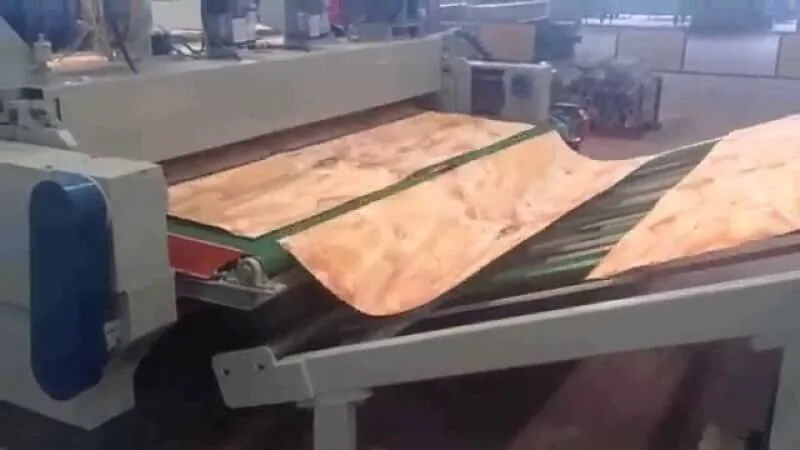
Log condition and peeling setup influence thickness uniformity, surface roughness and veneer checks. Conditioning should suit the log condition, equipment and intended veneer, including whether cold material needs preparation. A fixed seasonal soaking schedule cannot cover every diameter, species and starting temperature. Inspect the peeled veneer and use the result to control the process. Deep checks, torn areas or uneven thickness can affect contact and later appear as local surface or bond problems.
Control veneer moisture across the batch
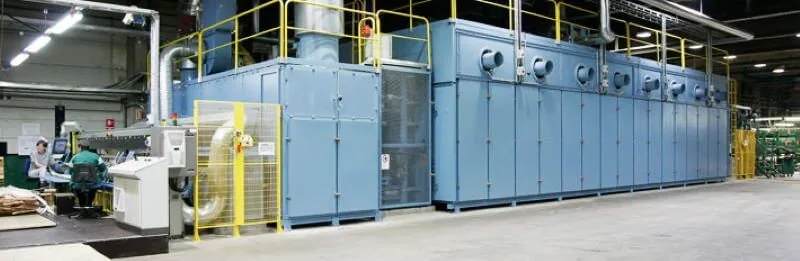
Veneers entering the dryer can have different starting moisture contents. Grouping and process control should account for meaningful differences rather than assume every sheet reaches the same condition together. Check representative areas and compare the spread of measurements as well as the average. Record the target for the adhesive and layup being produced. Veneer moisture before gluing, moisture in the pressed panel and moisture at shipment describe different stages; they should not be presented as one interchangeable number.
Grade, repair and assemble the core deliberately
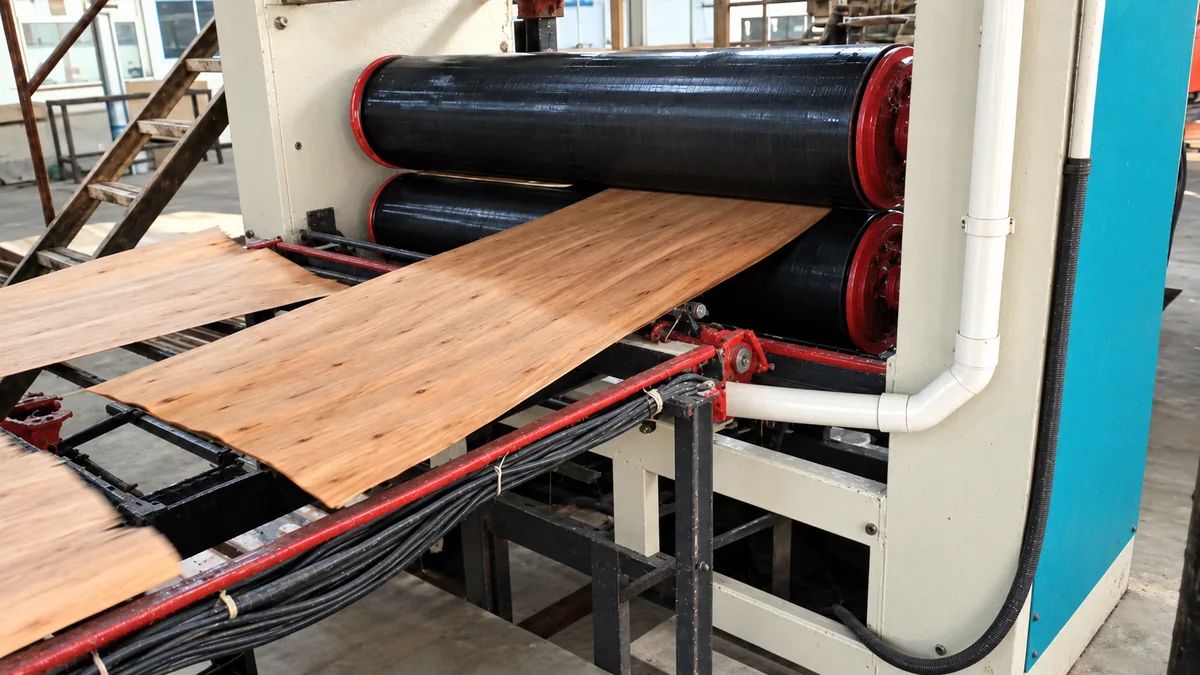
Sort veneers for their intended position, then control joints, gaps, overlaps and grain direction during assembly. An overlap can create a local high spot; an open joint can leave inadequate support under the next layer. Keep the layup consistent with the ordered thickness and performance requirement. Repairs must meet the selected construction criteria. For a decorative face, also consider whether a core discontinuity may show through after sanding or finishing.
Match the adhesive system to the required bond
Specify the adhesive system for the end-use requirement and the actual veneer. US Forest Service bonding guidance describes interactions among wood surface condition, porosity and adhesive performance. A universal claim that all poplar has the same pH cannot justify adding acid or modifying resin on the production line. Formulation changes need adhesive-supplier input and a controlled evaluation of cure and finished-bond performance.
Record what the glue-spread number measures
A glue-spread value is incomplete unless it states wet or dry mass, area basis and whether one or both mating surfaces are counted. For a production check, compare coated and uncoated mass over a defined area using a suitable measurement procedure. Check distribution across the width and between batches, not only the average consumption. Surface roughness, viscosity and assembly time can change contact even when the recorded mass is unchanged.
Control cure through the panel thickness
Match the press cycle to adhesive, layup, thickness, moisture and equipment. Platen temperature is not the same as temperature at the slowest-heating bond line. Insufficient contact, excessive local compression and incomplete cure require different corrections. Pressure release also matters when moisture and internal vapour remain in the panel. Retain process records with the batch so a defect can be traced to a specific change rather than attributed to poplar as a species.
| Observation | Potential process checks | Evidence to retain |
|---|---|---|
| Local delamination | Veneer condition, spread, assembly and cure | Affected location and bond-test samples |
| Blister after pressing | Moisture, cure and pressure release | Cycle and moisture records |
| High spot | Core overlap or thickness variation | Section through the defect |
| Face depression | Core gap, compression or sanding | Surface and cross-section observations |
| Bow or twist | Layup balance, moisture and cooling support | Measurements after conditioning |
Check what trimming and sanding reveal
Trimming exposes the core, making it an opportunity to identify gaps, overlaps and bond problems. Sand to the specified thickness and surface condition without unnecessarily reducing the face veneer. Check dimensions after the defined conditioning stage. If the panel will receive veneer, film, melamine or another finish, approve that complete construction rather than assume the raw panel's appearance demonstrates finished performance.
Connect bond and panel checks with the chosen use
EN 314-2 links bonding requirements to end use and refers to EN 314-1 for test methods. Use the agreed specimen preparation, conditioning and assessment method, with samples linked to the production batch. A photograph of boiling or a hand-broken edge is not a complete test report. Structural properties, emission results and appearance checks answer different questions and need the relevant evidence.
Keep product identity through inspection and packing
Link panel identity, dimensions, construction, inspection results and packing labels. Protect faces and edges from handling damage, and use suitable support so a stack does not acquire distortion before delivery. Where a change affects core material, resin, layup or the finished surface, assess whether the approved sample and evidence remain representative. Our production and quality page connects the factory stages with order requirements.
Start with your poplar panel or component
Send a component photo, current board or preferred face through our enquiry form. We help choose the poplar construction and processing requirements, then add sizes and quantities for pricing. Our poplar application guide addresses weight and completed-part value, while our birch comparison helps evaluate alternatives.
Poplar plywood production buying questions
Can I choose a decorative face over a poplar core?
Yes. Share the appearance and finished use you want. We help select the facing and core construction, then review the complete panel in a sample.
What should I check in a poplar production sample?
Review the face, cut edge and the machining or finish your part needs. Keep the chosen construction and sample reference with the order so repeat supply follows the same requirements.