
Choose melamine MDF colours around the room and furniture you want to create. Start with a preferred colour, a room photograph or a material you want to match. We help bring the decor, texture, gloss and edge together, then compare physical samples under your project lighting. PanelSource manufactures MDF and applies decorative facing in our own factory, connecting your colour choice with full sheets or processed furniture parts.
Solid-colour MDF Woodgrain MDF High-gloss MDF Browse colour references
Start with a colour you want to live with
Start with the intended colour family, then identify the particular sample or decor reference and the required texture. White can describe a warmer cream, a cooler white or another tone; oak can describe many different prints. Keep the reference attached to the order line rather than relying on a name shared by several catalogues.
Choose the colour and texture together and compare the actual face and edge samples. Browse our melamine colour catalogue to start a selection.
Separate colour, texture and gloss
| Selection | What to compare | What to record |
|---|---|---|
| Colour | Sample beside the actual floor, paint and worktop | Sample identifier and intended adjoining materials |
| Texture | Surface relief under touch and angled light | Texture reference and any directional effect |
| Gloss | Reflection on the proposed vertical or horizontal surface | Selected finish; measurement method if a numeric limit is required |
| Edge | Face-to-edge transition on a finished corner | Edge material, reference, dimensions and profile |
| Reverse face | Appearance with the door open or panel exposed | Same decor, coordinated decor or a specified reverse |
| Repeat order | New sample beside the retained project reference | Original order and sample details |
A rougher surface is not automatically a higher-quality product. It may be the right visual choice for a textured front and the wrong choice for a writing surface. Likewise, a matt label does not establish anti-fingerprint performance. Identify any special surface claim separately and request evidence for the selected finish.
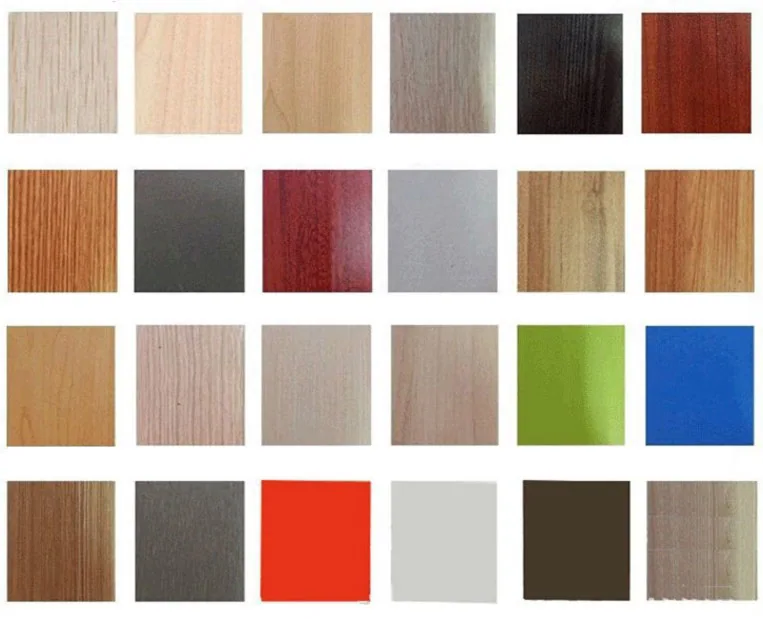
Check the sample in the light where it will be used
Place the sample vertically for a door or wall panel and horizontally for a shelf or desktop. Look at it under daylight and the planned artificial lighting, next to the materials it must coordinate with. Keep the light and viewing position consistent when comparing two candidate panels.
The FADGI definition of metamerism describes how colours can match under one illuminant yet differ under another. This matters when a panel face and edging are made from different materials. A satisfactory match beside a window should also be checked beneath the lighting used after dark.
A phone photograph helps communicate the arrangement but is affected by exposure, white balance and the display on which it is viewed. Include the sample identifier in photographs and retain the physical reference. Do not try to resolve a close colour dispute by comparing screenshots from different phones.
See the finish across a door or larger surface
A small swatch answers an initial colour question. A larger sample or assembled section answers whether the texture, reflection and pattern feel right across a door or repeated wall panels. For a long bank of cabinets, examine adjoining faces together instead of considering each sample in isolation.
For example, place a proposed warm white front beside the actual worktop, handle and floor sample. Check the junction at the edge, then step back to the normal viewing distance. Record whether the intended effect is a close match or a deliberate contrast. These are different objectives and should not share an ambiguous acceptance description such as looks similar.
Choose the edge with the face
Ask for a finished corner sample when the perimeter will be visible. Inspect colour, texture, gloss, the glue line and the transition at the trimmed radius. A face sample with a loose strip of edging does not show the final corner after processing.
An intentional contrasting edge can be easier to specify than an approximate match, but the choice belongs in the drawing. Identify visible long edges, short edges, internal openings and any area that needs a different treatment. If a panel meets another material, judge that junction as part of the same sample exercise.
For dark furniture, compare our black melamine MDF options and review the face, finished edge and machined openings together.
Keep the reverse face explicit, especially for open shelving and cabinet doors. The front and reverse may have different visual roles, but their construction still needs to suit the panel. Do not leave the reverse undefined because it was absent from the design rendering.
Include touch and cleaning in the sample review
Handle a sample as it will be handled in use, then clean it using the instructions appropriate to that surface. Inspect whether residue, smears or marks remain visible under the intended lighting. This practical comparison is particularly useful for frequently touched fronts; it is not a substitute for a formal stain or abrasion test.
Clean the selected face with compatible products and tools. Avoid procedures that scratch the surface, alter its sheen or leave deposits; keep the care instructions with the chosen finish.
Record the selection for cutting and repeat supply
Give each finish a project identifier and connect it to the part list. Include the core, thickness, front, reverse, edge treatment and sample reference. For directional wood prints, also record orientation and matching requirements; our woodgrain layout guide covers those details.
Keep a protected reference sample with the project records. For later replacements, send the original reference and order details together with information about the installed surfaces. A new panel should be evaluated against the relevant reference and surroundings rather than assuming a repeated colour name will settle the match.
Share your colour idea and furniture project
Send a room photo, preferred colour reference or the materials you want to coordinate. We help choose among coloured melamine MDF, woodgrain MDF and high-gloss finishes, then plan a face-and-edge sample.
When you are ready for pricing, add the approximate sizes, quantity and destination. Share any project performance requirements as well; we connect them with the selected board construction and relevant evidence while developing the order.
Melamine MDF colours buying questions
Can I start with a room photograph?
Yes. A photo helps us shortlist colours and textures. We then use physical samples beside your room materials to agree the finish and matching edge.
Does the online colour reference confirm the final match?
The online references help you choose a direction. Review the selected physical sample, texture and finished edge in the lighting where the furniture will be used.