
The most useful birch plywood quote starts with the parts you need to make. A cutting list, furniture photo or current component helps us compare sheet yield, face grade and core construction around your budget. We manufacture plywood and custom panels and can quote full sheets, cut blanks or agreed processed parts. Use this guide to compare the cost per usable part and the work included in each offer.
Birch plywood Poplar plywood Decorative panel options
Start each quote with the same component
Start with the intended component and the information you already have: a drawing, photo, dimensions or sample reference. Build one dated selection covering the faces, core and relevant performance, then use it for each quote. List any alternative construction alongside the requested option so its price and practical differences are easy to compare.
List all-birch construction and birch-faced plywood over another core on separate comparison lines. Identify the species in an offer described as hardwood core so the weight, edge and machining choices are clear. Our Baltic birch identity guide explains the main construction terms.
A proposed alternative can still be useful. Evaluate it as an alternative against the application, with its own price and evidence, rather than silently treating it as the requested panel.
Choose face grades for the visible surfaces
Write the grading system and the requirement for each side. EN 635-2 concerns hardwood plywood surface appearance; an appearance designation does not by itself establish the core, bond or structural performance.
A cabinet side with one concealed surface may have different needs from a freestanding divider visible on both sides. State the permitted repairs, colour variation and matching requirement where they affect the design. Use an agreed range sample instead of expecting every natural veneer to match one small photograph.
Also state whether exposed edges must meet an appearance requirement after routing or sanding. A quotation covering the faces alone may leave an important furniture detail outside the acceptance criteria.
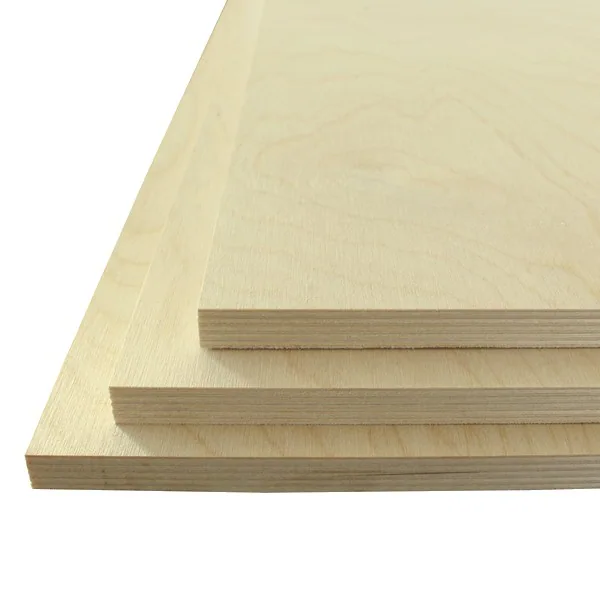
Compare sheet sizes with your cutting plan
A lower price per sheet can come with a smaller usable area or a poorer cutting yield. Nominal 1220 × 2440 mm and 1525 × 1525 mm sheets have different proportions; the more useful format depends on the component layout and permitted grain direction.
Include saw kerf, edge trimming, face matching and defects excluded from visible components in the cutting plan. An area-only comparison is a useful first calculation, but it does not establish how many accepted parts the sheet will produce.
Compare the material cost per usable part
| Assumed offer | Sheet price | Accepted parts per sheet | Material cost per part |
|---|---|---|---|
| Offer A | 48 currency units | 6 | 48 ÷ 6 = 8.00 |
| Offer B | 42 currency units | 5 | 42 ÷ 5 = 8.40 |
The example assumes equivalent accepted components and an established cutting yield. It excludes freight, machining, finishing, taxes and rejected material. Its purpose is to show why the lowest sheet price need not give the lowest material cost per usable part.
For quotations per cubic metre, confirm the thickness used in the calculation. For cut-to-size parts, confirm whether the price covers finished dimensions or oversize blanks. Keep quantities and units visible throughout the comparison.
Choose the processing and packing to include
Sanding, thickness calibration, cut-to-size work, CNC operations, edge preparation and coatings can change both the supplied item and the work remaining at your workshop. Define the sequence when later processing could damage an earlier finish.
For a clear-coated face, specify whether both sides are finished and whether cut edges are included. For machined components, identify the drawing revision, hole positions, tolerances and how parts will be labelled. A sheet quotation cannot be compared directly with a finished-component quotation.
Include face protection, pack limits and separation between different sizes or batches. Ask which packing features are included in the offered price and which are additional. This makes the comparison useful for receiving and handling as well as purchasing.
Include the performance requirements that matter
If the project requires a particular bonding, emissions or mechanical result, identify the method and acceptance requirement before comparing quotations. Establish whether the supplied evidence covers the proposed construction and whether order-specific testing is required.
A supplier's unrelated test report should not make an otherwise incomplete offer appear equivalent. Record the product identification, thickness range, test scope and any limitation. Our birch plywood receiving guide separates physical inspection from properties requiring documented testing.
Clarify the cost and time consequences of extra testing or a new sample programme. A late evidence request can change the schedule even when the raw panel specification remains unchanged.
See how a CP birch plywood order was checked before dispatch
The ECQA pre-shipment report dated 11 March 2025 records an 80-board inspection of CP full-birch plywood in 2500 × 1250mm sheets and 21, 24 and 30mm thicknesses, with an overall PASS result. Its dimensions, moisture and export-packing records show the detail a buyer can include in an order file. Read the inspection case, then bring your face grade, sheet format and receiving priorities into the quotation so the inspection scope is part of the purchasing discussion.
Compare delivery terms and timing together
A factory-price offer and an offer including freight cover different costs. ICC's Incoterms® 2020 rules define allocations of cost, risk and obligations. Record the chosen rule, named place or port and edition rather than comparing three-letter abbreviations in isolation.
Keep currency, payment terms, quantity, quotation validity and delivery assumptions together. Separate production lead time from transport estimates. Confirm what event starts the quoted production period and what conditions must first be met.
A dated freight estimate may expire before a panel quotation. Our freight coordination service helps discuss destination and packing details as part of the actual order.
Turn the selected offer into an order
Use a short comparison sheet with the requested part, each offer, agreed differences and any details still to settle. This helps you compare the price with the actual usable output, processing and delivery scope.
Before confirming supply, connect the selected offer to the final specification, agreed samples and drawing revisions. Keep a proposed substitution visible until it has been assessed for the component in which it will be used.
Send us your cutting list, component drawing or current part. We help compare birch plywood constructions, sheet sizes and processing around the finished parts you need. Add quantities and destination when ready for a delivered-cost discussion.
Birch plywood quotation buying questions
Can you help compare sheet sizes from my cutting list?
Yes. Share part sizes and any grain or visible-face direction. Compare usable parts after saw kerf and trimming, then include the chosen grade and processing in the price comparison.
Is the lowest sheet price always the lowest-cost option?
No. Compare the material cost per accepted part together with machining, finishing, packing and delivery. A sheet that yields more useful parts may cost less for the component even when its sheet price is higher.