
Baltic birch is a useful starting term when you want a birch face and a layered furniture edge. The trade description is commonly associated with birch veneers throughout the panel. We manufacture plywood in Xuzhou, China, and help you choose the actual all-birch or birch-faced construction for your part. Start with the edge, joint or finished appearance you want, then compare the grade, thickness and sheet size around your budget.
Birch plywood Compare poplar plywood Decorative plywood
Choose all-birch or birch-faced construction
In an all-birch construction, the inner veneers as well as the faces are birch. Birch-faced plywood can use poplar, another species or a mixed core beneath the visible veneer. Choose between them by comparing weight, machining, exposed-edge appearance and the properties your design needs. Specify the species through the thickness and use a section sample to review the selected layup.
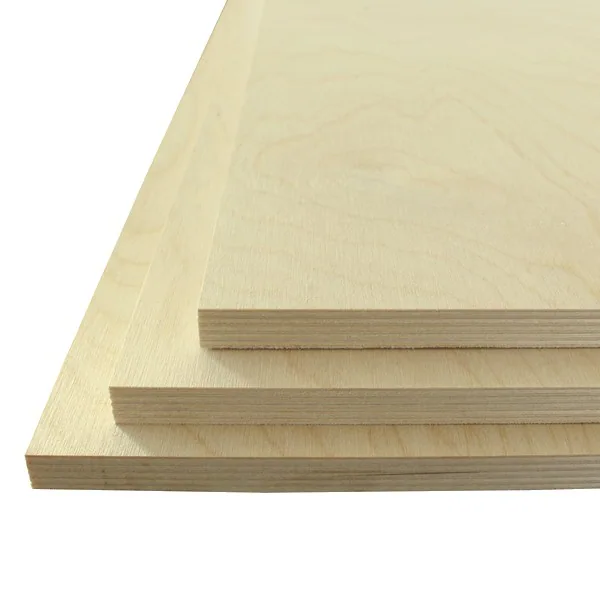
Record the manufacturing origin alongside the panel name
Keep the manufacturer, manufacturing country and wood-species declaration alongside the commercial product name. Our factory is in Xuzhou, China; a Baltic-birch-type order describes the chosen construction while the production origin remains China. If your purchasing specification requires a particular origin or named manufacturer, include that requirement so the comparison stays clear.
Choose the face and back appearance
Grade pairs such as B/BB or BB/BB describe the two outer faces under an identified grading system. Agree the permitted repairs, colour variation and natural marks, especially for clear finishing. Our birch grading guide provides a starting point.
Choose the layered edge and veneer arrangement
The number of layers depends on nominal panel thickness and the selected layup. A stated ply count is useful for matching an exposed edge or documenting construction, but more layers alone do not prove greater strength or less warping. Record veneer arrangement and any special face requirements. A thick outer veneer also behaves differently during sanding and machining from a thin decorative face over a different substrate.
| Description | What it identifies | What still needs confirmation |
|---|---|---|
| Birch face | Visible veneer species | Core species and layup |
| All-birch | Species throughout the construction | Grade, gaps and bond performance |
| B/BB or BB/BB | Face/back appearance in a grading system | Permitted repairs and core criteria |
| Ply count | Number of veneer layers | Thickness arrangement and properties |
| Exterior bond | Specified bond exposure capability | Installed moisture and decay protection |
| Baltic birch | Commercial material description | Actual origin and complete specification |
Match bonding and protection to the intended use
Birch species and an all-birch core do not create one universal bond classification. EN 314-2 addresses plywood bonding quality, while EN 636 addresses plywood use conditions and applications. Specify the evidence your component requires. An exterior-bonded panel still needs appropriate protection at faces, edges, joints and holes, and is not automatically a marine, preservative-treated or fire-retardant product.
Choose sheet sizes from the cut list
Square and rectangular sheet formats can produce very different yields for the same furniture parts. Include saw kerf, trimming, grain direction and visible-face restrictions when nesting. Compare usable pieces per sheet rather than only price per square metre. State actual thickness and tolerance where the panel must enter a groove or meet hardware. Our custom-dimensions service can be discussed against a part drawing instead of an approximate trade thickness.
Use the selected panel’s data for weight and loads
A shelf span, heavily loaded joint or building component needs properties for the offered plywood construction and direction. For sheet-weight estimates, use the actual dimensions and an appropriate density or measured mass.
Compare the finished edge, face or joint
For a visible layered edge, ask for a cut or routed sample in the finished profile. For a cabinet face, apply the intended clear finish or paint and review the permitted repairs. For a joint, check the machined slot or fastener location. A single clean edge cannot guarantee every internal section is free of gaps. Agree acceptance criteria, sampling and how unacceptable exposed defects will be handled before cutting a production quantity.
Share the birch detail you want to make
Send a furniture photo, drawing or current part through our enquiry form. We help select from our birch plywood range and plan a face, edge or joint sample. Add sizes, quantities and destination for the quotation. Our exposed-edge and joinery guide develops fabrication choices, and our birch versus poplar comparison helps with weight and cost.
All-birch plywood buying questions
Does a birch face mean the core is all birch?
A birch face can cover another species or a mixed core. If you want birch veneers throughout, record all-birch construction in the quotation and compare the relevant panel section.
What should I sample for an exposed furniture edge?
Choose the intended thickness, cut or route the actual profile and apply the planned finish. Compare the layer appearance and permitted gaps or repairs with the face that will be used beside it.