
Choose birch plywood for the furniture detail you want people to see and use. A pale face, visible layered edge or neatly machined joint can suit a cabinet, desk or drawer. Start with a furniture photo, drawing or current part. We manufacture plywood and MDF substrates with decorative facings, helping you compare the construction, finish, weight and cost across the different components in your design.
Birch plywood Poplar plywood Veneered MDF
Start with the cabinet, shelf, door or drawer
Mark the surfaces people will see, touch and clean, the places carrying loads and the joints that assemble the furniture. Choose the appearance grade for each visible surface and the core for the supports and fittings. A concealed back can often have different visual priorities from a door, helping you spend where it improves the finished piece.
| Component | Useful characteristic | Decision to make first |
|---|---|---|
| Cabinet side or open cubby | Wood appearance and an optional exposed edge | Which faces and edges remain visible after assembly? |
| Bookcase shelf | Panel construction that can be selected for stiffness | What are the span, support details and intended load? |
| Desk or table top | A continuous wood face with a shaped edge | What finish will handle daily contact and cleaning? |
| Drawer side and bottom | Machinable edges and relatively thin panel options | How are the bottom, grooves and runners connected? |
| Door or large front | A pale face or decorative substrate | How will flatness, weight and hinge capacity be managed? |
Choose a birch face or all-birch construction
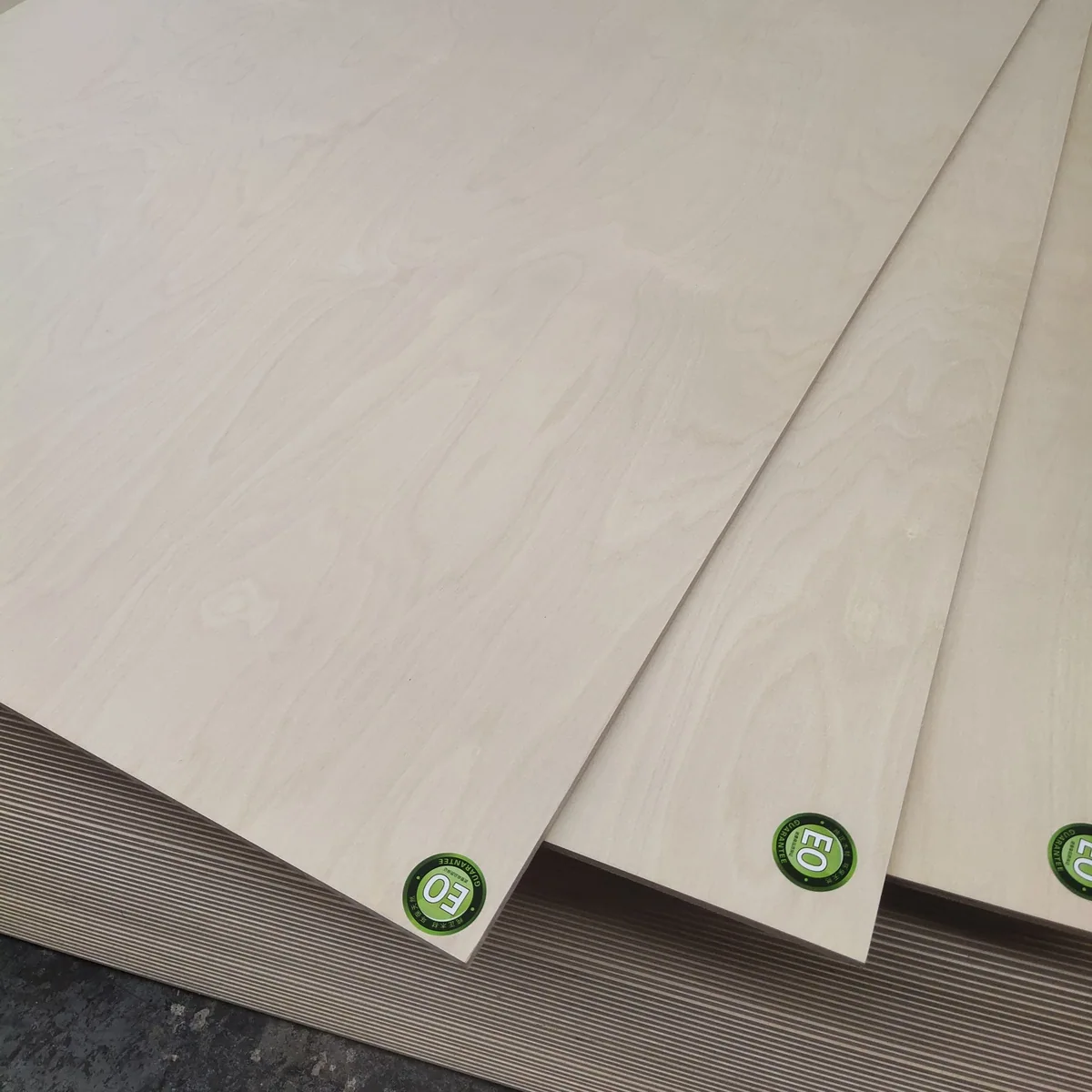
A birch face does not identify every inner veneer. If the design shows the edge, specify the core species, acceptable gaps and repairs, and the appearance after shaping. If the edge is covered, the internal construction still matters for fastening and machining, but a visually uniform stripe pattern may be less important.
Our guide to Baltic birch terminology explains these distinctions. For an order, confirm the offered construction for each thickness rather than assuming every birch sheet has the same veneer count or face thickness.
Plan shelf span, supports and thickness together
A shelf carrying books needs a different assessment from one displaying light ornaments. Record the clear distance between supports, shelf depth, load distribution and whether an edge stiffener or intermediate divider is included. The same sheet can behave differently in two cabinet layouts.
A thicker panel is one possible response to deflection; shortening the unsupported span is another. Neither should be selected from a species name alone. Use properties for the actual construction and verify the assembled unit under its intended loading. Do not turn a density figure into a shelf load rating.
For domestic storage furniture, EN 14749 addresses safety requirements and tests for defined units and components. A plywood purchase is only one input into that assessment; it is not a certificate for the finished cabinet.
Choose the finish for everyday contact and cleaning
Choose a furniture finish for the kind of contact it will receive. A desk can experience scratches in its coating, dents from concentrated contact and stains from spills, so compare a representative finished birch surface under the expected use. Raw wood appearance or a harder-feeling panel alone does not settle all three questions.
EN 12720 evaluates furniture surface resistance to cold liquids. Such a test answers a different question from whether the plywood's glue lines resist moisture. Agree the relevant liquids, conditions and acceptance criteria for your finish.
For a home desk, include the mouse area, writing area and front edge in the design discussion. A clear-coated wood surface, a laminate surface and a replaceable desk mat produce different maintenance expectations. Compare them as finished systems.
Compare clear-coated, stained or painted surfaces
A clear finish keeps the face grain visible; a dark stain can make local absorption differences more noticeable. Prepare the sample with the actual sanding and coating sequence. View several pieces together, especially where adjacent doors or drawer fronts need a coordinated appearance.
If an opaque coating hides the wood completely, compare a suitable MDF substrate as well. If the design depends on a decorative oak or walnut face, compare that veneer over the proposed core. Birch is valuable when its construction or appearance serves the design, rather than simply because it sounds more premium.
The Wood Handbook chapter on finishing identifies appearance and cleanability as central indoor finish considerations. It does not support a promise that every UV-coated or stained surface will remain unchanged indefinitely.
Consider weight at doors and movable parts
A large door puts demands on hinges and their attachments. A mobile storage unit adds castor, handle and joint considerations. Compare panel weight using the actual dimensions and stated density or mass per square metre, then include hardware and the expected contents.
A heavier panel is not automatically a better component. For a removable drawer insert, handling may matter more than a visible layered edge. For a fixed cabinet side, the balance may be different. Our birch and poplar comparison develops that choice.
Choose protection for the room and likely moisture
A dry living-room cabinet, sink cabinet and outdoor bench do not share the same moisture conditions. Around a sink, consider plumbing access, leaks, cut edges and the junction with the floor. A finish and suitable bond specification can be part of the solution, but neither makes an unchecked assembly waterproof.
Dark staining does not make birch more suitable outdoors. Likewise, an exterior bond does not establish natural decay resistance. Discuss the full service condition before carrying an interior furniture specification into a damp or exterior location.
Show us your furniture design
For example, list a bookcase as visible sides, supported shelves, back, doors and plinth. Mark the visible faces, exposed edges, finish, dimensions and quantities for each. Add the span and contents for shelves, and the hardware system for moving parts. This lets us discuss where one construction can be shared and where a different specification is justified.
Start with a photo, sketch or current piece through our enquiry form. We help choose from our birch plywood range and compare alternatives for hidden, painted or weight-sensitive parts. Develop the component schedule together, then add quantities, destination and any performance requirements for the quotation.
Birch furniture panels buying questions
Can different furniture parts use different panels?
Yes. A visible side, supported shelf, concealed back and moving door can have different priorities. Keep each chosen material in the part schedule and coordinate thickness, finish and assembly details.
Can I start with a furniture photograph?
Yes. A photo helps explain the appearance and intended use. A drawing or dimensions can follow as the design develops, with a face, edge or joint sample for the details that matter most.