
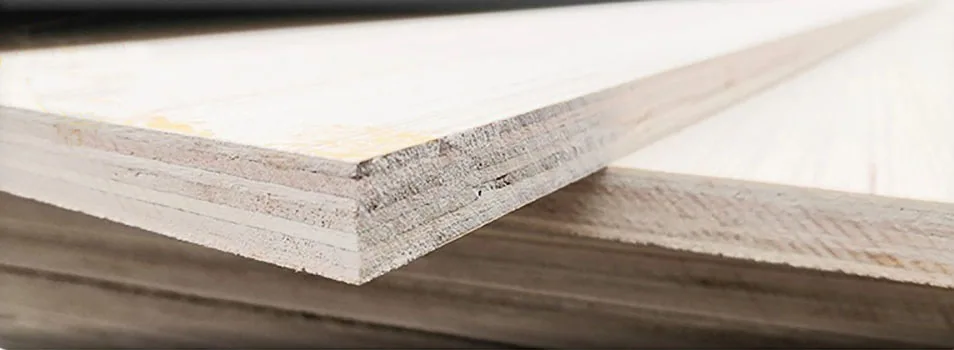
Plywood linings can bring a warm wood finish to offices, mezzanines and other interiors within steel-frame buildings. Start with an elevation, room photograph or the panel location. We manufacture the plywood and decorative facing and help develop sizes, edges and samples around the building design. The technical guidance below connects the lining with its mounting and the project fire requirements.
Fireproof plywood Oak veneer linings Custom panel sizes
Separate three fire roles on the drawing
Structural steel must retain the required load-bearing function for the building’s fire design. A wall or ceiling may need a fire-resistance classification as a complete element. A decorative plywood surface may need a reaction-to-fire classification. These three roles can coexist in one bay, but their evidence cannot be exchanged. EN 1993-1-2 addresses structural fire design of steel; EN 13501-2 addresses building-element fire resistance.
If a panel is called a “fireproof board” on an architectural sketch, ask which role it must perform. A plywood sheet with a surface fire result should not be substituted for the specified protection of a column or beam.
Steel-member protection is a tested system
Applied passive protection around steel is assessed with a named product, thickness, member geometry and fixing or application method. EN 13381-4 tests the contribution of applied passive protection to structural steel members within its scope. Its results are not a licence to wrap a beam in unrelated treated plywood. Coatings, sprays, encasement boards and claddings also have their own evidence and installation rules.
The specified steel-protection system remains part of the engineer’s design alongside the plywood lining. If the engineer specifies a particular protective system, the panel schedule must remain consistent with that design.
The plywood lining has its own reaction-to-fire question
EN 13501-1 considers the end-use application of a construction product. For an interior lining, identify the finished face, thickness, substrate, backing and any cavity. The document must cover the proposed configuration or a permitted field of application. A plywood veneer used for appearance is not automatically part of the steel protection, even if it sits in front of it.
The visible surface may also require an indoor-emission specification and an approved colour or grain sample. Fire, appearance and air-quality decisions should be recorded separately so a later design change does not silently alter the tested lining.
Draw the interfaces, not only the broad field of panel
| Interface | Why it matters | Who confirms it |
|---|---|---|
| Column or beam enclosure | Continuity of the tested steel protection | Structural/fire designer and system provider |
| Partition-to-steel joint | Movement, gaps and fire stopping | Partition system designer |
| Visible plywood lining | Face class, fixing and cavity | Architect and product assessor |
| Service penetrations | Openings through rated elements | Fire-stopping designer |
| Exterior edge | Water and treatment durability | Envelope designer |
Do not cover an unapproved gap with a decorative trim and assume the fire rating remains intact. The system detail for joints and penetrations is part of the element evidence. We use the project drawings to cut and supply the panel, while qualified project parties approve the full assembly.
Example: a warehouse office mezzanine
The structural engineer designs steel beams and their required fire protection. The partition supplier provides a rated office enclosure with tested joints and doors. The architect requests plywood-faced internal walls for appearance. We discuss a plywood grade, veneer and finish and compare its reaction-to-fire report with the actual backing and mounting. If the face is later changed to melamine or an air gap is introduced, the lining evidence is reviewed again. None of these steps grants the plywood a beam-protection rating.
At the stair opening, the fire-stopping and partition details may be more important than the field sheet. We ask for drawings at these interfaces before agreeing panel sizes and edge treatment.
Specify the sheet for its actual duty
If the plywood is only decorative lining, select a suitable non-structural construction and finish. If it carries load or serves as sheathing, request structural grade and design data. EN 636 distinguishes general and structural plywood for dry, humid and exterior conditions. The fire strategy still needs its own system evidence. A treatment may affect other properties; the US Forest Service Wood Handbook explains why treated wood must be evaluated as the actual product.
Construction time and cost depend on the complete project and are not plywood properties. We keep the panel specification focused on its construction, exposure, installed fire role and supporting evidence.
What to send for a steel-frame project
Share the architectural and fire drawings, the panel’s exact role, surface class, any element rating, backing, air gap, fixing, exposure, dimensions and quantities via our enquiry form. We will discuss the plywood construction and its documents, and keep steel protection and rated assembly decisions with the responsible project team. The applications guide gives the broader selection context.
Steel-frame questions
Can treated plywood protect a steel beam?
Do not assume so. Use the tested and specified steel-protection system.
Does a rated partition make its decorative face compliant?
Check the assembly’s permitted components and the facing’s own applicable reaction-to-fire requirement.
Can a fire-classified plywood panel replace fire stopping at a joint?
No. The joint and penetration systems need their own approved details.
Can I start with an architectural elevation?
Yes. It helps us plan panel sizes, grain direction and joints. Add the mounting and fire design details as your project team develops them.
Can you supply panels cut for the interior layout?
Yes. We can manufacture the substrate, add the selected facing and cut custom panels to the agreed drawing and edge requirements.