
Anti-slip plywood gives vehicle floors, ramps and platforms a textured working face over a plywood core. Start with the traffic, working area or a photo of the existing floor. We manufacture the panel and can help compare mesh and hexagonal patterns, core construction, cut sizes and edge treatment for your application. Use the support layout and relevant surface tests to settle the specification as the project develops.
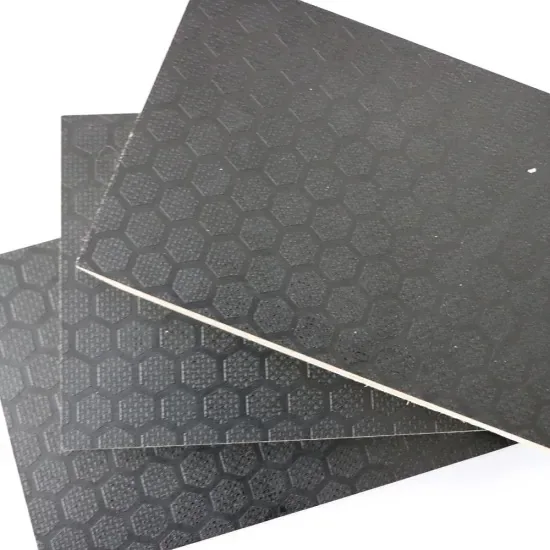
Mesh-pattern plywood Hexagonal-pattern plywood
Choose the working face and plywood core together
Choose the contact surface for grip and wear, then choose the plywood construction for the supported floor. Compare the overlay and core together when reviewing samples. During service, inspect both: surface wear and panel condition can develop at different rates.
Identify the working face and the required reverse: smooth film, another patterned surface or a specified alternative. State the core construction and finished thickness independently of the surface pattern. A high ply count does not replace documented panel properties.
Match the texture to people, wheels and cleaning
| Location | Information to collect | Key distinction |
|---|---|---|
| Pedestrian platform or walkway | Footwear, wetting, dust, direction of travel and cleaning method | Pedestrian slip assessment is separate from the structure's load design |
| Vehicle or trailer floor | Wheel loads, wheel contact areas, turning routes, supports and tie-down details | Surface abrasion results do not establish rolling-load capacity |
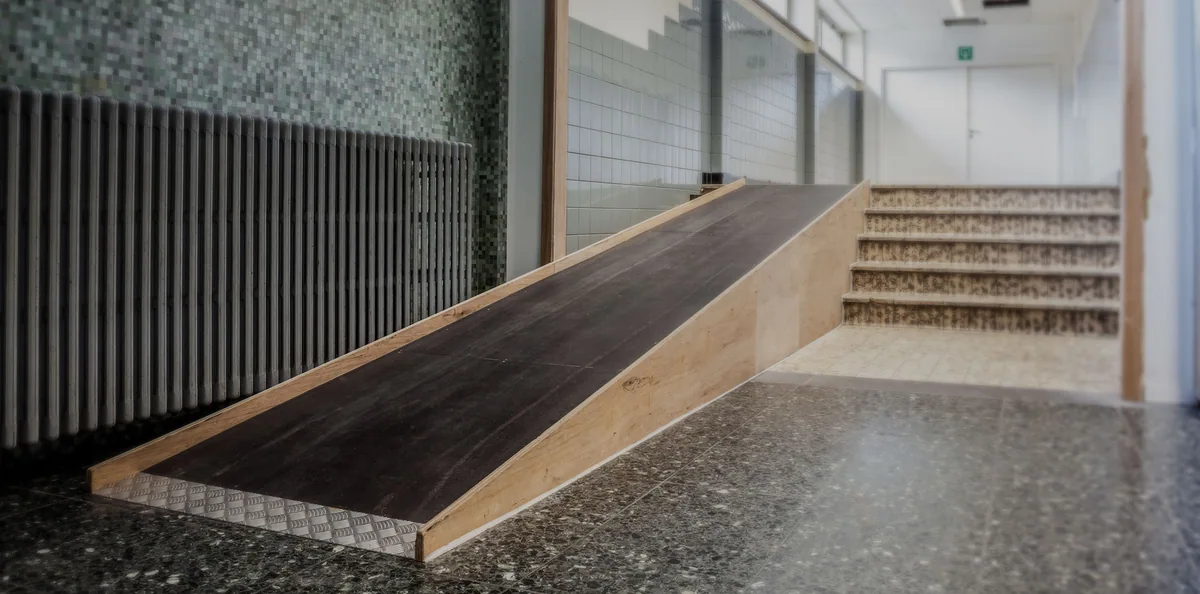
| Loading ramp | Gradient, travel direction, wheels or footwear, contamination and restraint | A level-floor result does not by itself qualify the complete ramp |
| Stage or removable deck | Repeated assembly, joints, point loads, handling damage and the intended users | The surface, panel connections and supporting structure need compatible specifications |
A clean workshop aisle and a wet loading bay should not share an unspecified slip claim. Record the likely contaminants, including water, grit, oil or residues from cleaning, and discuss representative testing with a competent assessor.
Read the conditions behind a slip-test result
HSE's guidance on assessing floor slip resistance explains the importance of the test method, surface conditions and competent interpretation. For profiled surfaces, direction and the contact material used in testing can affect the assessment.
Request a report identifying the exact surface product, method, dry or contaminated condition, test direction, contact material and result. Check whether the sample was new, worn or otherwise conditioned. A bare numerical rating without these details is incomplete.
Do not convert a dry-friction result into a wet-use promise or treat different rating systems as equivalent. A result measured on another supplier's coated surface cannot be assigned to our mesh or hexagonal panel because the photographs look similar. Define the required test for the offered construction.
Specify wheel loading using the actual support layout
For vehicle floors, obtain the loading-equipment details rather than only the total vehicle or cargo mass. Wheel size, contact area, load distribution, direction of travel and turning locations help describe what the floor must resist. The relevant designer must determine the design loading.
Match floor load information to the actual panel construction, direction, supports and contact conditions. A capacity table for another assembly does not establish the capacity of the same nominal thickness.
Mark support positions and panel direction on the drawing. Identify supported joints, access openings and narrow infill pieces. A replacement that matches the old sheet's thickness may still differ in stiffness or connection behaviour.
Protect the complete fabricated component
Factory edge treatment protects the supplied perimeter. Cutting, drilling or routing creates new exposed locations that need the specified protection. Include holes for fixings and tie-down fittings in the machining and sealing schedule.
Use the panel and vehicle or platform system's instructions for edge sealing, joints and fastening. A sealed edge does not make a permanently wet core immune to deterioration. Detail drainage and prevent water traps around trims and hardware.
Check fixing heads and joint transitions against the working surface. Raised heads can interfere with wheels or create a trip point; deep recesses can damage the panel face or collect water. The correct detail depends on the specified fastening system, not on a generic instruction to drive every screw deeper.
Keep wear and chemical resistance as separate checks
When comparing abrasion reports, identify the method, load, abrasive and endpoint. A test counting cycles until a surface changes is not directly comparable with one measuring material loss. Neither result gives a guaranteed number of years in a loading bay.
Record what will slide, roll or turn on the panel. A small hard wheel turning repeatedly in one location can create a different wear pattern from pedestrian traffic distributed over a wide area. Inspect that location during a representative service trial.
For chemical exposure, name the substance, concentration, temperature and contact duration. “Chemical-resistant” is not permission to use any cleaner or leave any spill unattended. Include edge sealers, joint materials and fastenings in the compatibility review.
Maintain grip by controlling contamination and wear
HSE identifies contamination and cleaning practices as important contributors to slip risk. A textured surface can still be unsuitable when its contact areas are obscured by material or when cleaning leaves a residue.
Choose a cleaning method that removes the actual contamination without damaging the overlay, edge protection or joints. Check the condition after cleaning and before returning the area to use. Do not promise that every film-faced panel tolerates unrestricted pressure washing.
Record changes at traffic routes, joints and loading points: worn texture, peeling overlay, exposed wood, swollen edges, movement or loose fasteners. Define withdrawal or repair criteria for the application. A surface assessment may need repeating after significant wear or a change in service conditions.
Start with your floor use or layout
Start with a floor photo, layout or description of the traffic. We can help choose a face pattern and panel construction, then settle the reverse, dimensions, machining and edge treatment. Add quantity, destination, support information and required tests when available. Our enquiry form keeps these requirements connected to the panel offer.
Compare our mesh-pattern plywood and hexagonal-pattern plywood by the agreed specification. At receipt, inspect pattern consistency, surface damage, dimensions, cut-edge protection and pack identification before fabrication or installation.
Anti-slip plywood buying questions
Can I start with a photograph of the existing floor?
Yes. Include what travels over it and whether it gets wet or dirty. That helps us shortlist a face and core before developing the cutting and support details.
What should an anti-slip sample include?
Compare the intended working face, reverse and a treated cut edge. Use the agreed surface test and floor design requirements alongside this material sample.