
Use ply count to describe a formwork panel, then choose its full veneer construction for the job. Veneer thickness, direction, core species and bonding work together with the facing and finished dimensions. PanelSource helps compare constructions and cut-section samples against your formwork drawing and panel requirements.
Start with film faced shuttering plywood and discuss poplar, birch or mixed-wood core construction for the required properties. Where the drawing specifies 18mm and black film, use 18mm black film faced plywood as the product starting point. Keep the designer’s property and direction requirements with any proposed layup comparison.
Identify the veneers included in the ply count
A ply normally means an individual veneer sheet. A layer description can instead group adjacent veneers with the same grain direction. The film on a concrete-contact face is an overlay, not another structural wood veneer.
The US Forest Service Wood Handbook distinguishes individual plies from grain-oriented layers and describes four-ply, three-layer construction. An even number of veneer sheets is therefore not automatic evidence of an incorrectly made panel.
Use a face-to-back construction description alongside the cut-section sample. Define whether the stated count covers individual veneers, grouped layers or any other element so both quotations describe the panel on the same basis.
Do not translate three-layer solid-wood formwork sheets into three-ply veneer plywood. They are different products even though both may be described loosely as three-layer boards.
Compare veneer thickness and finished panel dimensions
At the same overall panel thickness, increasing the number of veneers generally means changing individual veneer thicknesses or other parts of the build-up. Counting visible lines does not reveal how much wood is present in each direction.
For illustration, two nominal 18 mm panels described as nine-ply and eleven-ply cannot be ranked simply by dividing 18 by their respective counts. The veneers need not all have equal thickness, and pressing, sanding and the surface build-up affect the finished dimension.
Ask whether the supplied construction uses relatively thick internal veneers, thinner outer veneers or another specified arrangement. Compare the actual finished thickness and tolerance separately; an extra ply does not compensate for a panel outside the required dimension.
If a customer drawing requires a particular layup, record it as a controlled construction. If the real requirement is a performance property, avoid making a familiar ply count its only acceptance criterion.
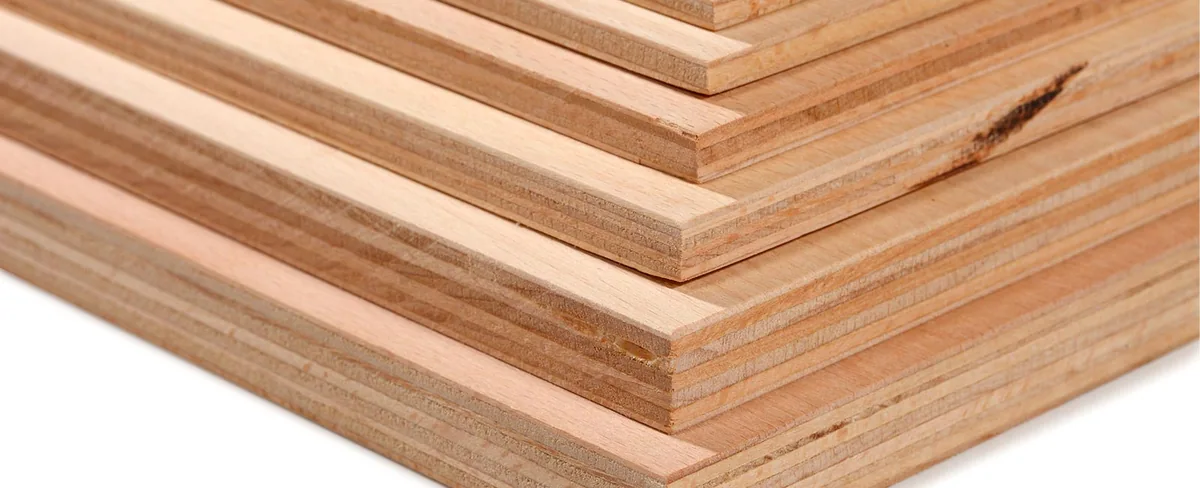
Choose the layup for the required working direction
Cross-lamination improves dimensional stability relative to the source veneers, but it does not make all panel directions mechanically identical. The distribution of veneer directions and their positions through the thickness affects the finished panel.
BS EN 14272 addresses calculation of plywood mechanical properties from its constituent layers. This is a construction-based approach, not a rule that a higher ply count always means greater bending performance.
For a formwork part, identify the required panel direction relative to its supports. If a film hides the face grain, obtain the direction from the product information and retain it on the cutting drawing.
Do not rotate a direction-sensitive part solely to improve cutting yield without checking the design. A nominally identical rectangular piece can behave differently when its panel direction is changed.
Specify core species and continuity
A face species does not necessarily describe every internal veneer. Clarify whether a quotation means birch throughout, a mixed hardwood core, poplar core or another defined construction. Keep that description attached to the ply count.
Record the required core quality and how it will be assessed. Gaps, overlaps, repairs and local veneer damage are separate from the number of sheets in the layup. More layers do not automatically remove these features.
| Specification item | Information still needed |
|---|---|
| Finished dimensions | Thickness, size and the applicable tolerances |
| Wood construction | Face and core species, veneer arrangement and any controlled layup |
| Core condition | Specified defect limits and the inspection or test basis |
| Mechanical performance | Relevant properties by panel direction and service condition |
| Bond and surface | Required bonding evidence, overlay and edge treatment |
Review a representative exposed edge alongside the written construction. Use the agreed sampling and inspection criteria to assess the order; a small section is useful for comparison while the wider checks establish the supplied quality.
Check bonding and facing alongside the veneer layout
Additional veneers introduce additional interfaces, but the count does not prove whether those interfaces were bonded adequately. Ask for the bonding requirement and relevant evidence for the quoted construction.
Likewise, a film-weight figure describes a surface specification on a stated basis. It does not establish core integrity, directional stiffness or the condition of machined edges. Compare those requirements independently.
APA's concrete-forming guidance considers panel selection and framing in relation to the design conditions. It does not select formwork capacity by ply count alone. Use the applicable properties and design basis for the actual panel, without transferring APA product classifications to an unrelated construction.
Our test-report review guide explains how to connect bond, bending and surface evidence to a quotation line.
Compare construction changes on a consistent basis
If a proposed replacement changes the ply count, list what else changes: veneer species, thickness distribution, total panel thickness, bonding system, overlay and direction. The count may be only the most visible difference.
Compare the properties required by the formwork design under a consistent basis. A test on a thicker panel or in a different direction cannot resolve the change merely because its result is higher.
Also compare machining and face behaviour where they matter to the job. A new construction may cut or fasten differently, and a successful fit in the existing frame does not establish all required performance.
Use a representative sample to check the relevant component details. Keep any structural acceptance separate from appearance and handling observations so the decision remains clear.
Keep the approved construction identifiable at delivery
Connect the order code, pack identification and relevant product information. If several constructions have the same colour and thickness, label them so the receiving and cutting teams can distinguish them.
Check the agreed construction indicators as part of the receiving plan. When a count appears different, confirm whether it is an interpretation issue or a real change before material is mixed across the project.
Retain the sample or cut-section reference associated with the order where useful. It supports identification, but it should accompany the written specification rather than replace it.
Bring your panel requirement into the comparison
Start with the required thickness, component use and any specified layup. Share the formwork drawing and panel-property requirements when available; we help compare the construction, facing and supplied dimensions for your order.
We can discuss our film faced plywood constructions against that information and confirm the proposed panel description. For cut parts, include the required direction and finished dimensions.
Send us your formwork plywood specification. The useful comparison connects the veneer construction to the intended work instead of treating the layer number as a stand-alone quality grade.
Choosing plywood core and layup
Can you compare constructions with different ply counts?
Yes. Share the required panel properties and any mandatory layup. Compare veneer species, thickness distribution, bond, facing and relevant direction together with the count.
What does a cut-section sample help me choose?
It makes the visible veneer arrangement, thickness and machining detail easier to discuss. Keep it linked to the written construction and required evidence for the order.