
MDF stands for medium-density fibreboard: an engineered wood panel made from refined wood fibres and binder, pressed and sanded into a smooth board. Buyers use it for painted cabinet doors, routed mouldings, melamine furniture and veneered interior panels. Its fine fibre structure gives designers a useful starting point for a clean face, shaped edge and consistent decorative finish.
You may also hear MDF called density board. In a furniture enquiry, that name can refer to raw sheets, decorated sheets or a machined component. Start with what you want to make and the finish you want to see. We manufacture MDF substrates in our own factory in Jiangsu, China, and help develop the grade, surface and processing around your order.
Plain MDF sheets Melamine MDF Veneered MDF Custom-size MDF parts
How MDF is made and why the edge matters
Wood is reduced to chips, softened and refined into fibres. These are blended with binder, formed into a mat and hot pressed. The board is then conditioned, trimmed and sanded. The European Panel Federation’s manufacturing description explains this sequence and notes that binder systems vary by product grade.
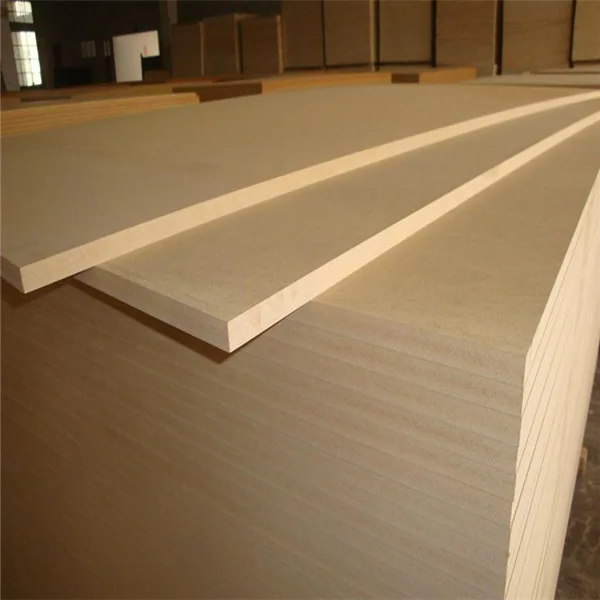
Refining and pressing give MDF its fine texture. The face and core can have different density profiles, which matters when your workshop cuts or routes the board. A sanded face and a newly exposed edge can absorb a coating differently, so the edge preparation belongs in the finishing plan.
For a cabinet door, send the profile and intended paint finish along with the nominal thickness. For a faced furniture part, include the edge band, drilling and any exposed MDF after machining. This lets the material choice follow the finished component.
Wood input can include forest and sawmill sources. If sourcing is part of your purchase requirement, include the requested claim and traceability records with the enquiry. Binder choice, manufacturing energy and cutting yield also contribute to a wider environmental assessment.
MDF, plywood and particleboard: choose by the part
The difference starts inside the board. MDF has a fine fibre structure, plywood has bonded veneer layers, and particleboard has visible wood particles. A decorative surface can make them look similar from the front; an exposed cut edge helps identify the construction.
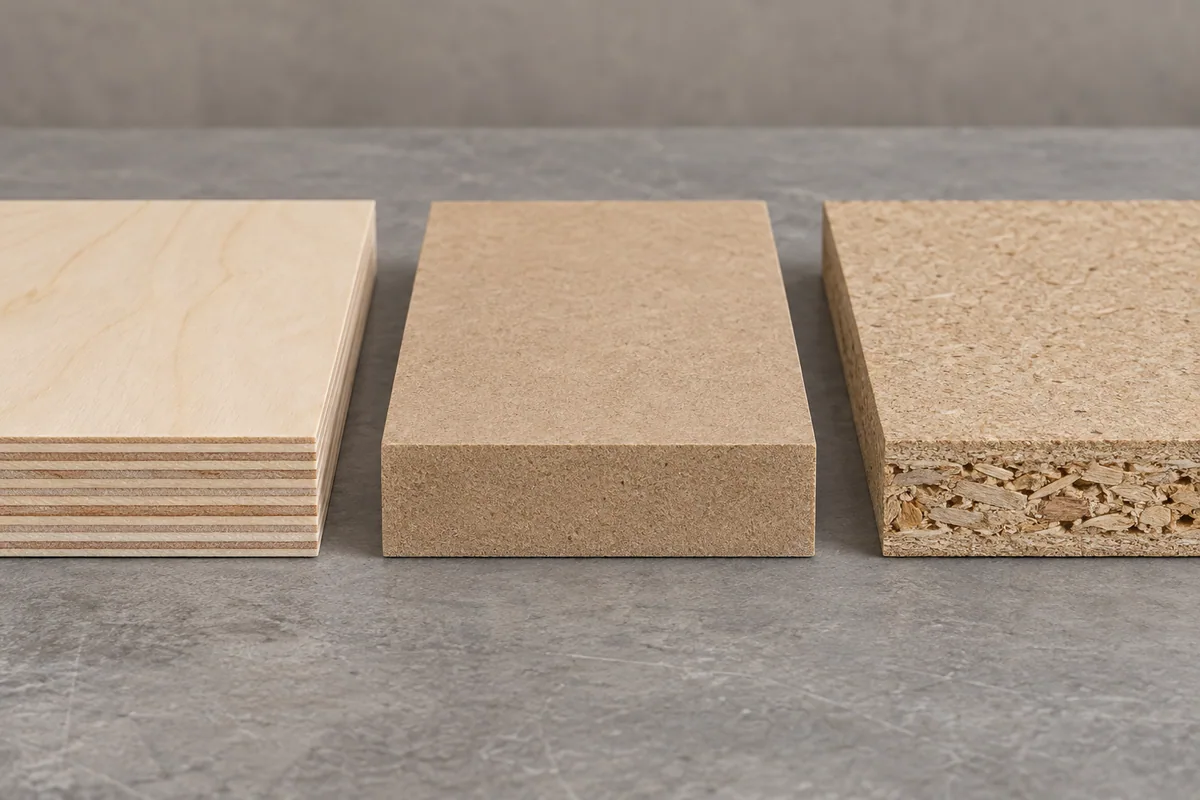
| Material | Construction | Useful design question |
|---|---|---|
| MDF | Refined wood fibres consolidated into a panel | Will the face or a routed edge be painted or laminated? |
| Plywood | Wood veneers bonded in a layered layup | Which veneer grade, core and bond class does the drawing require? |
| Particleboard | Discrete wood particles bonded into a panel | Will the design use flat laminated parts, and what edge and fixing details are needed? |
For painted profiles, compare the routed edge and finished surface. For loaded shelves or panels, compare the selected grades, thicknesses, spans and supports using the relevant product properties. The material name alone is not a complete load or fixing specification.
Use our MDF versus plywood guide for a project comparison, or the three-board construction guide to compare core types. An edge view is a useful first clue; grade, moisture performance and emissions come from the identified product and its documents.
Why use MDF? Benefits and design considerations
- A smooth starting face: useful for painting, laminating and veneering when the selected preparation and finish suit the board.
- Fine detail without a visible wood-grain direction: useful for routed door profiles, mouldings and decorative grooves. Review the deepest cut and exposed edge on a finished sample.
- A choice of supplied stages: buy sheets for your own line, prepared blanks or components with the agreed machining and surface already included.
- Material choices for different jobs: select the MDF grade, thickness and finish for the room, handling, fittings and service conditions.
Plan around the parts that need more attention: absorbent cut edges, holes close to an edge, long unsupported spans, moisture exposure and the weight of the completed component. Those details help decide the grade, support and processing your order needs. A finished-part sample makes the choice easier than comparing sheet faces alone.
Where MDF works in furniture and interiors
Painted doors, routed profiles and mouldings
MDF’s fine surface can reduce visible grain pattern under paint. Routed edges need their own preparation, sealer and topcoat review. The European Panel Federation’s finishing guidance explains why faces and edges may need different preparation. For a new door range, review the profile after the intended finishing process and check the hardware detail on the same part.
Decorated furniture and cabinetry
Melamine MDF supplies a decorative surface for cutting and edging; veneered MDF gives a natural wood face with its own matching and finishing requirements. Choose the reverse and finished edge as well as the visible front. A white or woodgrain face describes the decor, while the substrate grade is a separate selection.
Wall panels, shelves and shaped interior parts
For a shelf, include the span, support positions, expected load and finish. For a wall panel, show the support, fixing method and movement detail. For curves, joined edges or functional grooves, send the drawing that controls the finished shape and connection.
The raw and custom-size MDF range brings these component routes together. For more application ideas, see how MDF is used; keep the final product choice tied to the part your workshop will receive.
Choose the MDF grade and decorative surface separately
Start with the use environment, then choose the surface. A moisture-related grade addresses the board’s intended service; melamine, veneer, paint or another facing addresses the finished appearance and processing. Specify both in the order.
| Buyer requirement | Where to start | Bring into the component brief |
|---|---|---|
| Dry interior furniture | Plain MDF | Thickness, machining, fittings, finish and support |
| Waterproof furniture or humid rooms | Moisture-resistant MDF | Humidity, splashes, cleaning, exposed edges and joint protection |
| Outdoor exposure | Exterior MDF | Weather exposure, coating, drainage, cut edges and installed construction |
| A fireproof project brief | Fire-retardant MDF | Required fire classification, thickness, finish and assembly |
| A ready-decorated face | Melamine, veneer or another selected surface | Substrate grade, decor, reverse, edges and supplied processing |
The European Panel Federation distinguishes MDF.H for general humid conditions, MDF.HLS for load-bearing humid conditions and exterior MDF as separate grades. Use the selected product designation and the actual service requirements when comparing proposals.
For a kitchen door near a sink, include splashes, cleaning water and hardware holes. For a bathroom vanity, show where water can collect and how edges and joints will be protected. Direct shower exposure, prolonged wetting or outdoor weather require a board and complete protective system selected for that exposure. Tell us the waterproof result you need and we will help develop the construction around it.
Our MDF type-selection guide explains the wider choices. The MDF moisture guide distinguishes moisture content from water-immersion testing when reviewing technical data.
Choose the emission requirement and plan workshop extraction
For indoor furniture and interiors, give us the destination market and the emission requirement in your purchase brief. Review the declared result with its test method, units, specimen and product identity. Connect the requested documents to the proposed grade, thickness and supplied surface.
The emissions requirement and the workshop’s machining controls answer different questions. Cutting and sanding MDF produce fine dust. Plan effective extraction at the machine and follow the workshop’s safety requirements. The UK Health and Safety Executive’s woodworking guidance calls for effective dust extraction when machining or sanding MDF.
Keep the finish, edge adhesive and any later processing in the supplied-product brief. The selected coating defines the surface your customer sees; the matching panel or component documents support the declared emission requirement.
Turn a door or furniture idea into a useful MDF sample
A door photograph, profile sketch or finish reference is enough to start the conversation. We help turn it into the MDF grade, thickness, cutting or routing detail and supplied surface. Add hinges, handles, room conditions, quantities and destination as the design develops.
- Start with the difficult detail. Include the deepest recess, exposed edge, fixing zone or visible joint that controls the part.
- Use the intended finishing route. Review the face, routed edge, sealer, paint or facing together, including any edge band or reverse treatment.
- Check the finished fit. Record dimensions at the stage the part will be assembled, with holes, profiles, edges and hardware included.
- Retain the reference. Keep the selected board identity, drawing revision and completed appearance with the sample and order.
Keep an uncoated offcut beside the finished component where it helps the workshop compare the underlying board and surface treatment. Review edge porosity, chipping, surface uniformity and flatness with the actual profile and finish. Choose whether you want raw sheets, cut blanks or machined MDF parts supplied for the next stage of your production line.
Find the reports for the MDF you plan to buy
Our report library includes an 18mm MDF formaldehyde emission report and an HMR MDF formaldehyde emission report. The first identifies an 18mm board described in the report as white MDF; the HMR document identifies its own board configuration. Use the report’s specimen description alongside the MDF you intend to order.
Browse the panel test-report library, then send the grade, thickness, finish and destination requirement. We help select the relevant records for the proposed supply, including any additional requirement for a finished component or installed assembly.
- Material selection: board identity, grade, thickness and required test method.
- Finished component: drawing, machining, facing, edge and supplied coating stage.
- Order and shipment: accepted sample, batch or pack reference, quantities and receiving checks.
The buyer document checklist and production and inspection records help purchasing and the workshop use the same configuration. Keep the report with its actual material or assembly scope when changing a grade, surface or application.
Turn the selected MDF into a clear factory order
A familiar trade name is a useful starting point. Add the core, surface and supplied work so the quotation describes the same part as your drawing and sample.
| Description received | What it identifies | What to add for the order |
|---|---|---|
| Density board | The board family the buyer has in mind | MDF product grade, dimensions and supplied surface |
| High-density board | A density-related material requirement | Actual MDF or HDF product designation and required properties |
| White board | The desired appearance | Core, white decor or coating, reverse and finished edge |
| Oak MDF | An oak appearance or facing requirement | Natural veneer, printed decor or another selected finish |
| Moisture-proof board | The moisture performance needed for the job | Room exposure, board grade, finish and edge or joint protection |
A complete description identifies the core grade, thickness, both faces, finished dimensions, machining, quantity and required documents. For a white melamine furniture part, include the chosen white decor on each face, edge treatment, part drawing and agreed finished-thickness reference. For a painted door, include the raw MDF grade, profile and supplied preparation stage.
Use the cut-list guidance for part sizes and quantities. Keep the drawing revision, sample reference and included operations in the order specification. The sample and order process connects that selected detail to the production run.
MDF is available to order with a 10–15 day production cycle. We arrange container shipping and protective packing for sheets or processed parts; freight terms are agreed for the order and sea transit is separate from production. Supply includes a 180-day warranty, with any return or replacement solution and related freight agreed for the specific order and issue.
Common MDF buying questions
Is MDF real wood?
MDF is a wood-based engineered panel made from refined wood fibres and binder. It is different from solid timber and from plywood made with veneer layers. Choose it by the finished part, machining and service requirements.
Is MDF the same as particleboard?
MDF uses refined wood fibres; particleboard uses discrete wood particles. The different core textures affect the machining, fixing and finishing route. A decorative facing can make their fronts look similar.
Can MDF be painted?
Yes. Select the preparation, sealer and coating for the chosen board, with special attention to routed profiles and cut edges. Review a finished component to settle the colour, surface and fit.
Is moisture-resistant MDF waterproof?
Moisture-resistant MDF is a starting point for humid-interior and waterproof furniture requirements. Choose the grade, finish, edges and joints for the actual exposure. Direct shower wetting, prolonged water contact or outdoor use need a construction selected for those conditions.
Does the colour of the core prove its grade?
Core colour can help identify or design a panel, but the grade comes from the identified product and its documents. Keep the board reference with the sample, quotation and order.
Is MDF better than plywood for furniture?
It depends on the part. Compare routed or painted surfaces, visible edges, fittings, support, loading and moisture exposure. Use the selected grades and finished component when comparing cost and performance.
Can MDF be supplied cut, routed or faced?
Yes. We supply sheets or agreed processed parts with cutting, routing, decorative facing and other specified work. Send the part list and finish so the quotation identifies the operations your workshop will receive.
Which MDF report should I request?
Request the report for the proposed grade, thickness and supplied surface, using the test method and destination requirement in your purchase brief. The 18mm MDF and HMR MDF entries in our library identify different configurations; our team helps match the records to the order.