
Film faced plywood can serve transport floors, workshop surfaces, protective linings and other components when its face and core are selected for that use. Start with what you are making and what touches the surface. PanelSource manufactures plywood and MDF, helping you choose between smooth film, textured film, MDO and other finishes around the finished part.
A vehicle-floor photo, worktop sketch or exterior-panel reference gives us a useful starting point. We help develop the surface, dimensions and processing, then arrange a sample that shows the detail you need to assess.
Choose a surface route for your component
| Your requirement | Where to start | What to choose together |
|---|---|---|
| Vehicle floors and industrial access panels | Mesh pattern anti-slip plywood | Start with the required texture, traffic, support and finished floor details. |
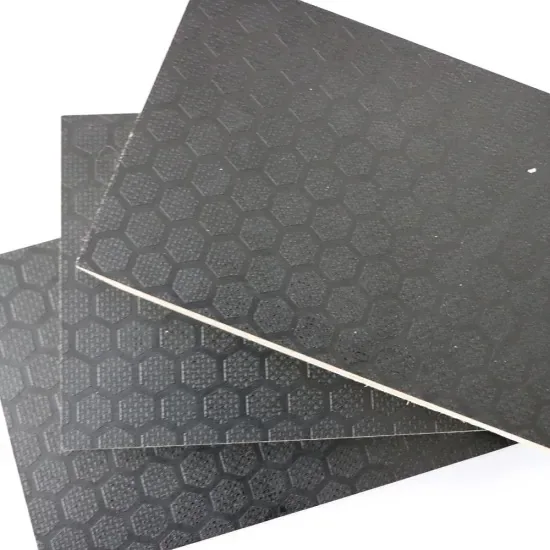
| Visible textured floors and display platforms | Hexagrip plywood | Compare the hexagonal working face, joint appearance and component outline. |
| Smooth protective linings and workshop parts | Brown film faced plywood | Match the smooth face to contact, cleaning, edge and fixing conditions. |
| Painted signs, trim and exterior accent panels | One-sided MDO plywood | Choose the paint-grade face, reverse protection and finishing scope together. |
Choose around what contacts the surface
List what the panel will touch: concrete, footwear, pallet-truck wheels, furniture hardware, cleaning fluids or outdoor weather. Describe how often the contact occurs and what failure would look like. A surface that releases concrete easily may be unsuitable where reliable traction is essential.
Separate the surface function from the structural function. A wear-resistant face does not determine the span capacity of a floor, and a strong core does not establish chemical resistance. Both may matter, but they need different information.
| Application | Requirement beyond a generic film-faced label |
|---|---|
| Vehicle or industrial floor | Wheel loads, support details, wear and relevant friction evidence |
| Workshop or laboratory worktop | Named chemicals, contact conditions, heat and edge-joint details |
| Interior furniture or lining | Appearance, machining, finish compatibility and applicable emissions or fire evidence |
| Exterior component | Weather exposure, water management, fixing and coating maintenance |
| Temporary protection panel | Traffic, support, surface condition and compatibility with the protected finish |
Use these application details to choose the surface and construction with our team, then carry the selected combination into the sample and quotation.
Specify a floor for the actual traffic and support
Distinguish foot traffic from static storage and repeated rolling loads. For wheels, describe the load, wheel material, contact area and route, including turns and joints. The total vehicle or trolley mass alone does not fully describe how it loads the panel.
Provide the support spacing, panel orientation, edge support, joints and fastener detail for the responsible designer. A floor replacement may need to fit an existing frame, so the actual finished thickness and rebate geometry matter alongside strength and stiffness.
Choose the textured surface with its intended contact conditions: water, oil, cleaning and wear can change the result. Our anti-slip plywood guide connects surface tests, wheel loads and the installed floor so the relevant evidence follows your application.
Name chemicals and contact conditions for worktops
A workshop assembly bench, school worktop and laboratory bench do not have the same exposure. Provide the substances, concentrations, temperatures and contact durations, including the cleaning method. An occasional wiped spill is different from prolonged contact around a sink or tray.
Define the required outcome after exposure: acceptable appearance, no unacceptable softening, cleanability or another project criterion. A general statement that a surface resists chemicals does not identify which conditions were evaluated.
Assess edges, joints, sinks and drilled openings as well as the broad face. A surface test on an intact specimen does not automatically cover fluid entry through a machined joint. Direct food-contact use also needs its own applicable evidence; easy cleaning is not a substitute.
Choose the complete interior component
For furniture, identify the visible faces, edge treatment, hardware and expected finish. A utilitarian concrete-forming overlay may not offer the appearance, bonding surface or machining detail required for a cabinet or decorative panel.
If a paint, laminate or adhesive will be applied, trial its compatibility with the actual surface and any release-agent history. Use the planned preparation and bonding method on the sample, including a cut edge or joint, to establish the finishing route for the component.
Where an interior project specifies emissions or fire performance, connect the documents to the complete proposed construction and relevant application. A film colour, resin name or added decorative layer does not establish those results.
We can also discuss our decorative plywood and MDF families where they better match the required component. Starting from the application avoids forcing a formwork surface into a furniture detail simply because a sheet is available.
Plan the exterior component and finish
Record whether the panel is sheltered, intermittently wet or permanently exposed, and whether it carries load. Detail water shedding, exposed edges, joints, fixings and any cavity behind the panel. The coating must work with that design and the intended maintenance.
BS EN 636 addresses plywood specifications for defined service conditions and uses. It does not make an unspecified film-faced sheet a complete exterior cladding system. Confirm the required product classification and the separate assembly requirements.
For a painted sign or trim, choose a surface intended for that finish and include the required colour, weather exposure and maintenance. Our paint-grade MDO guide develops that route, including coating preparation and exposed boundaries.
For a boat component, specify the marine construction and evidence required by its own design, together with the face and edge protection. Bond performance remains one part of that complete component choice.
Plan temporary protection for the surface below
If panels protect a finished floor or form a temporary working surface, identify the traffic and what supports them. A panel used to bridge a gap takes on a different structural duty from one lying continuously on a sound substrate.
Consider trapped grit, moisture, coatings and release-agent residue against the surface being protected. Protecting the panel itself is not the only objective: dragging it over a finish or trapping contamination beneath it can damage the work below.
Plan the edges and transitions so the installation does not create an unintended trip or movement point. Use an appropriate designed arrangement where loading or bridging is involved. Calling the use temporary does not establish that any available offcut is suitable.
Reassess used formwork before assigning a new duty
A recovered shuttering panel may contain hidden fasteners, enlarged holes, damaged edges, repairs or residues from concrete and release agents. Identify that history before cutting it or assigning it to an interior or contact-sensitive use.
Inspect and document the actual condition against the new task. Previous success containing concrete does not demonstrate the remaining capacity of a new floor arrangement or the suitability of its surface for food, chemicals or decorative finishing.
Where the new application requires evidence that cannot be established for the recovered material, specify a suitable identifiable product instead. Reuse can be useful, but the next duty must be defined independently of the wish to avoid waste.
Bring your component into the quotation
Start with a photograph or sketch of the component and tell us where it will work. As the order develops, add dimensions, supports, exposure, contact conditions, quantity and destination. We help identify the critical surface requirements and the machining, bonding or coating needed before installation.
We manufacture film faced plywood and other plywood and MDF constructions. We help select the panel, confirm relevant product information and plan the supplied finish for the component you need.
Discuss your panel application with us. A sample showing the working surface, edges and fixing detail brings the material choice and factory quote together.
Film faced plywood components buying questions
Which film faced plywood should I consider for a vehicle floor?
Start with a textured flooring route such as mesh or Hexagrip, then match the construction to traffic, loads, supports, joints and wetting. The relevant surface information and panel properties belong with the specific floor detail.
Can I use film faced plywood for a workshop worktop?
It can be considered for the defined worktop duty. Describe the materials, cleaning agents, heat and contact time, and include edges and openings in the sample review. Chemical or food contact brings its own compatibility and document requirements.
What if I want a painted exterior panel?
Consider paint-grade MDO alongside the desired finish and exposure. We help select the visible face, reverse, cut boundaries and supplied processing; the coating and installation details complete the component.