
Choose the wood face you like, then match the core and factory work to the part you are making. Start with a furniture photo, grain reference or room idea. We help plan the matching doors, visible edges, finish and fittings, using a section or machined sample where it matters. Our factory manufactures plywood and MDF substrates and decorative facings. Veneer-core plywood uses bonded wood layers, usually with changing grain directions, while its decorative face can be a different species.
Decorative plywood faces Veneered MDF Custom sizes and machining
Choose a veneer core for the part you are making
Veneer core identifies the bonded wood layers inside the panel. Choose their material and construction alongside the face quality and intended use. “Oak plywood,” for example, may describe an oak face over a different veneer core.
Decorative panels can use all-veneer, MDF, particleboard or combination cores. Read the construction description in the quotation rather than assuming every decorative wood face covers an all-veneer panel.
Choose thin plywood or a separate veneer surface
A request for thin plywood veneer can mean a thin plywood panel or separate veneer for bonding. Identify the delivered material, thickness and dimensions. For a faced panel, state the decorative veneer thickness separately from the complete panel and core.
For a thin insert or bonded furniture skin, show the receiving frame or backing and the intended fixing or bonding process. Include the bare and finished fit, edge detail and any design or exposure requirement. Our 3mm birch panel guide describes one thin-panel option; its thickness is not a recommendation for every component. Use the thin-panel sample plan to define the fit and appearance your workshop needs to approve.
Bring the face, inner layers and back together
| Part of the panel | What to specify | Practical consequence |
|---|---|---|
| Face veneer | Species, cut, appearance and supplied surface condition | Controls the visible grain and finishing work |
| Crossband beneath the face | Construction and acceptable joints or defects | Can affect surface support and defect show-through |
| Inner plies | Species or mixture and construction for each thickness | Relevant to weight, machining and panel performance |
| Back veneer | Appearance requirement and balancing construction | Relevant when both faces are visible or differently finished |
| Bond lines | Required bonding performance and evidence | Connects the construction with intended exposure |
| Finished panel | Dimensions, tolerances, flatness and use requirements | Defines the material delivered to the workshop |
Layer count is useful identification, but not a stand-alone quality score. Two panels with the same number of plies can have different veneer thicknesses, species and inner defects. Request the layup for the thickness you actually intend to order.
Compare poplar, birch and mixed-core options
An all-poplar or all-birch description should identify what it covers, including whether the decorative face is excluded. If the panel uses a mixed core, ask which species or construction is proposed and whether that specification will be consistent across the order.
Species selection can influence weight and machining, but the full construction controls the comparison. Do not substitute a generic solid-wood density for the supplied panel's measured mass. Keep the agreed birch content and layer description in the construction record.
For a cabinet with exposed edges, core appearance may be a visible design requirement. For a cabinet with covered edges, the same visual requirement may add little value, while fastener engagement and machining quality still matter. Our birch and poplar comparison explores those trade-offs.
Choose the combi construction around your component
Choose a combi core by its actual layers. The term can describe mixed-species veneers or veneer inner plies with fibreboard crossbands. Record the selected layup so the quotation, sample and production order identify the same construction.
For a mixed-species veneer core, record the species, positions, veneer thicknesses and grain directions. For a veneer-and-fibreboard combination, identify the MDF or HDF crossband material and thickness as well as the veneer interior. Request the actual layer sequence for each ordered thickness, with face and back named separately. If a species percentage is stated, record whether it is based on ply count, thickness, volume or another agreed basis and whether the face and back are included. The percentage alone does not locate the material within the panel.
Choose the decorative grain, colour and finish
Choose the face for its grain, colour range, permitted repairs and planned coating. Choose the core for the component's construction and use. Keeping these decisions separate makes it easier to compare two quotations with the same visible species.
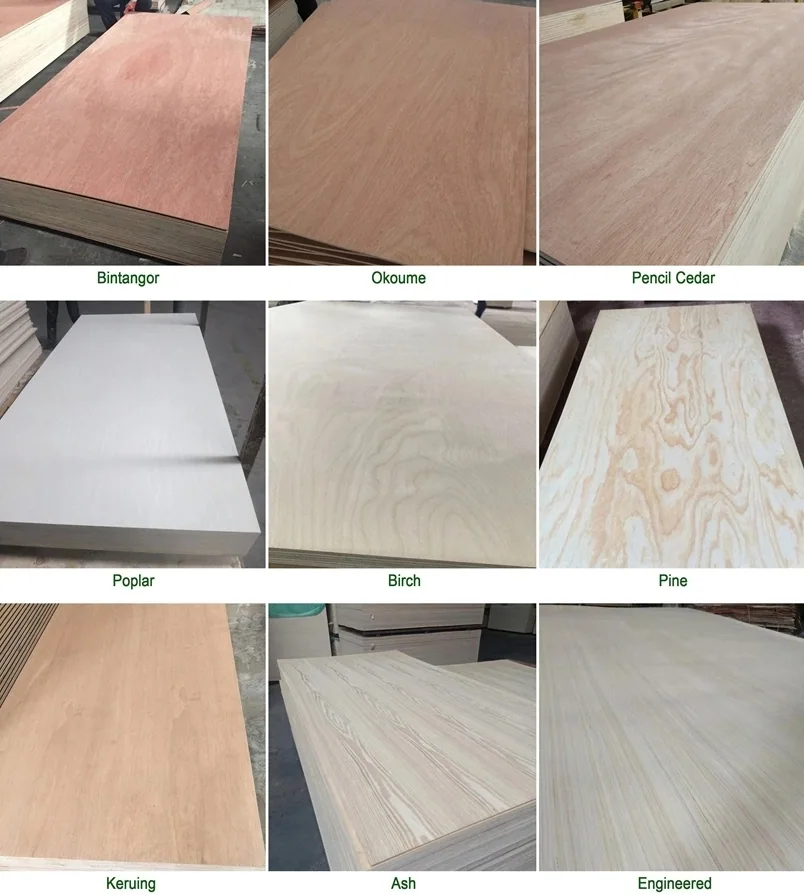
A thin decorative veneer also sets limits on sanding and later refinishing. Ask about the face supplied and the intended preparation. It is not equivalent to a thick solid-wood wear layer merely because the surface is real wood.
For wood veneer plywood used on adjoining doors or wall panels, specify how veneer leaves join within each face and how the panels relate across the set. Mark grain direction, show face and panel sequence on the drawing, then approve representative samples through the intended finish. A small species swatch does not show full-panel joins or the appearance of adjacent pieces. Our veneer matching guide connects those choices to the finished layout.
Plan a smooth surface beneath the finish
A line or depression visible under a finish may relate to a veneer joint, local void, overlap or another substrate irregularity. More sanding is not always the answer: removing face material can make the problem harder to correct.
For high-gloss or thin decorative finishes, discuss the surface requirement early and inspect a finished trial. For a routed part, also inspect the newly exposed section. A smooth face cannot reveal every internal feature that machining may encounter.
Choose the core and bond for the intended use
Poplar is not automatically suitable for humid service, and birch is not automatically a marine panel. Establish the intended exposure and the required bonding classification. EN 314-2 defines bonding-quality requirements within its classification system; it does not make a species name a performance class.
Where a panel carries a specified load, obtain properties appropriate to the construction and design. Decorative appearance grading does not supply a shelf load rating or make a panel suitable for structural flooring. The same face can be used on panels intended for quite different purposes.
Review a cut edge or machined sample
A cleanly cut section helps check ply count, veneer arrangement and visible gaps at that location. Use representative sampling to assess the delivery. Define the inspection or sampling approach and the agreed limits for the actual application.
For a deep routed pocket, inspect a representative machined part. For a screw connection, trial the intended fitting and engagement. For a visible edge, review it after the planned edge finishing. These checks answer different questions and should not be replaced by one attractive sample photograph.
Request the sample that reflects your workshop work
Visible edge or deep machining
Approve a cut section and a part machined to the intended depth, with the planned edge treatment and actual fitting. Identify where the fixing engages and which layers the tool exposes. Keep the machined section with the face sample for approval. Use the layer inspection guide and compare the proposed birch and poplar constructions on the same basis.
Decorative face and finishing
Approve the actual face, back and supporting layers through the intended finishing route. Review repairs, joins and any show-through on that completed trial, then keep its construction reference. A change below the face can affect the result even when the visible species stays the same. Use our decorative plywood sample plan to connect the appearance approval to the order.
Carry the approved construction into production
Record the face and back, inner species, thickness, sheet dimensions, bonding requirement, acceptable defects and supplied finish. Link the approved sample to that schedule. If the construction changes, review the affected machining or performance requirements before treating it as an equivalent substitute.
Include the intended cut sizes and whether grain orientation matters. A cutting layout that rotates parts may improve yield but change a visible grain arrangement or a directional performance requirement. State which priority controls the layout.
Put competing quotations on the same face/back grades, dimensions, tolerances, bonding requirement and supplied machining or finishing stage. Give each proposed layup a revision and connect it to the approved sample and required reports, then to the order and pack or lot references. Review a changed material, layer position or thickness against those approvals before accepting it as a substitute. Compare the layer details when reviewing an alternative combi construction. Our configuration document checklist and production inspection records help define that handover.
Share your face idea and component details
Send a photo or preferred grain and tell us what you are making through our enquiry form. Mark any exposed edges, deep machining or performance requirements. We help choose suitable decorative plywood constructions, matching and factory finishing. Add approximate dimensions, quantity and destination for pricing.
Veneer-core plywood buying questions
Can I start by choosing the wood face before the core?
Yes. Send the grain or colour you like and explain the part you are making. We help choose the core, edge and finish together with a representative sample.
What sample should I request for visible plywood edges?
Request a cut section or machined part with the intended edge finish. Include fittings or routed details where they affect how the finished component is made.