
Melamine board production combines a wood-based core with resin-impregnated decorative paper under heat and pressure. For your order, choose the core, decor, texture and both faces around the finished component. We manufacture MDF and plywood and apply the selected facings, connecting your sample and drawing with the supplied sheets or processed parts.
Compare furniture melamine MDF and double-sided melamine plywood; browse the colour catalogue to begin choosing the face.
Identify the production route before comparing settings
Direct lamination applies the impregnated paper to the board in the pressing operation. The Composite Panel Association's TFL overview describes this process and the role of press plates in creating texture. It differs from bonding a separately manufactured high-pressure laminate sheet to a substrate.
Select the pressing setup for the actual impregnated paper, substrate and finish. Keep the paper and panel identities connected when developing the laminated construction.
Follow the material through the production stages
| Stage | What needs control | Record carried to the next stage |
|---|---|---|
| Order definition | Core, dimensions, decor, texture and both faces | Product specification and reference sample |
| Material preparation | Core condition and suitable impregnated paper | Core and paper lot identities |
| Lay-up | Face assignment, alignment and cleanliness | Correct material combination and orientation |
| Pressing | Validated cycle and actual operating conditions | Equipment, recipe revision and run identification |
| Cooling and finishing | Support, handling and final dimensions | Panel condition and trimming or machining results |
| Inspection and packing | Appearance, specified properties and pack identity | Release evidence linked to the order |
A change at an early stage can affect later results. Replacing the paper while retaining the same decor name, for example, is still a material change. The new combination needs assessment even if the visible colour seems close to the previous sample.
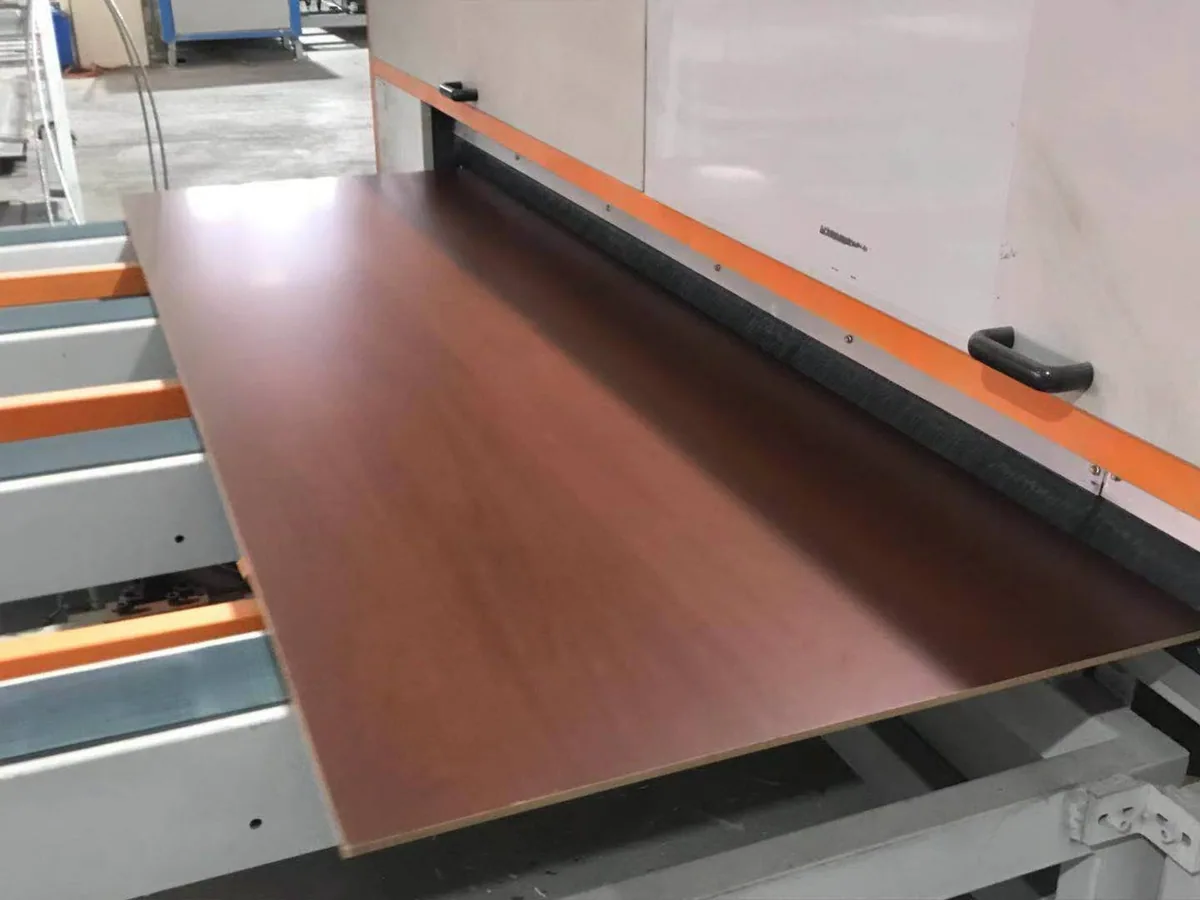
Prepare compatible core and paper inputs
Identify the substrate material and grade, finished thickness target, surface condition and intended exposure. MDF, particleboard and plywood are not interchangeable descriptions. A change in substrate construction should not be hidden beneath the same decorative finish or justified solely by an average density figure.
For the paper, retain the decor reference, texture requirement, lot, storage history and the relevant impregnation specification. Inspect damage and contamination before lay-up. A torn or creased sheet should not enter the process simply because the defect might be covered by pressure. The useful question is whether it can produce the specified usable panel area.
Our MDF lamination guide covers substrate preparation; the impregnated-paper guide covers the paper's separate process controls.
Control face identity, orientation and contact
The lay-up instruction should identify the front and reverse, print direction and selected press surface. Clear the previous order's materials and labels from the working area before changing the product. A visually similar reverse paper is not an acceptable substitute unless the construction permits it and the order records the change.
Inspect the contact surfaces through which the board moves. Local particles or damage can create repeated marks that survive later cleaning. Keep the material alignment and handling history identifiable, so a defect can be traced to a face, edge or process position instead of being described only as poor finish.
Where a design requires the embossing to align with the printed grain, registration becomes a separate requirement. A generally textured face is not the same as an embossed-in-register surface. Our woodgrain guide explains the related drawing and matching decisions.
Validate the material and pressing combination
Temperature, pressure and time interact with the paper condition and substrate. Record how each variable is defined. Platen temperature is not the same measurement as the temperature at the resin interface; a machine's hydraulic pressure display may not equal the specific pressure on the board. Dwell time and the complete loading-to-unloading cycle are also different quantities.
A useful process record identifies the equipment and measurement basis alongside the settings. It also records material changes, stops and deviations that might affect the result. Use the observed symptom and relevant evidence to assess a change to the validated cycle.
For a new decor, paper construction, thickness or texture, evaluate representative output against the specified requirements. A successful release from the press is only one observation. Colour, texture, bond condition, dimensions and the required surface properties still need their own assessment.
Treat both faces and cooling as part of the construction
Record the reverse-face arrangement even when only the front is decorative. Its role in the panel's behaviour cannot be inferred from appearance alone. A balanced construction is an engineering choice involving the substrate and both surfaces, not a guarantee that a panel can never warp.
After pressing, preserve adequate support and keep handling damage separate from pressing defects. Inspect dimensions and shape under an agreed condition rather than comparing a hot panel with a cooled reference without qualification. Pack layout, supports and movement between stages should protect the usable faces and edges.
Make product changes visible in the records
A useful changeover record links the previous and new product, paper lot, core lot, press surface and recipe revision. Identify the first output produced after the change and assess it before releasing the continuing run. Following a stop, check whether the interrupted material experienced conditions different from a normal cycle.
For example, changing from a pale smooth finish to a dark textured decor changes more than the colour label. The specified surface, visual assessment and possibly the material-and-process combination differ. Retain the relevant sample and identify the affected panels so an investigation does not combine two unlike runs.
Check the finished product against the order
The official record for GB/T 15102-2017 identifies the current Chinese standard for thermosetting-resin-paper-faced fibreboard and particleboard, replacing the 2006 edition. Its product scope matters; do not automatically extend a fibreboard or particleboard assessment to a plywood construction.
Where an order specifies the European system, EN 14323:2021 provides test methods for melamine-faced boards within the associated scope. The required product, method, result and acceptance basis should remain linked. Neither a short production cycle nor an attractive face establishes every performance claim.
Put the selected construction into the factory order
Send the intended component, sizes, quantities and destination. We can develop the MDF or plywood specification, front and reverse, cutting and edge treatment with you. Include any required reports or drawings.
Buying questions
Can I start before choosing the core?
Yes. Describe the component and its use, then compare MDF and plywood with the required facing and processing.
What carries sample approval into production?
Keep the accepted construction, front and reverse, decor and texture references with the drawing and order specification.