
Start with birch plywood for pale furniture faces and exposed layered edges; start with a marine construction when your boat, wet-area or outdoor project needs that specification. If handling weight matters, compare an all-Okoume option alongside the birch core. We manufacture plywood and help turn your drawing into a choice of sheets, cut blanks or machined parts—with the face, core, bond and finish matched to the job.
You do not need a complete specification to get started. Tell us what you are making, where it will be used and what matters most: the finished look, weight, water exposure or cost. This guide shows what changes between the options and what to send for a useful factory quotation.
15mm birch-core plywood Marine plywood sheets All-Okoume marine plywood
Birch or marine: which fits your project?
Birch gives you a familiar pale wood appearance; the core determines what you see at the edge and how the part machines. Marine plywood gives you a route for projects with a marine material requirement. Choose the actual construction behind each name, then compare it on the same component.
| What your project needs | Start your comparison here | Detail that makes the choice useful |
|---|---|---|
| Furniture with visible faces and edges | Birch-core plywood with your chosen face pairing | Face repairs, layered edge, sanding and the finished coating |
| A birch appearance with covered edges | Birch-faced plywood over a selected core | Our 4 × 8 birch range includes pine, poplar and hardwood core options; specify the construction you want |
| Lower bare-panel weight | All-Okoume alongside the proposed birch-core panel | Compare the same dimensions and thickness, then add the finish and fittings |
| Boat components or a named marine specification | Marine-grade construction to the project requirement | Species, layup, bond, required standard and documents for that configuration |
| Bathroom, kitchen or sheltered outdoor furniture | A water-resistant construction with the planned finish | Protect edges, holes and joints as well as the faces; describe where water reaches the part |
| A shelf, deck or other loaded component | The construction supported by the design requirements | Thickness, span, support, loading direction and relevant design properties |
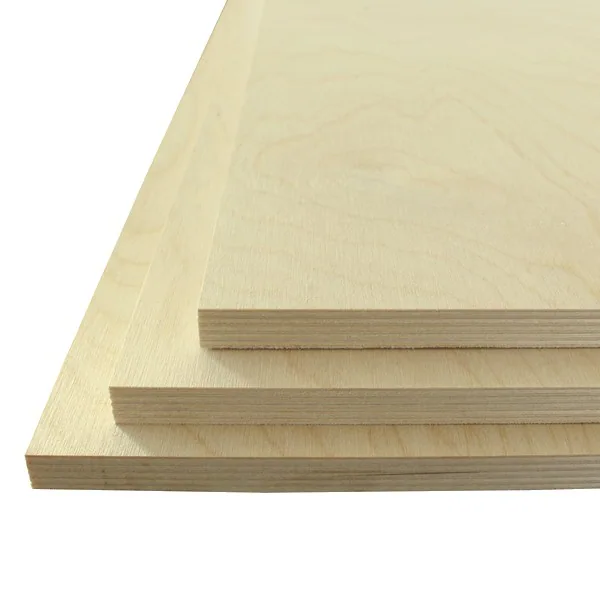
Ordering marine birch plywood
If your drawing calls for “marine birch plywood”, send us that wording together with the intended use. We will work through whether you need birch on the faces, birch in the core or birch throughout, and the marine requirement attached to the order. That gives you a clear product proposal without having to settle every material detail beforehand.
For a BS 1088 order, name the edition and class required by the project. BS 1088:2018 covers standard and lightweight marine plywood, including durability and bond requirements. The proposed species and construction must suit the named requirement. Keep appearance, machining and any structural design requirements on the order too, so the panel arrives ready for its intended role.
Strength, shelf sag and support spacing
For a shelf, compare how much it will deflect as well as the load it must carry. Supply the clear span, shelf depth, support arrangement, expected load and grain direction. Those details help select thickness and construction; a material name alone does not describe the finished shelf.
For plywood with published bending data, compare the same direction, test method and material condition. A laboratory mean describes the tested specimens; a structural design uses the applicable design values and calculation method. The BSI guide to EN 12369-2 explains how plywood characteristic values relate to EN 636. For a structural deck, bulkhead or partition, bring the designer's material schedule so we can quote against it.
For furniture, use the sample to check the actual joint: a routed groove, screw position, hinge pocket or connector opening. Keep the remaining material under a pocket and the fastener's distance from the edge on the drawing. A clean face is valuable; a component that fits your production tooling saves work on every unit.
Waterproof plywood for kitchens, outdoors and boats
Looking for waterproof plywood? Start with where the water will reach it. A sink cabinet, an outdoor cupboard and a boat panel need different combinations of core, bond and protection. We can help choose a construction and supplied finish around that exposure.
- Kitchen and bathroom cabinetry: show plumbing cut-outs, floor contact and areas exposed to splash or leaks. Include edge banding or sealing around concealed backs and fittings.
- Sheltered outdoor joinery: describe wind-driven rain, sunlight and drainage. Plan the coating system, joints and treatment of cuts made after delivery.
- Boat or waterway use: share the designer's panel requirement and whether the part is a lining, removable cover, bulkhead or another component. Match connections and protective layers to that assembly.
Bond performance, decay resistance and load capacity answer separate questions. APA's plywood guidance explains bond classifications; use it with the applicable project specification. For practical selection, send a sketch of the wet area and the finish you plan to use. Our waterproof plywood guide helps turn that description into an order.
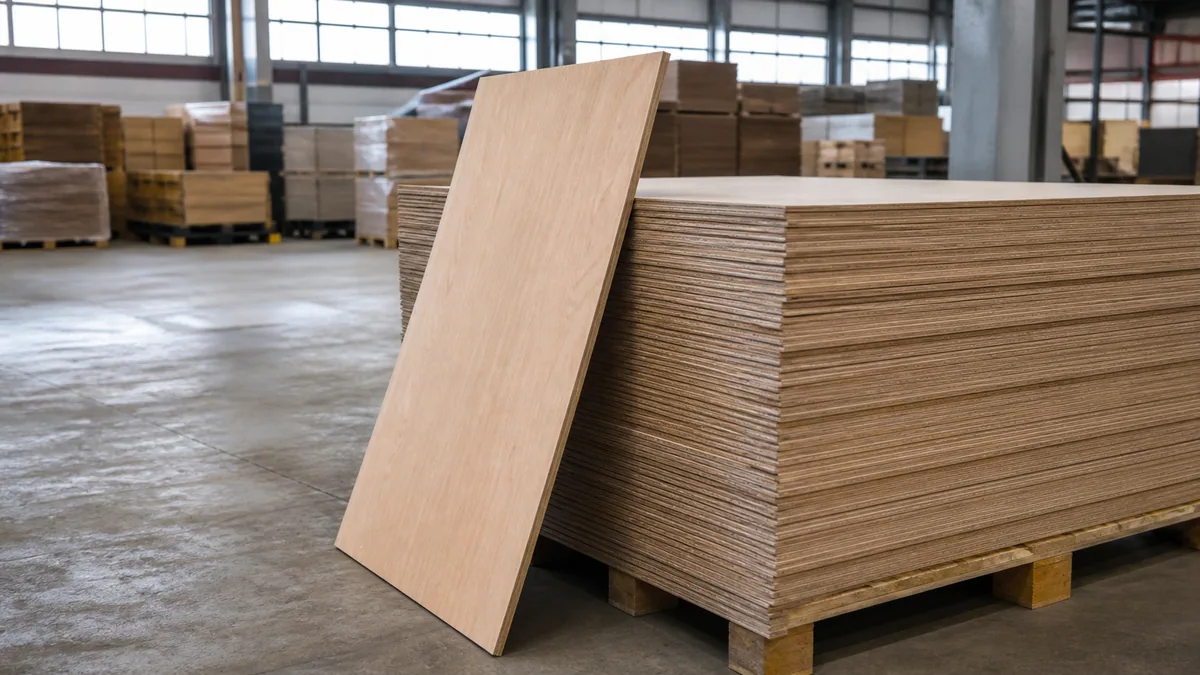
15mm sheet weight: birch core vs all-Okoume
For a fair handling comparison, keep sheet size and thickness the same. The table below uses our published 15mm CP birch-core specification and all-Okoume marine density range. Both calculations use a bare 1220 × 2440 × 15mm sheet.
| Construction | Density basis | Calculated sheet mass |
|---|---|---|
| 15mm CP birch-core plywood | 640–700kg/m³ | 28.6–31.3kg |
| 15mm all-Okoume marine plywood | 500–550kg/m³ | 22.3–24.6kg |
Volume = 1.220 × 2.440 × 0.015 = 0.044652m³; sheet mass = volume × density. For these two constructions, all-Okoume gives the lower calculated bare-sheet weight. The ranges belong to the panels named here; a birch-faced sheet with another core needs its own calculation.
These are weight calculations from the published density ranges. Dispatch moisture, actual thickness and finish affect the shipped weight. The all-Okoume loading table uses a separate 540kg/m³ planning value, giving about 24.1kg for this size. For a lifting limit, a packed pallet or a finished boat part, request the weight for the supplied configuration and add coatings, lippings, hardware and packaging as appropriate.
Choose the face, edge and machining together
Decide which surfaces the customer will see. For clear-finished furniture, show the visible face, permitted repairs and the direction of the grain. For an exposed layered edge, try the proposed core after routing and coating. A painted or edge-banded part may allow a different face or core choice while achieving the finished look you need.
| Workshop detail | Put this on the drawing or sample request |
|---|---|
| Slots and grooves | Finished slot width, board thickness limits, coating allowance and the fit required |
| Hinge pockets and recesses | Depth, remaining material, fitting reference and face orientation |
| Cut-outs and curved edges | Drawing revision, corner radius, machining allowance and edge treatment |
| Visible face and reverse | Face pairing, repair acceptance, sanding, clear coat or painted finish |
| Repeated parts | Part labels, left/right pairs, quantities and packing sequence |
Agree thickness at the stage your tooling uses: bare sanded board, laminated sheet or finished part. For a close-fitting joint, send the fitting or slot detail with the panel sample request. This keeps machining and finish allowances in the same discussion instead of leaving your workshop to correct the fit.
Choose around the part you are making
Exposed-edge furniture
Start with birch-core plywood, the visible-face grade and a routed edge. Compare the finish and joint on one representative part. Use our birch construction comparison to shortlist a face/core combination before choosing samples.
A removable boat-cabin panel
Bring the component's role and the designer's specification. All-Okoume is a useful weight-focused option to compare where the required construction permits it. Add fixing details, protective finish and the completed part's weight target to the marine component schedule.
A kitchen or outdoor cabinet
Start with the wet areas, visible faces and how the edges will be finished. Compare a water-resistant birch construction with a marine alternative around the complete cabinet. Include backs, plinth contact, drainage and later site cuts so the order covers the surfaces that need protection.
Compare the cost of usable finished parts
Ask for two quotations against one part list. Use the same dimensions, thickness tolerance, face requirements, quantity and destination. Then separate what the factory supplies from the work remaining in your workshop: full sheets, cut blanks or machined components.
For sheets, compare cutting yield as well as unit price. A layout that produces more usable parts can offset a higher sheet price. Include trimming, saw kerf and grain direction; for left/right parts, count complete pairs. Our custom-size and machining service can help develop the supply format around your cutting list.
For components, compare the delivered part with the same finishing stage. Include sanding, permitted face filling, edging, machining, coatings, packing, freight and any import charges relevant to your destination. Add product documents and inspection requirements to the enquiry so both proposals cover the same scope. Current product-page prices give a starting range; a factory quotation prices your selected construction and order.
Move from a drawing to comparison samples
One representative component is more useful than two unrelated offcuts. Send the drawing revision and mark the visible face, edge, groove and fitting. Ask for both shortlisted constructions at the same processing stage so you can compare appearance, handling and assembly together.
- Choose the part: include the joint, curved edge or fitting that drives the decision.
- Compare the finish: use the planned preparation and coating on both panels.
- Record the result: note fit, dimensions, appearance and finished weight where it matters.
- Carry the choice into the order: retain the approved sample reference, construction, drawing revision and acceptance details.
Our birch sample checks and marine sample plan help connect the trial to the order. If you only have a photograph or an existing part, start there—we will help identify the remaining details.
Keep the product, report and order connected
For purchasing approval, make it easy to trace the proposed panel from the quotation to the documents. Keep the core species, face pairing, thickness, bond or grade and supplied finish together on the order line.
- Test reports: identify the tested construction, thickness, method and result relevant to the requirement. The test-report library provides available reports and their product references.
- Inspection records: use the CP birch pre-shipment inspection record to discuss face, core, dimension and packing checks for the selected supply.
- Production and delivery: agree the sample reference, lot or order identification and receiving checks with our production and quality team.
A report's results belong to the construction it describes; your sample adds the machining, fit and finish comparison. We can help assemble the documents for your proposed order and destination. See buyer information for the document request route.
Birch vs marine plywood: buying questions
Which is better for furniture: birch or marine plywood?
Start with birch when the pale face and exposed layered edge are part of the design. For wet-area furniture, include the water exposure and protective finish; compare a marine option when that construction suits the job. The best shortlist is built around your part, appearance and processing needs.
Can I order waterproof birch plywood?
Yes—send the use, dimensions and exposure so we can propose the birch construction, bond and protective finish. Include edges, cut-outs and fittings in the brief. For an outdoor or marine specification, send the named requirement with the enquiry.
Is marine plywood lighter than birch plywood?
Our 15mm, 1220 × 2440mm comparison gives 22.3–24.6kg for all-Okoume and 28.6–31.3kg for the specified CP birch-core panel. These are calculated bare-sheet ranges. Other core combinations, thicknesses and finishes change the comparison.
Is marine plywood stronger?
Choose strength and stiffness from the actual construction, direction, thickness and support conditions. A marine designation addresses a set of material requirements; the load-bearing component still needs the design properties applicable to that use.
Does marine birch mean birch throughout?
Specify where birch is required—faces, core or every veneer—and the marine requirement for the project. We will put the proposed construction in the quotation so the sample and order refer to the same panel.
Which option will cost less for my order?
Send one cutting list for both options. We will compare the selected core, face grade, processing and delivery scope. Yield, edging and finishing can change the cost per usable part even when the sheet prices look similar.
Can I request both samples before placing an order?
Yes. Tell us the two constructions or the job you want to compare. Add the edge, joint, fitting and finish you want to see; our team will confirm the sample and delivery arrangements.