
Select film faced plywood and its release treatment as a working combination. Start with the actual facing, the intended concrete finish and the agent manufacturer’s instructions. PanelSource helps identify the plywood surface and arrange a representative sample for the project’s first-use and compatibility checks.
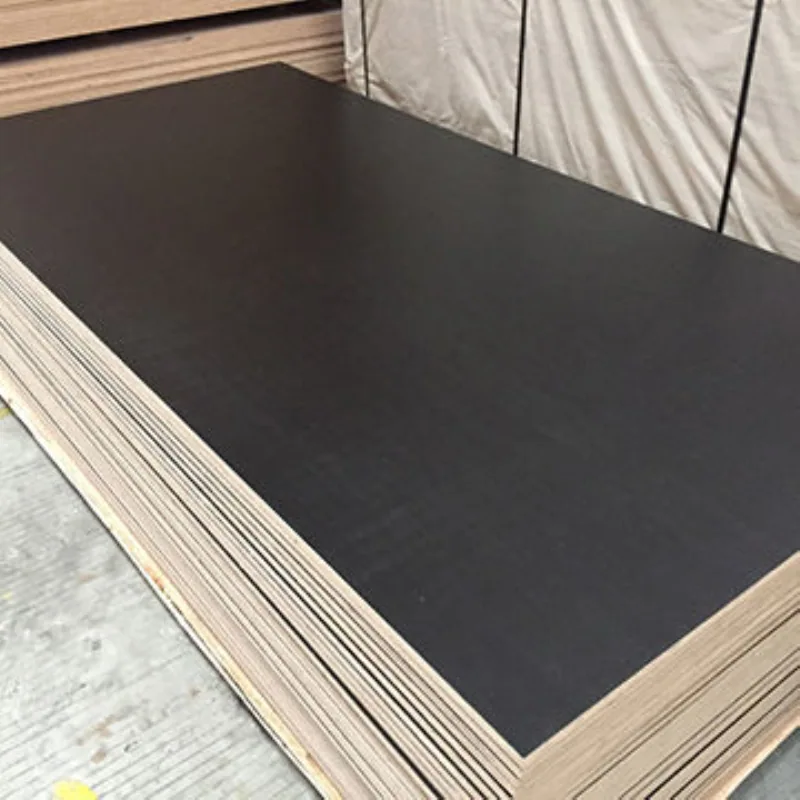
For a smooth film face, start with film faced shuttering plywood. If the project specifies a different overlay, compare MDO-faced plywood with preparation and release guidance for that surface. Tell us whether panels are new, repaired or reused, and whether the concrete will later receive a coating.
Choose the agent for the actual plywood surface
Record whether the concrete contacts phenolic film, MDO, a polymer surface, bare wood or a repaired area. Note whether the panel is new or previously used. Similar colours can conceal different surfaces and absorption behaviour.
Select the release agent for the actual facing and concrete application. Smooth and absorbent surfaces can require different preparation and treatment.
Check both the panel supplier's guidance and the release-agent manufacturer's instructions. Identify any existing factory treatment so additional application is planned on a known basis.
Plan release agent, edge sealer and concrete curing compound as separate materials with separate jobs. Use the specified product for each step and coordinate their compatibility where they meet.
Use the product instructions to plan application
Confirm whether the selected product is supplied ready to use or requires a specified preparation. Record the permitted application method, surface condition, environmental limits and readiness criteria. Do not dilute or mix products unless the manufacturer's instructions allow it.
Use the current instructions for the product supplied in the project's market. Similar brand names can cover different formulations, and a technique used successfully with one product may not transfer to another.
Keep the technical data and safety information available to the application team. Agree storage and handling arrangements with the site method, including keeping the product identifiable in its working container.
Where the concrete will receive paint, render, adhesive or another finish, include that requirement in the selection. A satisfactory release at stripping is only one part of the intended result.
Prepare and inspect the working face
Remove concrete residue and other contamination using a method compatible with the facing. Check for film damage, repairs and exposed edges. Applying more release agent cannot flatten a hardened deposit or restore a missing part of the overlay.
Prepare new panels using the selected panel and release-agent instructions. Keep that procedure with the order instead of assuming every surface needs the same soaking or oiling treatment.
Keep cut-edge and hole treatment in a separate work step. Complete any required drying or curing before applying materials that might interfere with adhesion. Do not assume a thin film of release agent provides the specified edge protection.
Record repairs included in a visible-concrete area. Their response may differ from the surrounding facing even when the repair is flush.
Apply consistent coverage across the form
Use the specified method to achieve consistent coverage over the required face. Check corners, returns and recessed areas where application may be missed or collect unevenly. Protect surfaces that should not receive the product.
A nominal consumption rate is a planning guide under stated conditions, not proof that every square metre was treated correctly. Overspray, nozzle condition, surface absorption and application technique affect the actual result.
Follow the manufacturer's instruction on wiping, reapplication and excess material. Some products specify a treatment that should remain undisturbed, so do not turn wiping into a universal step.
Check readiness after weather or site delays
Distinguish the time of application from the time the product is ready for concrete contact. Readiness may depend on the formulation and conditions. Use the selected product's criteria instead of a fixed waiting period copied from another project.
After rain, dust exposure, extended delay or handling, inspect the face against the instructions. Do not automatically pour over a disturbed coating or add a second application without considering the required condition.
| Event | Question to resolve |
|---|---|
| Rain or wash water | Has the required coating condition been affected, and what recovery method is specified? |
| Dust or site debris | Can contamination be removed without leaving an unsuitable face? |
| Extended delay | Is the treatment still within its stated use conditions? |
| Repair or late machining | Which areas need compatible preparation and treatment again? |
| Change of concrete or agent | Does the established trial still represent the new combination? |
Keep reinforcement and construction-joint surfaces protected from unintended contamination. Resolve an affected interface through the project procedure rather than concealing it behind the next operation.
Trial release and concrete finish together
Include the actual facing, preparation, release agent and representative concrete mix. Where relevant, include a joint, repaired area or new-to-used facing transition. Record the application and placing conditions.
Assess both release behaviour and the stripped surface: sticking, damage, visible pores, staining and any required finish criteria. Observe the panel as well as the concrete. Easy removal does not establish every appearance or subsequent-coating requirement.
Change variables deliberately. If the facing, release agent, concrete and application method all change together, the trial may show a useful outcome but cannot isolate which change caused it.
Retain the successful combination and its limits in the working instructions. A later material or process change may need a focused repeat trial.
Use the preparation record to investigate defects
If concrete sticks or the surface is marked, record the panel identity, facing condition, product and application history before cleaning removes the evidence. Include the concrete and stripping conditions.
Look for patterns: local missed areas, repeated marks at repairs, accumulations at returns or differences between new and used panels. These observations help direct the investigation but do not prove that the release agent is the sole cause.
Compare the actual preparation and application with the instructions and agreed trial before changing the next pour. Our concrete surface-interaction guide helps review the facing and site variables alongside the release product.
Choose your panel with the release plan in view
Start with the release product name and intended concrete finish. We help identify the plywood face and a useful sample, then add dimensions, quantities and destination when the selected combination is ready for quotation.
We can clarify the proposed film faced plywood surface and agreed preparation information for the order. Coordinate the agent's application instructions with its manufacturer and the project's construction method.
Discuss your plywood facing requirements with us. A compatible facing and a controlled application method support a repeatable result more reliably than a generic claim that coated plywood needs no release agent.
Choosing plywood for release-agent compatibility
Can you help choose a sample for a release trial?
Yes. Share the facing requirement, agent name and intended concrete finish. We can discuss a panel sample; the agent manufacturer’s instructions and project method govern application.
Does a film face always need the same treatment?
Preparation depends on the actual facing, any factory treatment, the agent and whether the panel is new or used. Follow the specified combination and confirm it with a representative trial.