The board behind your next painted kitchen or bathroom range.
Looking for waterproof MDF for cabinets? Our factory makes unfaced MR and HMR MDF for humid interiors, with full sheets, cut parts and routed profiles ready for your paint, veneer or laminate process.
Send your design or cutting list. We’ll bring the board, machining, samples and export order together, so your workshop can focus on the finished furniture.
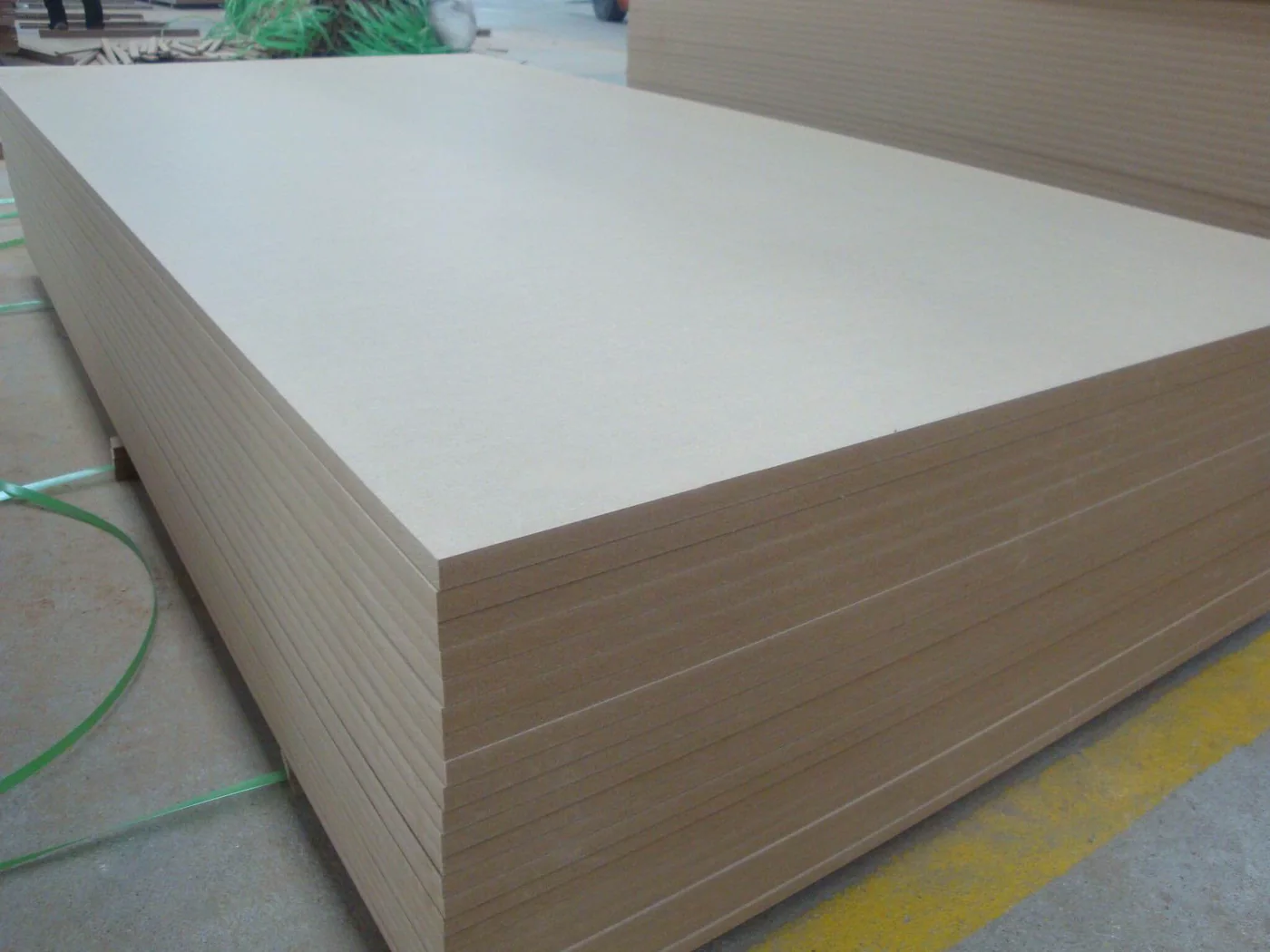
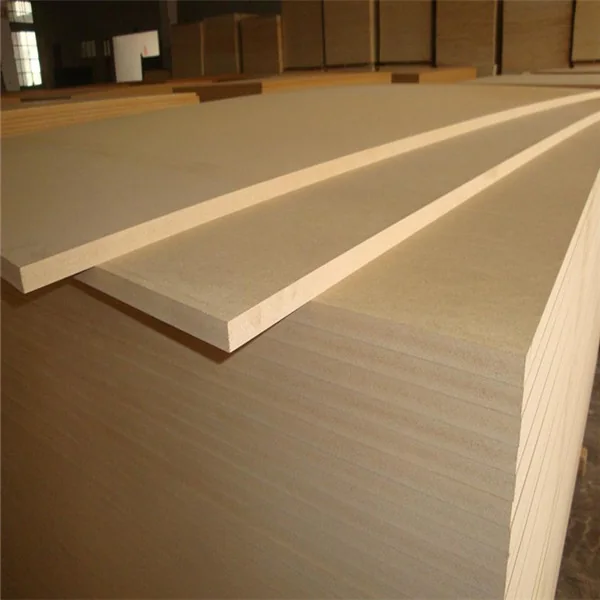
Unfaced MDF sheets · board surfaces and fibre edges.
SHEETS · CUT PARTS · ROUTED FRONTS
Order the board and preparation your workshop needs.
Choose unfaced moisture-resistant MDF when you want control of the final colour, veneer or laminate. Order full sheets for in-house cutting, component blanks for your finishing line, or parts machined to your drawing. We manufacture the MDF substrate in our own factory in Jiangsu, China.
Moisture-resistant MDF supply and order options
Board construction
Unfaced MR or HMR medium-density fibreboard for humid-interior furniture. Name the grade with your application.
Sheet planning
1220 × 2440 mm and 1830 × 2440 mm are starting formats for your cutting schedule. Send the format, thickness and grade together for the production quotation.
Thickness & finished fit
Specify thickness in mm and the deepest routing or groove. The quotation states the board limits and whether dimensions apply to the raw blank or finished component.
Cut-to-size supply
Length × width × quantity by part code. Choose oversize blanks or final machining dimensions; include trimming and tool allowances.
Factory machining
Straight cuts, drilled holes, routed profiles and shaped parts to the drawing, including hole datums, corner radii and revision.
Surface route
Unfaced for painting, veneering or laminating. For a decorative face supplied on the board, choose moisture-resistant melamine MDF.
Moisture requirement
Match the grade and finished construction to the location. For EN 622-5 projects, identify MDF.H or the load-bearing MDF.HLS category required by the design.
Product documents
Published SGS HMR MDF formaldehyde report: 0.080 mg/m³, PASS. The report identifies HMR MDF; request the documents for your selected grade and supplied finish.
Order & delivery
Available to order. Production: 7–10 days. Container shipping, with freight terms agreed for the order.
After-sales support
180-day warranty. Contact our team with the order and issue; replacement, return arrangements and freight are agreed for the order.
Start with the measurements you already have. We can develop the remaining board, finishing and packing choices with your purchasing and production teams.
DOCUMENTS & ORDER SUPPORT
Reports for this panel
We help your purchasing team gather product reports, inspection records and packing documents for your order.
HMR MDF Formaldehyde Emission Report
SGS records a formaldehyde result of 0.080 mg/m³ and PASS for HMR MDF, using a method with reference to EN 717-1:2004.
Report configuration: HMR MDF; green board
Tests & checks: EN 717-1:2004; Formaldehyde emissions; UV-Vis analysis
This SGS report covers formaldehyde emissions for HMR MDF and includes a photograph of the green board. Analysis was performed with reference to EN 717-1:2004 using UV-Vis. The formaldehyde result is 0.080 mg/m³, with PASS recorded in the table. For an HMR MDF order, share the thickness, decorative finish and intended application so our team can connect the report with the panel specification and other documents your buyer requires.
We can plan production and inspection around your panel specification, with dimensional checks, recorded readings and packing photographs for your order.
We prepare packing details, pack quantities and dispatch documents for your order. Share the destination and receiving requirements so our team can help plan delivery.
For your supplier approval, send the configuration and document list for your order. Our team will connect the relevant reports, inspection and packing records.
Use unfaced MDF for the profile and colour your range needs. Order cut or routed blanks, then plan edge preparation and paint build-up around narrow beads, deep recesses and hinge positions.
Bring plumbing openings, lower edges and concealed backs into the board selection. Coordinate the MR/HMR grade, edge sealing and joints for humid rooms and everyday splashes.
Choose the unfaced substrate for your facing process. Plan the face, reverse, adhesive and pressing sequence together so the finished thickness and fit match your furniture drawing.
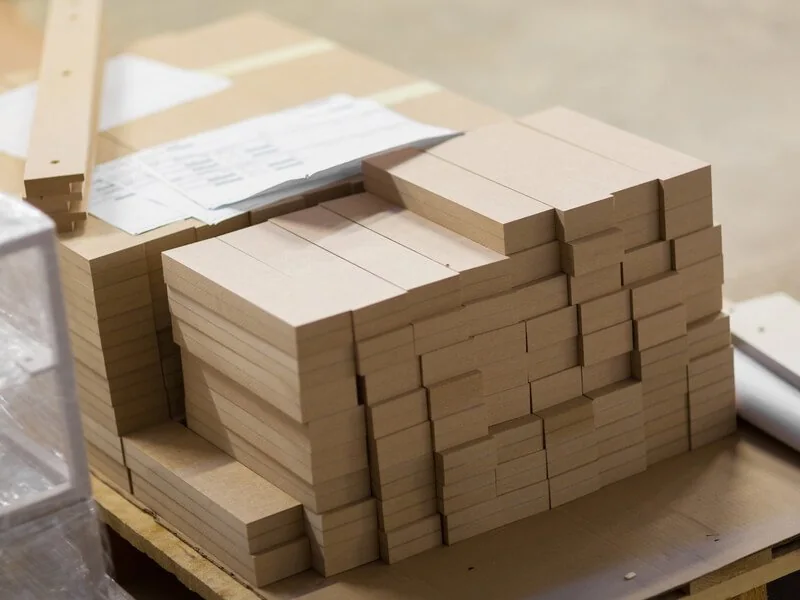
Unfaced MDF board faces and cut fibre edges.Cut MDF panels arranged by component size.
CHOOSE THE SUPPLY ROUTE
MR board, HMR board or a ready-faced panel?
Choose the board for the room, then decide who applies the finish. MR and HMR product names are useful starting points; the grade, machining and finished construction make the order specific.
Choose this route when you want a decorative face and reverse supplied on an MR substrate. Select decor, texture, finished thickness and banding together.
For outdoor components, discuss a separate exterior-grade board with the coating, detailing and expected exposure.
Green colour is commonly used to identify MR/HMR MDF. Use the grade, technical documents and pack labels to keep the delivered material consistent; choose samples for both the board and your planned finish.
PROTECT THE FINISHED COMPONENT
Plan the details that keep moisture away from the core.
For buyers looking for waterproof MDF for kitchens or bathrooms, MR/HMR MDF is the starting point for a humid-interior cabinet. The finishing plan covers the broad face, reverse, cut edges, joints and service openings—not just the surface you see.
Where moisture meets the furniture
Kitchen and utility interiors
Describe steam, cleaning and concealed edges near appliances or walls. Select the MR/HMR grade and a compatible face, reverse and edge finish.
Bathroom cabinets and plumbing openings
Include the lower edge, pipe opening and sink cut-out in the component trial. Decide who seals any holes cut during installation.
Veneered or laminated parts
Coordinate the facing, adhesive, reverse and perimeter treatment with the substrate and intended room.
Persistent wetting or outdoor exposure
Describe the exposure before choosing the material. Develop the grade, drainage, coating and complete assembly for that use with our team.
Send a photo of the installation or a cabinet drawing if that is easier than a specification. We’ll help turn the use conditions into a practical board and finishing plan. MDF grade guidance provides further information on the material categories.
CUT · ROUTE · SEAL · FINISH
Keep the routed profile crisp through painting.
Order the cut or routed blank at the stage that fits your workshop. For a painted front, the broad face, routed recess and perimeter edge each need preparation that works with the coating system.
01
Cut and route
Use the drawing revision, deepest recess and smallest radius. Record the tooling and machining allowance.
02
Prepare the edge
Remove cutter marks while retaining the profile. Plan sealing for exposed fibre and hidden edges.
03
Apply the finish
Follow the coating supplier’s sealer, primer, topcoat and curing sequence. Include the reverse and machined openings.
04
Check the assembly
Inspect the cured surface, profile, corner and fitting. Keep the approved part for repeat production.
Routing exposes the board interior; edge preparation controls how that detail looks after paint. Allow for finish build-up in grooves and hardware openings. For veneer or laminate, balance the face and reverse with the adhesive, pressing process and installation support.
Agree the handover stage in the order: oversize blank or final machining size, cleaned surfaces, protected profiles and the finishing operations your workshop will complete. Read more about edge finishing and veneering MDF.
SIZES · CLEARANCES · YIELD
Turn the cutting list into a usable part count.
Choose the sheet around the parts you need. Include perimeter trimming, saw kerf, routing allowance and finish build-up when comparing formats or checking a fitted joint.
Open the fit and cutting worksheet
The values below are calculation inputs. Use your quoted board limits and measured finishing build-up for the production drawing.
Separate nominal thickness from fitted thickness
Use the actual board-thickness interval to check a groove or rebate. Then add the facing or coating build-up at the surfaces that control fit. If a groove is also coated, that coating reduces the usable opening; allowing only for the panel finish misses part of the fit calculation.
Fit calculation: clear opening − finished panel thickness
Design input
Calculation
Board interval
18.0 ± 0.2mm gives a possible board thickness of 17.8–18.2mm.
Finish on the panel
Assumed build-up of 0.15mm per face gives 18.1–18.5mm finished thickness.
Uncoated 18.6mm opening
18.6 − (18.1–18.5) gives 0.1–0.5mm total thickness clearance.
The same opening with 0.10mm on each wall
Clear opening = 18.6 − 2 × 0.10 = 18.4mm. Clearance becomes −0.1 to 0.3mm; the thickest part would interfere.
Use your agreed board limits and measured finishing build-up in place of those inputs. A positive arithmetic clearance still needs a connection design that suits movement, fixing and installation. Specify when dimensions are checked: raw sheet, machined blank or finished part.
Calculate a cutting layout with trimming and kerf included
For a 1220 × 2440mm sheet, allow 10mm trimming at each outer edge. The usable rectangle is 1200 × 2420mm. If the required rectangular part is 600 × 700mm and the inter-part kerf is 3mm, two 600mm widths would require 1203mm and do not fit across that usable width.
One rectangular nesting calculation; part dimensions are finished cutting dimensions
Orientation
Across × along
Parts per sheet
600 across, 700 along
1 × 3; three lengths need 3 × 700 + 2 × 3 = 2106mm.
3 rectangular parts
700 across, 600 along
1 × 4; four lengths need 4 × 600 + 3 × 3 = 2409mm.
4 rectangular parts
Four-part area utilisation
4 × 600 × 700 ÷ (1220 × 2440) × 100
56.4% of the original sheet area
This comparison covers rectangular nesting only. Oversize blanks, edge defects, machine hold-down, decor direction on a subsequently faced panel and the usable offcuts can change the production layout. Send the cutting list before selecting a larger sheet purely on its price per square metre.
For a routed recess, remaining nominal wall thickness is board thickness minus routing depth. An 18mm board with a 6mm recess leaves 12mm before other operations. We help bring the remaining section, profile depth, fixing positions and intended hardware into a component trial, with supports planned around the actual material and use.
Include hinge cups, face and edge screws, dowels or threaded inserts in the component drawing. Pilot-hole size and depth, remaining wall thickness, edge distance and installation torque follow the chosen fitting and board.
For repeated assembly, trial the insert or connector through the expected installation sequence. With a routed front, check the remaining material around the hinge and the deepest profile. Use the hardware supplier’s connection design and installation instructions.
Check a coated pipe opening
A 50.0 mm drilled opening with 0.20 mm finish on each side leaves 49.6 mm clear diameter. With a centred 49.0 mm pipe, radial clearance is (49.6 − 49.0) ÷ 2 = 0.30 mm. These inputs illustrate the geometry; set the working gap from the actual fitting, finish, pipe position and installation requirements.
Assign sealing of service holes and rear notches to the factory, workshop or installer, including holes cut after delivery. MDF fixing guidance explains the connection considerations.
REPORTS FOR YOUR BOARD CONFIGURATION
Give your purchasing team a clear material file.
The published SGS HMR MDF formaldehyde report identifies green HMR MDF and records 0.080 mg/m³, PASS, with reference to EN 717-1:2004 using UV-Vis. It covers formaldehyde emissions. Pair the report with the grade, thickness and supplied finish in your order.
For your destination
Tell us the emissions method and documentation your customer requires. We connect the board, any facing or adhesive, and the supplied condition to the document request.
For production and receiving
Keep the quoted grade and dimensions, drawing revision, finished component reference and pack labels together. Add the inspection and packing records your receiving team needs.
Request the HMR board documents
Share the thickness, finish and application. Our team will help assemble the report and production information for that configuration.
(Thickness after the stated exposure − initial thickness) ÷ initial thickness × 100.
Test method, time, specimen preparation, measurement points and applicable acceptance limit.
Water absorption
(Mass after the stated exposure − initial mass) ÷ initial mass × 100.
The exposure and mass measurement method; do not compare it directly with thickness swelling.
Moisture content
Water mass relative to oven-dry mass under the specified method.
Conditioning and measurement method; this is not the same as an immersion mass increase.
Board density
Mass divided by volume, reported with units and board condition.
The identified thickness and test information; density alone does not establish an MR grade.
For an initial thickness of 18.0 mm and a post-exposure reading of 19.8 mm, thickness swelling is (19.8 − 18.0) ÷ 18.0 × 100 = 10%. A separate mass increase from 100 g to 130 g gives 30% water absorption. These calculations explain how to read the properties; the order’s product values come from its technical information and stated test conditions. See the property-assessment guide.
APPROVE THE PART YOU WILL MAKE
Move from board selection to a working component.
Choose a trial that answers the next production decision: a routed and painted corner, a veneered joint, a hinge position or a sealed plumbing opening. Send the drawing or detail you already have and we’ll plan the board and supplied stage around it.
What to carry from the sample into the order
Board
MR/HMR grade, thickness, material identity and unfaced supplied condition.
Component
Drawing revision, routing depth, edge detail and drilling datums.
Finishing
Your face and reverse finish, edge sealer or facing process, including cured fit.
Acceptance
Appearance, dimensions and hardware checks on the completed part.
Repeat supply
Accepted component reference, agreed changes, part codes and packing sequence.
FACTORY ORDER · CONTAINER DELIVERY
Receive sheets and components ready for your next operation.
Available to order with a 7–10 day production cycle. We ship by container, with the loading plan, freight terms and destination arranged for your order. Production time is separate from the sea transit schedule.
Full sheets
Plan flat pack support, face and corner protection, pack height and unloading requirements.
Cut and routed parts
Use part codes and drawing revisions on the packing list. Protect exposed edges and narrow profiles and group components for receiving.
Workshop arrival
Check counts, labels, transit condition and agreed dimensions. Store flat and supported before finishing and fit checks.
Our 180-day warranty supports your order. If an issue arises, send the order details and photographs; we agree the replacement or return solution and freight arrangements with you. For repeat supply, keep the accepted material, component and drawing references.
MR MDF is medium-density fibreboard selected for humid-interior furniture and joinery. PanelSource manufactures unfaced MR/HMR MDF in Jiangsu, China, supplying sheets, cut parts and routed blanks for your paint, veneer or laminate process.
Is this the waterproof MDF used for kitchen and bathroom cabinets?
Buyers often ask for waterproof MDF when planning kitchen and bathroom furniture. Choose the MR/HMR board together with the face finish, reverse, sealed edges, joints and openings. For persistent wetting or outdoor use, describe the exposure so we can develop the appropriate material and complete construction.
How do I choose MR or HMR MDF?
Start with the room, component, finish and moisture exposure. Ask for the named grade and technical requirements for that configuration, then assess a working component. Our published HMR report covers formaldehyde emissions for the identified green board.
Does MR MDF have to be green?
Green is a common identification colour for MR/HMR MDF. The ordered grade, product documents and pack labels identify the material; colour alone does not define its performance.
Which thickness and sheet size can I order?
Send your required thickness and sheet or part dimensions. You can start a cutting schedule around 1220 × 2440 mm or 1830 × 2440 mm; we quote the selected format, MR/HMR grade, thickness limits and machining stage together. Include any deeper routing or final-fit requirement.
Can you route, drill and cut the boards to size?
Yes. Send the drawing or cutting list with part sizes, quantities, hole datums and profile details. Choose oversize blanks or final machining dimensions, then identify the finishing operations your workshop will carry out.
Can I paint, veneer or laminate the board?
Yes. The unfaced board is supplied for those finishing routes. Plan edge sealing for paint, or the facing, adhesive and reverse construction for veneer or laminate. Check the completed part for appearance, fit and the intended installation.
What does the SGS HMR MDF report show?
The published report records formaldehyde at 0.080 mg/m³ and PASS for HMR MDF, with reference to EN 717-1:2004 using UV-Vis. View the report or request the documents for your grade, thickness and supplied finish.
What is the difference between MDF.H and MDF.HLS?
Under EN 622-5, MDF.H is the humid-use category and MDF.HLS the load-bearing category for humid conditions. Give us the category required by the design so it can be linked to the selected board and supporting technical information.
How long does production take and how is it shipped?
Production is 7–10 days, with container shipping and freight terms arranged for the order. Transit time depends on the destination and sailing. Supply includes a 180-day warranty; any return or replacement arrangements and freight are handled with you for the order.
What do you need for a factory quotation?
Send the application and finish, preferred grade and thickness, sheet sizes or cutting list, quantity and destination. A photo or sketch is enough to start the discussion; we’ll help develop the machining, sample, documents and packing details.
WORK DIRECTLY WITH OUR FACTORY
Let’s plan the MDF for your next furniture order.
Tell us about your cabinets, routed fronts or interior components. Our team will help choose the MDF, cut sizes and processing, arrange samples and prepare a factory quotation.
Have a photograph, drawing or cutting list? Email it with the dimensions, quantity and delivery plans you already know. We’ll work through the remaining grade, finishing, document and packing details with you.
Optional Google Analytics and Ads cookies measure visits and enquiries. Reject keeps these cookies off; basic cookieless measurement continues. Enquiry details are never sent to Google. Privacy details.