
Check oak plywood through the face, cut edge and finished appearance you want. For a cabinet front, shelf or wall panel, compare the face, adjacent pieces and visible edges together. We manufacture plywood and MDF substrates and apply decorative facings, allowing the oak appearance, core, joinery and budget to be considered in one panel proposal. A natural oak veneer, an engineered oak-effect veneer and a printed oak pattern are distinct choices; a sample helps you choose the right one.
Oak plywood Veneered MDF Compare decorative faces
Choose the oak face and supporting core
Choose natural oak veneer for natural wood figure, reconstituted veneer for the selected oak effect, or a printed decorative face for the agreed pattern. Pair it with veneer plywood, MDF or another specified core, then record the reverse face, thickness and finish. An oak face over another core is a valid construction when it suits the design and is described clearly.
For species-sensitive projects, include the botanical identification required by the purchasing specification, alongside the trade name. Oak and rubberwood are different woods; rubberwood is not inherently a counterfeit material, but it must not be substituted for a specified oak component without agreement. Avoid deciding suitability through prestige labels or an unsupported claim about country of origin.
Compare a face and cut-edge sample
Use a representative offcut or an agreed exposed section. A thin face over alternating veneer layers supports a description of veneered plywood; a fibre core supports a description of veneered MDF. Solid edge lipping can conceal the inner construction, so an attractive finished edge is not always an informative sample. Do not dismantle or damage a finished customer's component merely to inspect it.
Photograph the section with its sample identifier and a scale. A phone image may show layers but is rarely a dependable measurement of a thin decorative veneer. If face thickness matters for machining or repair, agree how it is measured and whether the requirement applies before or after final sanding.
Explore grain, pores and ray figure
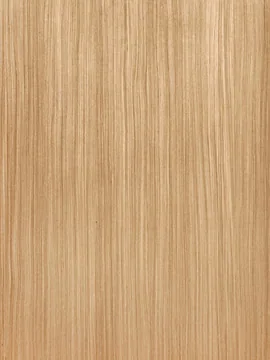
Oak can show visible pores, growth-ring patterns and ray figure, but slicing, staining and coatings change how those features appear. A straight-grained face can be natural; a repeated pattern may warrant further questions without proving that the face is printed. Our veneer cutting and matching guide explains how production creates different appearances.
US Forest Service guidance on wood structure explains why anatomical features underpin wood identification. A finished surface photograph lacks much of the information available in a prepared sample. When identity is critical, retain a traceable sample and ask a qualified wood-identification laboratory what it can establish from that material.
Judge the panel by its construction and finish
Panel mass depends on dimensions, core density, moisture and attached materials. A heavy MDF-core panel can outweigh a veneered plywood panel; neither result establishes the face species. Dark stain does not prove fraud, and a pale clear finish does not prove authenticity. Natural colour variation, selected character and declared repairs should be assessed against the agreed appearance, not a rule that the most uniform wood is always best.
For species, bonding and emissions requirements, use the relevant identification or performance method. Water drops, smell and improvised burn tests provide no reliable substitute. The finished sample is most useful for choosing appearance and checking the detail you will make.
Check delivery against your selected sample
| Check | Evidence to retain | Question it resolves |
|---|---|---|
| Shipment identity | Order, packing list, panel labels and lot references | Is this the material intended for this order? |
| Face and core | Written construction and representative section | Does the delivered build match the description? |
| Colour and figure | Approved range and adjacent panels in order | Does the set meet the appearance agreement? |
| Dimensions | Measurements, locations and stated tolerances | Can the planned parts be made from these sheets? |
| Surface condition | Marked photographs of seams, damage and repairs | Which locations need investigation? |
| Required performance | Relevant product reports and sample identity | Does the evidence cover the supplied construction? |
Agree the natural character you want
Record permitted sapwood, knots, mineral marks, repairs and colour spread in the sample agreement. An attractive figure is a design preference, while an open seam or lifting face is a different condition. ISO 2426-2 covers hardwood plywood surface appearance, including wood characteristics and manufacturing defects; its scope excludes overlaid panels. If a grading system is specified, identify the applicable material, class and edition instead of assuming that A, AA and premium mean the same thing.
Check the panel condition on arrival
Note packaging damage, wet areas, edge swelling and panel distortion on receipt. Record storage conditions and use a suitable measurement method if moisture content is part of acceptance. A meter reading needs the instrument settings, panel type and measuring locations to be interpretable. The agreed product and destination conditions determine the acceptance requirement; no single number identifies genuine oak.
Use labelled samples for a species question
Set aside the affected pieces before machining or refinishing them. Record which sheet supplied each sample and preserve both disputed and comparison material. Ask the laboratory whether it can identify a species, a species group or only a broader wood category. The Global Timber Tracking Network's methods review explains that identification and provenance methods have different strengths and limitations. A wood identification result does not automatically prove where a tree grew.
Move from the oak sample to your order
Start with our oak plywood range and send a room photo, preferred grain or current part through our contact form. We help choose the face, plywood or MDF core and finished edge. For a delivery query, include the order reference, affected quantity, photographs and labels so a colour difference, wrong core or damaged face can be addressed appropriately; record any agreed replacement or alternative with the order.
Oak plywood buying questions
Can I match oak plywood to existing furniture?
Start with photographs or an offcut, then compare a physical veneer sample with the intended coating beside the furniture. Natural variation is easier to agree across several pieces than from one small photograph.
Do I need oak throughout the panel?
That depends on your specification and design. For many appearance-led parts, the oak face provides the look while a separately selected plywood or MDF core supports the joint, weight and cost requirements.