
Choose raw MDF for your own paint or finish, melamine faced MDF for a selected decorative surface, or veneered MDF for a real wood face. Start with the furniture you are making and a photo of the look you want. PanelSource manufactures MDF in our own factory and carries out decorative facing, connecting the core and surface choice with full sheets, cut blanks or processed components.
Raw MDF Melamine MDF Wood veneered MDF Browse colour references
We manufacture MDF substrates in our own factory. We plan the grade, dimensions, decorative facing and component processing together for your order.
Choose the finish for your furniture
| Panel | What arrives | What still needs finishing | Common purchasing risk |
|---|---|---|---|
| Raw MDF | Sanded fibreboard faces | Paint, laminate or another planned finish; prepared cut edges | Assuming a smooth face means a routed edge is ready for topcoat |
| Melamine faced MDF | Decorative paper surface pressed to MDF | Exposed edges, drilled locations and component details | Ordering by colour name without a décor sample or core grade |
| Wood veneered MDF | Real wood veneer bonded to MDF | Finish system, edge treatment and appearance matching | Ignoring veneer cut, figure, species variation and face selection |
The surface choice does not settle the core grade. The same decorative idea may be paired with different substrates. Ask which construction is proposed, particularly when thickness, moisture or emission requirements are strict. Our MDF specification guide covers how to write those requirements consistently.
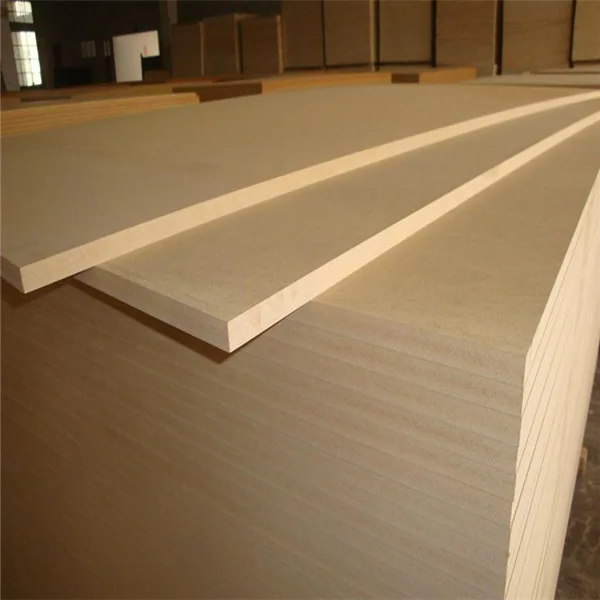
Raw MDF for painted and further-laminated parts
Raw MDF is useful when the buyer controls the final finish: routed doors, painted fronts, mouldings, veneered parts or parts that will receive a separate laminate. Check surface sanding, thickness tolerance and the intended machining. A smooth face does not guarantee that every routed edge accepts the same amount of primer. The European Panel Federation’s finishing guidance explains the different absorption of MDF edges and faces.
For a profiled door, give the drawing and show the deepest cut. For a flat painted panel, describe the coating and required face appearance. We can then compare the board and sample process against the actual use. Do not ask for a generic “paint grade” if the project has a measurable surface or tolerance requirement.
Melamine faced MDF for repeatable décor
Melamine faced MDF is often selected for cabinet carcasses, wardrobes and shelving where a consistent finished colour or woodgrain matters. Specify the décor code or an approved physical reference, texture, gloss, number of faced sides, core grade and edge-band colour. A photo can start the conversation, but lighting and screen colour make it unsuitable as the sole acceptance reference.
Cutting exposes the MDF substrate. Plan edge banding or another appropriate edge treatment, and protect drillings and junctions where the application needs it. For a kitchen cabinet, examine the sink-adjacent joints separately from dry interior shelves. A moisture-resistant core may improve humid-condition behavior; the surface print does not make the assembled cabinet waterproof. Read our melamine MDF material guide for construction and comparison details.

Wood veneered MDF for a real timber face
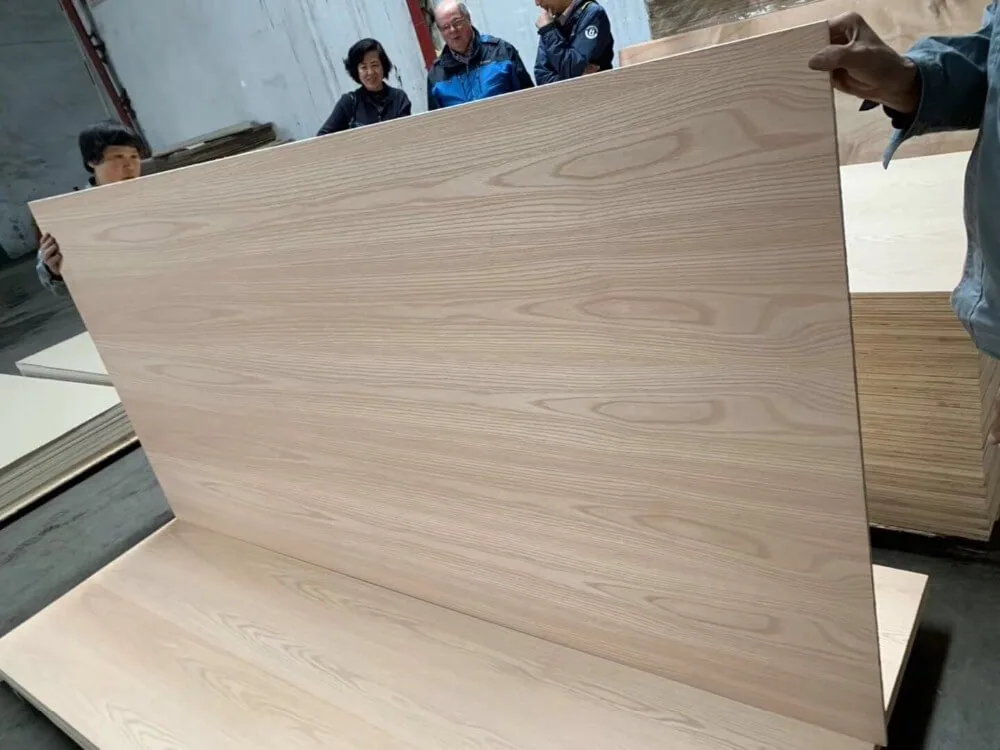
With veneered MDF, the face is real wood. Identify the species and cut, the desired figure, matching method, visible faces and finishing process. A walnut or oak name alone does not decide colour range or grain continuity across several cabinet doors. Approve a representative sample and define whether appearance is judged panel by panel or across a matched set.
Natural veneer needs different handling from a melamine decorative surface. Check the veneer thickness and the permitted sanding allowance before final finishing. Ask how the reverse face is constructed and whether the component needs balanced surfacing to manage flatness. Edges may use matching veneer, solid lipping or another design detail. The European Panel Federation’s veneer guidance is useful background for processing decisions; the final sample and quotation define our order.
Choose the core grade for the service conditions
Grade names refer to defined performance and use conditions, not simply to a green or red dye. The European Panel Federation distinguishes MDF.H, MDF.HLS, exterior MDF and flame-retardant MDF. A humid-use board and an exterior-use board are different specifications; “moisture resistant” does not mean safe for a shower enclosure or continuously wet base.
A fire reaction classification also differs from the fire resistance of a complete wall or door assembly. We will not describe a red board as providing “30 minutes” or “60 minutes” of fire resistance based on colour alone. When the project has a fire requirement, state the applicable standard, classification, tested thickness and end-use conditions, then request evidence for the proposed product or assembly. The European Panel Federation’s classification example illustrates how a reaction-to-fire class is reported for a specified MDF product.
We produce MDF for the planned panel ranges and help choose the core grade around the project. The quotation identifies its exact construction and the documents relevant to that use.
Plan dimensions and processing around the component
Send nominal sheet size and thickness, then the finished tolerance needed after cutting or sanding. If density is important to machining or weight, specify the relevant range or property and how it will be checked. “Light MDF” without a density requirement can conceal different products. Do not use a colour stripe or the weight of one offcut as the only way to identify a grade.
For components, provide the cutting list, grain or décor direction where relevant, drilling pattern, profile, edge-band material and packing sequence. A large panel quote and a finished cut-to-size component quote have different yield and inspection scopes. Identify which you need before comparing prices.
Example: hotel wardrobe doors and internal shelves
A project may use veneered MDF on the visible doors and melamine faced MDF inside the carcass. The doors need a veneer species, appearance range, finish sample and matching plan; the shelves need a décor, edge treatment, load and support details. Both require thickness and emission documentation appropriate to the destination. If the architect requires a fire classification, identify exactly which component and assembly are covered by the requirement.
This example is a way to organise the enquiry, not an assertion that a particular panel meets a hotel fire rule. Keep each part’s construction on its drawing and in its order line. That avoids replacing a veneered visible door with a similar-colour melamine face or quoting an interior shelf as if it were a load-tested assembly.
Sample and shipment checks
- Raw: measure finished thickness and flatness; inspect sanding and trial the intended route and coating.
- Melamine: compare décor and texture with the physical sample; inspect press marks, chipping and finished edge colour.
- Veneer: review species, grain figure, join lines and appearance range; inspect any agreed balancing face.
- All three: match labels, quantity, packing and relevant documents to the order specification.
Review a sample of the actual proposed construction. A photographed face cannot prove the hidden core grade, an emission class or the appearance of a machined edge.
MDF buying questions
Which MDF is easiest to paint?
Raw MDF is the usual starting point for a controlled paint system. Approve the finished face and routed edge with the intended primer and topcoat.
Can a melamine face replace natural veneer?
They create different surfaces. Compare the approved appearance, finishing, edge detail and maintenance expectations for the specific component.
Is green MDF suitable for exterior use?
Colour does not establish an exterior grade. Specify the exposure and request the declared product grade and complete finishing requirements.
Can I start with a photograph of the finish I want?
Yes. Send the photograph and explain the furniture use. We help compare melamine, veneer or a raw MDF finishing route, then choose a sample.
Can one project combine melamine interiors and veneer fronts?
Yes. Keep each component linked to its chosen surface and sample. We help plan the matching edges, grain direction and processing for each part.