
Choose between treated marine plywood and HPL-faced marine plywood around the surface and component you want. Natural wood and coloured laminate create different looks, and a project may use both. We manufacture the plywood and decorative facings, helping you compare the core, finished edges and samples. Share the room or component idea, and we develop each option with its relevant moisture and fire requirements.
Fireproof marine plywood Marine plywood cores Natural veneer plywood
Ask each seller to draw the panel cross-section
Offer A may be a marine plywood core whose veneers or assembled sheet receive fire treatment. Offer B may be ordinary marine plywood bonded to a decorative HPL face. Offer C might combine a treated core and a particular facing. Their cut edges, surface appearance, moisture paths and tested fire behaviour may differ. A label or a face photograph cannot tell the buyer which offer is on the quotation.
BS 1088:2018 addresses marine plywood requirements, while ISO 13894-2 covers HPL composite elements for normal interior use. Neither document means that any finished HPL-faced marine panel is approved for a ship or exterior wall.
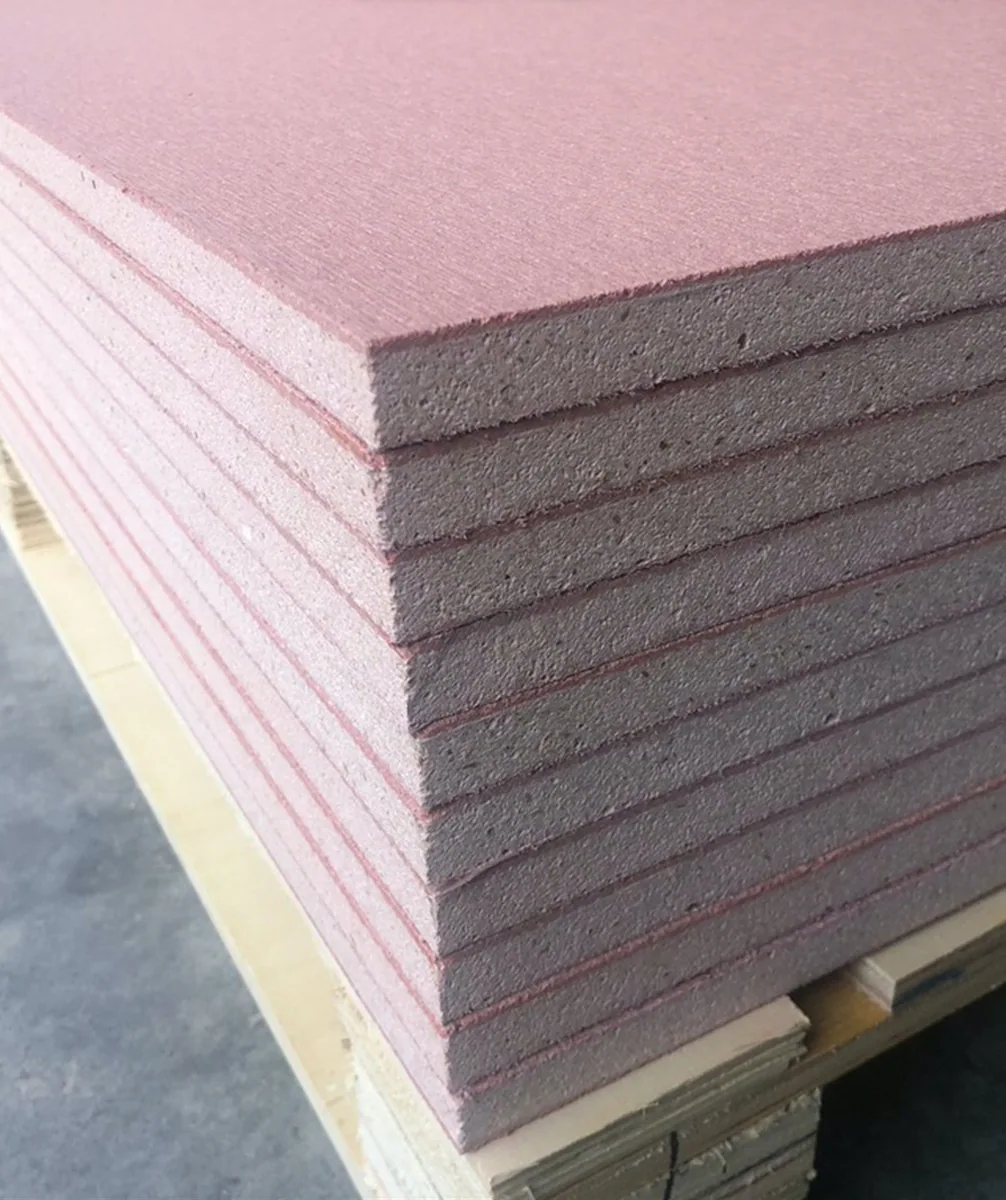
Compare five physical features
| Feature | Treated marine plywood | HPL-faced marine plywood |
|---|---|---|
| Visible surface | Wood veneer or specified finish | Laminate décor and texture |
| Fire route | Treatment and tested sheet | Finished facing-core composite test |
| Bond questions | Veneer glue and treatment compatibility | Marine core plus face-bond adhesive |
| Cut edge | Treated or exposed veneers as made | Exposed laminate bond and core |
| Primary sample check | Layup, surface and treatment identity | Laminate bond, balance and edge seal |
A treated core may also receive an HPL face, but that creates a third construction requiring its own assessment. Include that cross-section when developing a fireproof plywood door.
Use the destination’s fire procedure
For construction products, EN 13501-1 concerns reaction to fire in end use. For regulated ship materials, IMO describes SOLAS fire protection and the 2010 FTP Code. A building class cannot be silently translated into a vessel approval, nor can an HPL sheet result be transferred to a different wood core.
Marine plywood is still wood and can char. The US Forest Service Wood Handbook explains the bounded effects of fire-retardant treatment. Use the fire requirement set for the specific venue or vessel.
Compare moisture risk at the finished edge
The plywood core, HPL face bond, edges, penetrations and fasteners all see the installation’s moisture conditions. A protected cabin fitting differs from a continuously wet deck. The buyer should state salt spray, cleaning water, condensation or direct weather exposure and request documents for that service. Weathering research on fire-retardant-treated wood shows why the treatment’s fire performance after exposure may require separate evidence.
Do not assume either offer has insect resistance. Fire treatment, marine bond and biological protection are separate properties, each needing a relevant product record where specified.
Example: two panels for one vessel interior
The architect wants natural wood for a cabin wall and a coloured wipe-clean finish near a pantry. A treated marine plywood construction could be considered for the first location; an HPL-faced marine composite could be considered for the second. The vessel’s fire requirement applies to each finished surface and installation. We obtain distinct documents and samples for each, rather than declaring them equivalent because both quotations contain “fireproof marine”.
When doors or cabinets are fabricated, hinge cuts and exposed edges are reviewed against the selected panel. The maker should not swap the core while keeping the same decorative face and assume the test result follows.
Review each proposal as a fabricated detail
Give the treated-core, HPL-faced and combined proposals separate references. Put the maker or product identity and report reference beside each cross-section, with the tested thickness, facing, backing and mounting details. Our product-document guidance helps organise the evidence for each offered construction. Ask the project reviewer to confirm how that scope applies to the planned component before selecting a proposal.
Review a representative fabricated detail for each shortlisted proposal, including the cut edge, hinge recess or opening, face-bond line, reverse and intended edge finish. Our cut-list guidance and sample and order guidance help define the supplied work and remaining fabrication. Keep this fit and finish review separate from the fire classification. Carry the selected proposal and accepted sample references into the order specification and receiving checks, then follow the delivery trace below.
Keep the approved construction identifiable through delivery
The comparison is only useful if the ordered and delivered panels match the documents. Record the core, face, adhesive or treatment route, overall thickness, finish and approved sample reference on the purchase order. Where a report names a specific maker or product code, keep that identity on the quotation and packing record. A different colour or core may look harmless commercially but could be outside the test scope.
At receipt, inspect the pack identification, count, sheet edges and surface against the approved sample before fabrication. Set aside any variant for a document check instead of mixing it into the installation. This is especially important when a project orders both natural-veneer and HPL-faced panels of similar size. The yard can then trace each component to the intended cabin location and its evidence set.
A comparison we can answer
For a detailed discussion, share the information you have: both proposed constructions, their data sheets, intended finish and the destination’s fire and marine requirements. Include drawing, edge detail, thickness, quantity and mounting via our enquiry form. Our HPL-faced marine panel guide explains the facing route; the dual-requirement guide lays out the evidence tracks.
Comparison questions
Is one option always safer?
No. The applicable class and construction must be verified for the actual use.
Does a treated core make any HPL facing compliant?
No. The finished composite may need separate fire and bond evidence.
Can an HPL face make an unsuitable core marine grade?
No. The underlying plywood and its bond still need to meet the specified wet-service requirement.
Can I use both wood and HPL finishes in one interior?
Yes. We can develop separate panel constructions for the relevant locations and coordinate their sizes, edges and samples with the design.
How can I start a comparison without complete drawings?
Send a room photo and the finishes you like. We can shortlist the construction options, then develop a cut sample and panel schedule.