
Fire-retardant marine plywood brings marine plywood construction and a project fire requirement into the same panel choice. It is a starting point for boat interiors, linings and fitted components where both requirements matter. Tell us the component or show us a photo. We help develop the core, finish, custom sizes and sample, with the relevant reports connected to the proposed construction.
Fireproof marine plywood Marine plywood constructions Decorative veneer options
What the marine part describes
Plywood is built from wood veneers bonded into a sheet, usually with grain directions crossed to improve dimensional behaviour. Marine plywood places particular emphasis on veneer quality and bonding for demanding service. BS 1088:2018 defines requirements for two classes of marine plywood. A buyer should specify which class or other destination standard applies, rather than treating “marine” as a synonym for indefinitely waterproof.
Faces, edges, joints, fasteners and coating still determine how a finished component survives wetting. A marine bond does not stop a cut edge from absorbing water, nor does a veneer standard design the complete boat or building. We ask where the panel will be installed and how it will be protected.
What the fire-retardant part describes
A treatment or facing can modify a wood panel’s response to heat in a defined test. It may be incorporated in a veneer, an assembled sheet or a surface system, depending on the actual product. It does not make wood noncombustible. The US Forest Service Wood Handbook fire chapter describes reduced surface flammability and continued charring in fire-retardant-treated wood.
For construction products, EN 13501-1 classifies reaction to fire in an end-use context. A class must be tied to a named panel, thickness, face, backing and mounting. A board-level result does not by itself give a wall or vessel compartment a resistance time.
Connect the production route with the chosen panel
Some products use treated veneers before pressing; others may be treated after assembly or combined with a specified coating. Treatment route can affect penetration, moisture uptake, glue bonding and finish. We do not claim that every marine/fire panel is pressure treated, contains the same additive or receives a fixed chemical weight gain. The production and test records for the offered panel must establish its route.
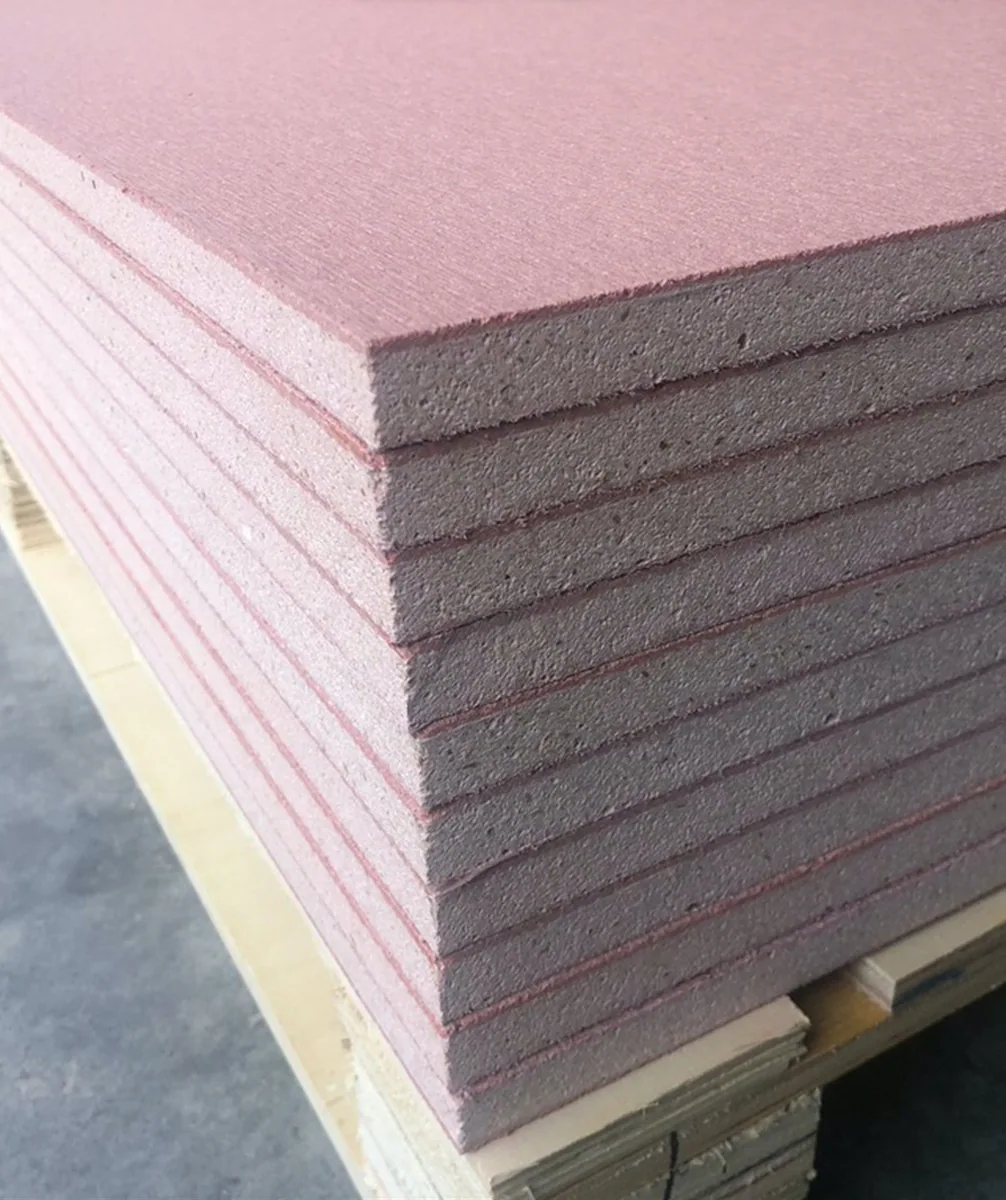
The visible colour is not a reliable identification method. A pale face or tinted core can arise from many choices. We identify product type by data sheet, report and order marks, then check a representative cut sample for layup, gaps, face and edge workmanship.
Read the evidence as two tracks
| Track | Check | It does not establish |
|---|---|---|
| Marine construction | Applicable class, veneers, bond and panel identity | Fire class or weathered fire treatment |
| Fire reaction | Finished product and end-use test scope | Marine bond or indefinite water resistance |
| Wet-service durability | Edge detail, finish and relevant exposure evidence | Structural or fire approval of an assembly |
| Assembly design | Designer’s complete specification and test basis | Transfer to unrelated installations |
US Forest Service research on weathering of fire-retardant-treated wood explains why exterior fire claims may need evidence after wetting and weathering. A dry-interior fire result must not be copied onto an exposed marine component. Moisture and fire evidence need to cover the same proposed construction at the relevant exposure.
Where this combined requirement may arise
A buyer may need a plywood lining in a humid marine interior, an exterior waterside installation or a decorative panel subject to a local fire rule. These settings differ. A protected cabin lining may need a visible veneer and a specified fire result; an exposed deck component may need much more demanding moisture and treatment-durability evidence. We ask the project designer to identify the local rule and assembly detail rather than naming a universal “marine B1 board”.
If the project only needs an interior decorative panel, marine plywood may be unnecessary. If it only needs a wet-service panel, fire treatment may be unnecessary. Selecting each requirement deliberately keeps the quote and the evidence aligned.
What to send us
For a detailed discussion, share the information you have: the component location, exposure, drawing, veneer and finish, thickness, quantities, destination and the exact marine and fire requirements. Include any mounting or assembly conditions. Our two-part specification guide shows the document checklist. Share the project details through our enquiry form.
Definition questions
Is fire-retardant marine plywood MDF?
No. MDF is a fibreboard, while plywood is made from veneers. They need separate product data and tests.
Does the treatment extinguish a flame by itself?
No universal claim follows from the name. The finished panel’s measured behaviour under the relevant test is what can be stated.
Does “marine” mean the fire treatment survives weather?
No. Ask for weathering or wet-exposure evidence for the actual treated construction.
Can I start with a boat interior photograph?
Yes. Tell us which part you are making and how it will be used. We can begin the core and finish discussion from that information.
Can the order include decorated and cut panels?
Yes. We manufacture the substrate, apply decorative facings and can supply custom panels or parts to the agreed drawing.