
Need fireproof and waterproof plywood for the same project? Start with the component you are making and where it will be used. A boat interior, fitted cabinet or protected exterior detail gives us a practical starting point for the core and finish. Our factory team helps develop the plywood construction, sample and quotation, bringing moisture exposure and the required fire rating into one panel schedule.
Fireproof marine plywood Marine plywood options
Define the actual wet-service condition
Is the panel used inside a boat, under a protected deck, in an exposed exterior lining or in a permanently wet assembly? Salt spray, direct rain, intermittent condensation and temporary transport wetting are different exposures. Specify where water reaches the faces, edges and fixings, and how long it can remain. The panel also needs a construction and protective detailing appropriate to that use; a durable glue line alone does not preserve unsealed timber against every wet-service risk.
BS 1088:2018 sets requirements for two classes of marine plywood. It does not by itself establish the project’s fire class, structural design values or a finished craft’s approval. Where the application is not a marine craft, the project may instead specify plywood under EN 636 for dry, humid or exterior use. The buyer should name the applicable document and grade, not assume that a general phrase such as “waterproof marine” is test evidence.
Define the fire requirement independently
For a construction product, a destination may require a reaction-to-fire class for the installed surface. EN 13501-1 classifies reaction to fire in an end-use context. State the full requested class, any smoke or droplet subclass, thickness and mounting. If the requirement is for a wall, ceiling or door to resist fire for a period, that is an assembly question under a different assessment; a bare sheet cannot supply the rating.
Do not assume a fire treatment remains effective after repeated wetting. US Forest Service research on weathering of fire-retardant-treated wood describes why exterior fire evidence may require weathering before testing. Ask for durability evidence appropriate to the actual exposure and treatment. We do not convert a dry-interior class into an exterior promise.
Keep the evidence in two columns
| Question | Panel evidence | Not established by it |
|---|---|---|
| Marine or wet-service construction | Named standard/class, veneer and bond details, grade and test scope | Fire classification |
| Reaction to fire | Report for the finished thickness, face, treatment and mounting | Marine bond or water durability |
| Weathered fire performance | Applicable exposure/conditioning evidence for the treatment | Indefinite life in any climate |
| Structural application | Design properties and assembly details specified by the engineer | Automatic approval from either label |
Short labels, a blanket boiling-time claim or a generic “Class B” are not usable without matching reports and the correct standard. We do not present inspection-body names or ratings as properties of our whole range. The relevant order documents must name the tested product and the responsible issuer.
Specify the physical panel
State core and face species or accepted alternatives, thickness and tolerance, sheet size, veneer defects, bond and intended finish. Where treatment is part of the proposal, identify whether veneers, the assembled board or the surface are treated. Check that the treatment does not compromise the required glue bond, strength or finishing. The US Forest Service Wood Handbook notes that treatment can influence wood-panel properties and remains subject to charring.
A marine-use panel may need sealed edges, drainage, ventilation and suitable fasteners in the final design. We can discuss panel construction and samples, but the craft or building designer must approve the complete assembly, coating and installation.
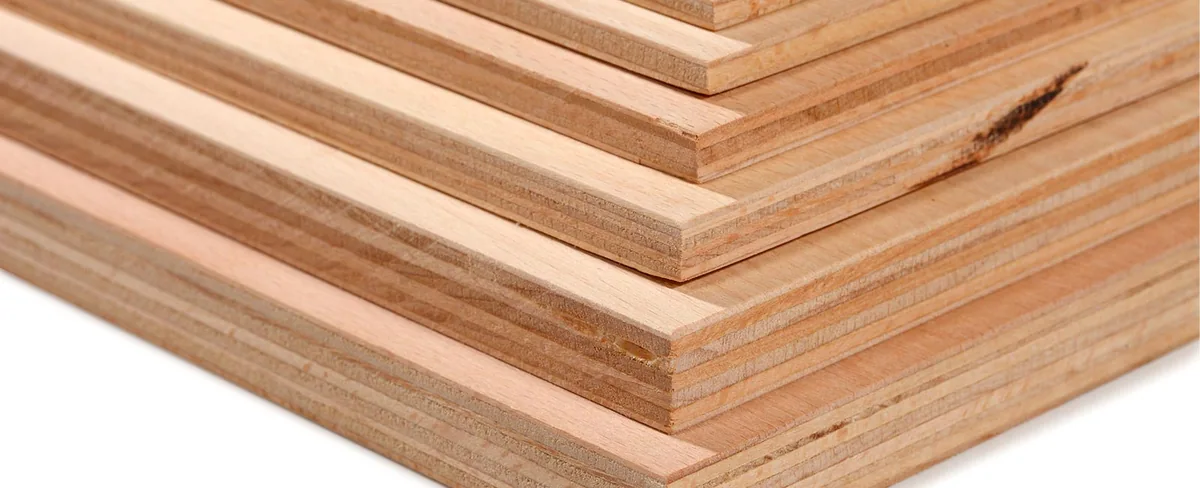
Example: covered marine interior lining
The buyer wants an attractive plywood lining inside a vessel compartment. First, they identify the moisture and bond requirement for this protected but sometimes humid location. Second, they provide the destination’s applicable fire test and end-use configuration. Third, they select the veneer finish and edge treatment. We compare a proposed sample and report with all three parts; a result for unfinished plywood cannot simply be copied to a veneered and lacquered lining.
If the buyer later moves the same sheet to an exposed deck enclosure, the wetting and fire-durability assumptions change. We review the specification again rather than extending the original report by analogy.
What to send for an accurate quotation
If you are still choosing the construction, compare our fireproof plywood options for interior linings, furniture and marine projects, then bring the separate moisture requirement into the same panel brief.
For a detailed discussion, share the information you have: the use location, exposure, destination, named marine or plywood standard, named fire requirement, thickness, face/finish, size, quantity and drawing. Attach any system-level detail through our enquiry form. Our marine plywood guide explains the wood-panel side; the fire-retardant guide explains the fire side.
Dual-specification questions
Does “marine” mean waterproof forever?
No. Bond construction, veneers, sealing, exposure and maintenance all matter.
Does a fire class prove marine durability?
No. The fire result addresses a different property under specified conditions.
Can one certificate cover a changed finish?
Only if its scope explicitly permits that finished construction and application.
Can I start without knowing the exact panel grade?
Yes. Describe the component, location and water exposure. We help develop a panel choice and identify the project requirements to include.
Can the quote include facing and custom cutting?
Yes. We manufacture plywood substrates and facings and can include custom panel sizes, machining and agreed edge details in the proposal.
Use a four-axis shortlist
| Brief | Exposure | Fire evidence | Construction and finish |
|---|---|---|---|
| Protected cabin lining | Humid interior | Destination’s lining requirement | Approved decorative face and mounting |
| Waterside exterior sign | Direct weather | Relevant result after suitable conditioning | Weather-suitable core, edges and coating |
| Interior exhibition panel | Dry short-term use | Venue’s exact rule | Cut geometry and visible finish |
These rows are examples, not preapproved grades. In each, request the report and data sheet for the specific construction and identify any gap. If the fire requirement is for a complete wall, the row must also include the designer’s assembly detail.