
Growing elm for veneer matters to a panel buyer because stem quality influences usable veneer, grain and the finished face. If your aim is elm furniture or wall panels, start with a photo or wood sample. We manufacture plywood and MDF substrates and decorative panels, and can develop the face and construction around your project. The growing and mill-trial guidance below explains the upstream material choices.
Decorative plywood Veneered MDF Custom panels and parts
Identify the elm behind your veneer choice
Elm is a group of species, not one uniform raw material. Record the botanical name alongside any local trade name. For planted material, also keep the source of seed or planting stock and any cultivar or selection identity.
Kew identifies Ulmus pumila as an accepted species with a native range across parts of Asia. That record helps clarify identity; it does not establish that another wood called white elm or northern elm is the same species.
Keep reported density with its moisture and measurement basis. A wet-log mass per volume cannot be compared directly with a conditioned veneer value or finished-panel shipping weight. Our wood identification guide explains the limits of names and visual checks.
Connect the growing resource to the desired face
For a decorative panel, colour, grain and matching potential guide face selection. For rotary veneer, usable block geometry and the accepted dry-veneer grade guide conversion. Identifying the intended face or core role connects growing decisions with the material the finished board needs.
Discuss the intended conversion route with a potential mill before treating a plantation as a future plywood resource. Ask about usable lengths, diameter range, straightness, branch defects and how the mill measures accepted volume. Keep these as buyer-specific requirements, not a universal elm grade.
The relevant yield is the quantity that meets the intended use after conversion and grading. For an elm-faced furniture order, that means enough veneer within the agreed colour and grain range; timber growth and decorative-face recovery are separate measures.
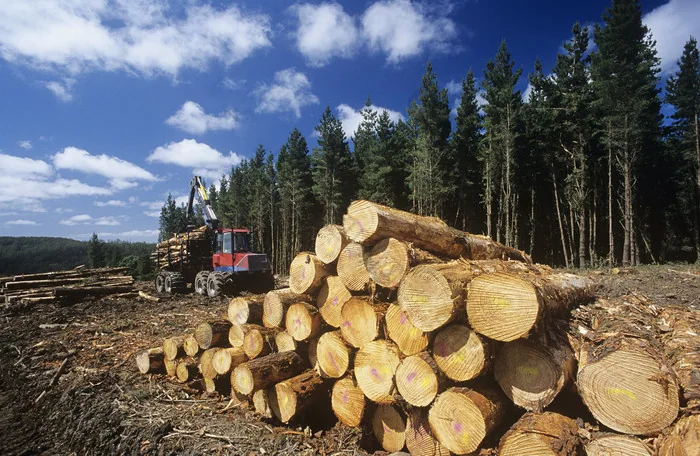
Understand how growing conditions shape the resource
Record the site's climate, soil and drainage conditions, water availability and exposure. A species' presence in a region does not prove that every seed source will establish well on a particular field.
Forest Research's provenance guidance emphasises matching species and planting origin to site conditions and management objectives. Its regional recommendations concern the UK; the broader decision framework is useful, but local forestry advice is needed for an elm planting elsewhere.
Build the establishment plan around suitable nursery stock, handling, planting conditions and follow-up inspection. Record survival and the reasons for failures. Irrigation, spacing, nutrition and competing vegetation management should follow site evidence rather than a single calendar or fertiliser rate copied between climates.
Look for stems that can yield useful veneer
For veneer production, inspect prospective crop trees for forks, sweep, damaged leaders and large branches. Record both growth and form: increasing diameter does not erase the history of a branch or an earlier stem injury.
The Forestry Commission handbook Growing Broadleaves for Timber explains formative pruning as a way to favour a straight leader and address oversized branches before large wounds develop. This is general broadleaf guidance, not a fixed elm pruning schedule.
Have the timing and extent of intervention assessed for the actual species, tree condition and site. Keep enough healthy crown for continued growth. Thinning decisions also need to balance competition, stem development and stability rather than simply maximising space around every tree.
Consider tree health when assessing a wood resource
Health problems can change both standing volume and the timing of usable supply. Inspect and record unusual crown decline, branch death, bark damage and changes in growth. A symptom record should identify affected trees and dates so progression can be assessed.
Forest Research's Dutch elm disease guidance provides information on symptoms and appropriate responses to suspected disease. Do not assume that all elm species or named selections have identical susceptibility, or identify a disease solely from one photograph.
Use local diagnostic advice for affected trees and follow applicable movement requirements. Keep any disease-resistance claim attached to its actual selection and evidence. Resistance to one disease would not prove veneer quality or eliminate every other source of loss.
Assess the logs that will actually be converted
| Record | Useful detail | Decision it supports |
|---|---|---|
| Resource identity | Species, source area and lot reference | Whether separate resources are being mixed |
| Stem dimensions | Length and diameter distribution, curvature | Block preparation and equipment suitability |
| Visible condition | Knots, splits, decay and handling damage | Trial grading and expected exclusions |
| Handling history | Felling, storage and delivery records | Whether condition has changed before conversion |
Keep representative observations rather than selecting only the best log for inspection. Agree how end damage and unusable sections affect the accepted quantity. The assessment should reflect the lot that will actually be processed.
Review elm veneer on the intended panel
A mill trial should track accepted veneer, not just whether a log can be cut. Record thickness variation, surface condition, splits and grading losses through conversion and drying. For decorative faces, include the appearance after the proposed finishing process.
Then assess the intended panel construction, including the substrate beneath the elm face. Review the appearance on the proposed plywood or MDF board, and verify the relevant finished bond and mechanical requirements. Document any changes from the comparison panel so the sample represents the order.
Our raw-wood selection guide explains layer roles, while our veneer cutting and matching guide helps define the decorative result. Neither substitutes for evaluating the actual elm lot.
Bring your elm appearance into a panel order
For elm furniture or interior panels, start with a face sample or photo and the intended component. Tell us whether you want natural elm veneer or an elm-style printed decor. We help settle the substrate, finish and sample before adding dimensions and quantity for pricing.
If you are evaluating a particular wood resource, include its identity, location, dimensions, condition records and any veneer trial results. Avoid promising a harvest age, recovery percentage or supply volume before the resource has been assessed.
Discuss the elm face and panel construction with us. We bring the selected appearance, substrate and finished-part requirements together, using a representative sample to guide the panel order.
Elm veneer panels buying questions
Can I start with an elm furniture photograph?
Yes. A photograph helps establish the grain and colour direction. We then use a physical veneer and panel sample to agree the appearance, substrate and finish.
How do I choose the substrate beneath an elm face?
Start with the component, visible edges, fixing method and intended finish. We can compare plywood and MDF substrates, then review the selected elm face on a representative panel sample.