
A new plywood or MDF construction can improve the weight, finish, machining or material use of a familiar component. Start with the part you want to improve and a photo, drawing or existing sample. Our factory makes both substrates and decorative facings, giving you a way to compare constructions and custom panels around that practical goal. This guide takes the choice through a representative trial and first order.
Lightweight MDF Custom MDF Decorative plywood
Name the problem the new material should solve
Begin with one defined application and an observable objective. Examples include reducing the mass of a removable access panel, improving the edge finish of a routed part or reducing cutting loss in a repeated component schedule.
Describe the current problem and its measurement. Choose the main fabrication, installation or service improvement first. That gives the sample trial a clear purpose and makes the cost comparison easier to use.
Keep the component's other requirements visible. A lighter panel still needs suitable fixings and the required performance. A more uniform decorative face still needs to suit the chosen coating, cleaning method and service conditions.
Our MDF or plywood project guide helps define an initial material brief. This guide addresses a later decision: changing the panel after a baseline already exists.
Compare the alternative with your current component
Identify the current panel construction, thickness, dimensions, faces, back, edges and relevant documents. Include the finished component drawing and the installation or hardware interfaces that depend on those details.
Distinguish an actual contract requirement from a habit carried over from an earlier project. Some properties may be flexible; others may be essential to design calculations, fire evidence, finish matching or the customer's manufacturing process.
If the original material is known only from an offcut, first build a usable description with our reference-sample guide. An uncertain baseline makes a claim of equivalence difficult to assess.
List the proposed differences explicitly. Two panels with the same commercial name may differ internally, while a differently named construction may satisfy some requirements after proper assessment. Neither conclusion should be based on the name alone.
Follow each change into the adjoining detail
Review what the alternative affects beyond the sheet itself. A thickness change can alter a rebate or flush junction. A different core can change the conditions around a connector. A new surface treatment can require a different finish trial.
| Proposed change | Connected question |
|---|---|
| Lower panel mass | Are stiffness, fixings, handling and required assembly performance still suitable? |
| Different core or layup | Do routed pockets, edges, joints and relevant material values remain appropriate? |
| New face or overlay | Does the finished appearance, adhesion, cleaning response and evidence remain applicable? |
| Changed thickness | Can tolerances, clearances, fasteners and adjacent finished levels accommodate it? |
| Different sheet format | Does the actual cutting plan preserve orientation, quantity and usable yield? |
Assign these questions to the responsible designer, fabricator or installer. A supply quotation can describe the panel, but it cannot silently resolve changes to another party's design.
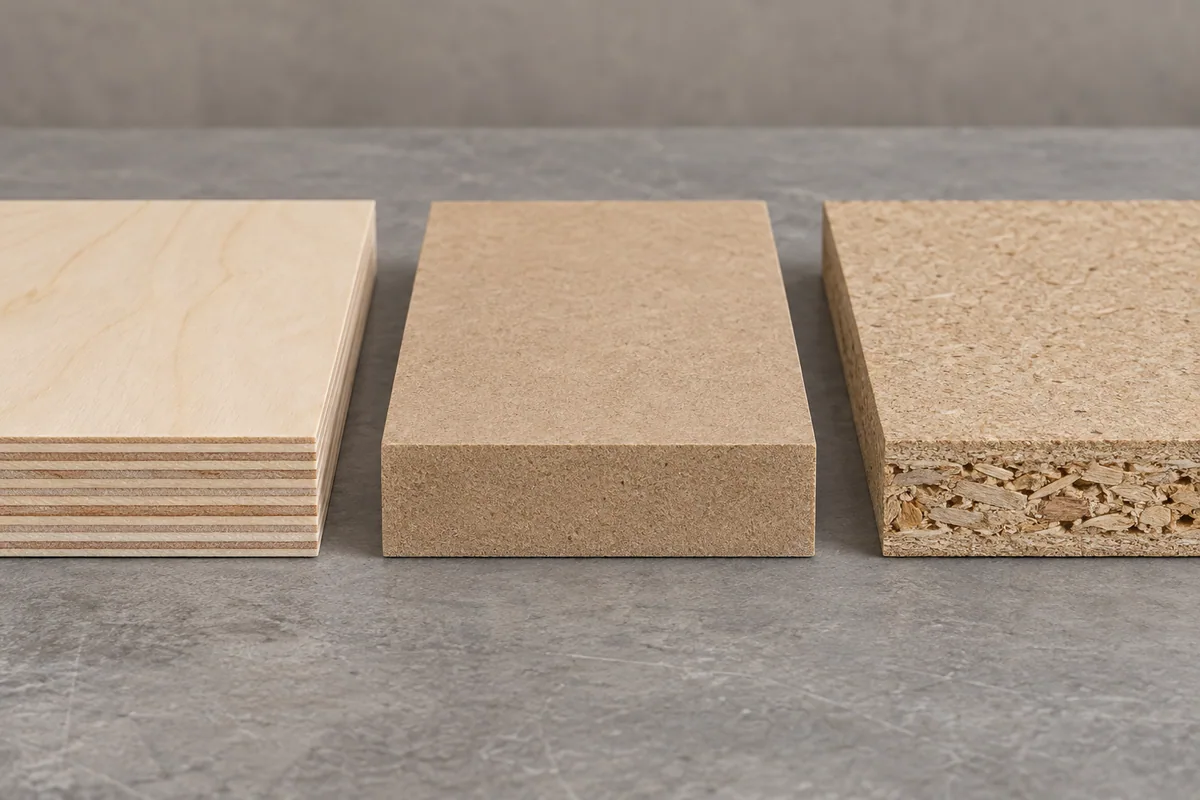
Choose evidence for each project question
Identify what needs measurement, a laboratory test, a design assessment or an appearance comparison. A clear finish sample can answer a visual question; it cannot establish structural capacity, emissions or fire classification.
ISO/IEC 17025 concerns the competence and consistent operation of testing laboratories. When using laboratory evidence, check the relevant accreditation scope, test method and identification of the tested construction. Laboratory accreditation is not a blanket product certification.
For example, BS EN 310 addresses bending tests on wood-based panels. Such a test answers a defined material question; it does not independently qualify every completed component made from that material.
Check the scope of existing reports before reusing them. A change in surface, thickness or construction may need further assessment. Keep the test identity connected to the exact alternative rather than borrowing evidence from a neighbouring product in the range.
Build a trial around the most demanding component details
Use material representative of the proposed supply and make the parts that expose the important differences. Include the actual edge, routed profile, fixing pocket or surface treatment instead of relying only on a plain rectangular coupon.
Define the operations and acceptance criteria before the trial. Record the cutting and finishing setup, material identity, drawing revision and the observations relevant to the objective. Use the intended finish and hardware where their interaction is part of the question.
For example, when evaluating a lighter decorative access panel, inspect the finished appearance, fit, handling and operation of the specified retention system. Any required load or safety assessment remains a separate planned activity. Easy lifting alone does not demonstrate complete suitability.
Keep trials for alternative constructions identifiable. If the cutting setup changes midway, record that fact so the team does not attribute every difference in edge quality to the panel itself.
Document the substitution as a project decision
Summarise the proposed change, its reason, supporting evidence and effects on dimensions, cost, schedule and adjoining work. State the application and component range for which the alternative has been evaluated.
AWI's submittal guidance calls for material substitutions to be identified separately rather than hidden in shop drawings. Where that framework is specified, follow it; in other projects, use the applicable contract process to obtain a clear written decision.
Keep unresolved differences visible in the technical comparison. Do not describe an alternative as fully equivalent merely because it meets the primary objective. The responsible project parties need to decide whether each remaining difference is acceptable for the intended component.
Update the controlling specification and drawings once the decision is made. A note in an email should not leave the fabricator working from a conflicting older detail.
Keep the first project order identifiable
Specify the agreed construction, sample reference, drawing revision, quantities and evidence for the first order. Identify the parts or project area where the material will be used so that receipt and fabrication observations can be traced back to it.
Check dimensions, finish and documentation at receipt, then follow the agreed component checks during fabrication and installation. Keep material from different versions distinguishable when a project contains both the original and the alternative.
Review any problems against the actual requirement before expanding the use. A successful first order supports the assessed scope; it does not prove suitability for unrelated exterior, structural or fire-rated applications.
For repeat supply, retain the construction and change record. Later alterations in the material or processing should be assessed against the same critical requirements instead of being treated as automatically covered by the first trial.
Bring your idea or existing part to our factory
Start with a photo or drawing of the current part and the change you want. We can help shortlist constructions and finishes, then add the dimensions, quantity, destination and named performance standards as the sample or first order takes shape.
We can discuss our plywood and MDF constructions against that comparison and confirm the agreed material and processing scope. Where appearance matters, connect the trial with the adjoining finish and junction details.
Discuss a new panel application with us. A defined objective, representative trial and written component specification make a useful improvement repeatable without relying on broad claims that a new building material is automatically better in every respect.
Practical buying questions
Can I begin with a panel offcut?
Yes. Send photos of its face and edge with the part's use and the improvement you want. A physical reference can then help compare the proposed construction.
Which sample is most useful for a new panel?
Choose one that includes the demanding detail: a routed edge, fixing pocket, finished corner or joint. This makes the trial relevant to the part you will produce.