
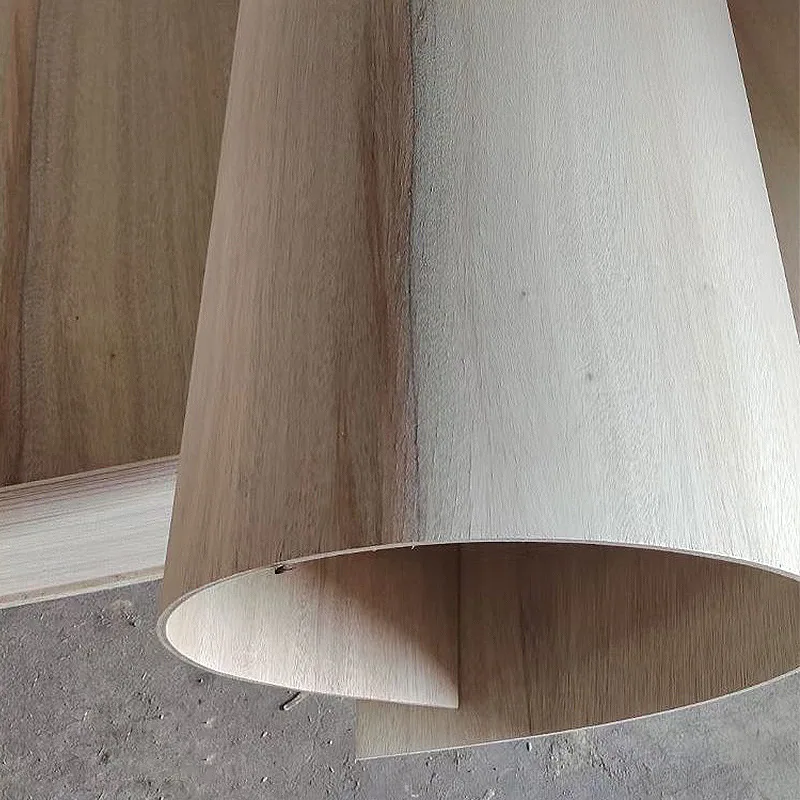
Flexible plywood brings rounded forms to reception desks, cabinet ends, column casings and retail displays. Show us the space or furniture you are creating, even if the design is still a sketch. We manufacture plywood and MDF substrates with decorative facings and help choose a construction for the curve, finish and workshop process. A representative sample connects the idea with the finished component and its cost.
Flexible plywood Flexible MDF Decorative plywood faces
Reception desks and bar fascias
A curved front needs a continuous visual surface, clean end returns and a secure connection to its framework. Mark the front radius, overall height, plinth, joints and service openings. Decide whether the face will be veneer, laminate or paint and whether seams can remain visible. For a bar, define likely splashes and protected edges; the fascia and heavily used countertop may need different constructions.
Column casings and wall returns
A column wrap is usually a decorative enclosure around a separate support, not the load-bearing column. Determine how the casing is fixed, where it opens for services and how joints align at the floor and ceiling. A tight radius may force a different layer build-up or facing. Tapered columns need changing geometry rather than one cylinder dimension. Installation in public interiors also needs the applicable finished-assembly fire specification; a raw sheet's flexible behaviour provides no fire classification.
Curved cabinet ends and furniture fronts
A fixed cabinet end and a moving curved door have different demands. The door needs controlled thickness, hinge or sliding hardware, shape retention and repeatable gaps. Include the hardware bores and loaded condition in the sample assembly. US Forest Service guidance describes curved and laminated plywood components. A formed skin can contribute to a finished furniture assembly, but the flexibility of the loose sheet does not demonstrate the load capacity of a chair, shelf or moving door.
Retail displays and exhibition components
Displays may need low handling weight, repeat assembly, concealed fixings and replaceable decorative skins. State whether the component travels flat or preformed and how it is protected. Coordinate the material, joints, reuse plan and packing with the venue requirements.
Choose a forming route for the shape you want
Constant-radius surfaces can often be planned with a simple profile and repeated frame. Changing radii, compound curves and sharp transitions need more detailed trials. For a spherical surface, provide sections in both directions so the trial represents the whole shape. The chosen panel, facing and fabrication route must be evaluated together. Our geometry guide explains the drawing, orientation and sample information needed to settle the shape.
| Application | Design focus | Useful sample |
|---|---|---|
| Reception desk fascia | Continuous finish and end returns | Curve with a visible joint |
| Column casing | Frame, access and closure | Joint and service opening |
| Moving cabinet front | Hardware, shape and clearance | Complete moving part |
| Retail display | Transport and repeated assembly | Fixing and packing trial |
| Complex sculpted surface | Multiple curvature directions | Most demanding geometry |
Coordinate decorative curves with structural design
Boat hulls, aircraft components, curved roof panels and pressure-loaded concrete forms require their own materials, design and evidence. APA publishes a dedicated design method for structural curved plywood roof panels. That shows why an architectural curve and a load-bearing curved assembly are distinct requests. Where the curve has a structural role, coordinate the material with the project engineer's design and evidence requirements.
Compare the cost of the finished curve
Include blanks, orientation-dependent yield, layers, adhesive, tooling, former, decorative facing, finishing, trial work, rejected parts, assembly and packing. A lower sheet price may provide little saving if the facing cracks at the required radius or the nesting wastes the wrong-direction sheets. Compare dated quotes for the same drawing, quantity and acceptance criteria. Include the agreed tooling ownership, trial allowance and packing method so each quotation covers the same delivered result.
Plan for a single piece or a repeat order
A single installation may use a simple reusable template and site fitting. Repeated doors or display modules need stable tooling, traceable batches, consistent orientation and measured final shapes. Store approved reference parts and drawings for later orders. A change in adhesive, facing or raw panel may justify a fresh trial. For export orders, compare shipping formed components with shipping supported flat blanks, including the fabrication work available at destination.
Start with your curved interior idea
Send a photo or sketch of the desk, cabinet, column casing or display through our enquiry form. We help develop curve sections, supporting frame and facing around the intended use. Add the sizes, sample needs, approximate quantity and destination you have, and we will connect them with our customization and services workflow. Our material introduction explains bending plywood, and our forming guide helps plan the workshop process.
Curved interior panels buying questions
Which projects suit flexible plywood?
Rounded cabinet ends, reception fascias, column wraps and curved displays are useful starting points. The construction and sample are developed around the shape, support and finish.
Should I compare only the price per sheet?
Include material yield, facing, forming, assembly and packing for the same component. A quotation tied to the drawing and sample makes the delivered scope easier to compare.