
Buy bamboo panels by starting with the component you want to make, then choosing the construction, finished size and supplied processing. A woven formwork face, a strip-laminated furniture panel and an industrial pallet need different specifications. Send a use description, photograph or existing dimensions; we help develop the panel enquiry and sample around the work. PanelSource manufactures plywood and MDF, and we can also compare a wood-plywood option when your project allows a material choice.
- Concrete formwork: discuss the bamboo mat or composite construction and working face, alongside film faced shuttering plywood if a wood option is suitable.
- Furniture and interior parts: choose strip-laminated construction, visible grain and exposed-edge appearance; our bamboo finishing guide helps plan the supplied surface.
- Industrial pallets: start with the equipment interface, finished dimensions and duty. Use the panel assortment to discuss the material family and a representative component sample.
Choose the bamboo construction for your component
For example, develop an “18 mm bamboo plywood” request by adding the layer construction, finished thickness tolerance and required face. These details let us compare an identified panel and the work supplied for your component.
Ask for a cross-section description: woven mats or curtains, bonded strips, a bamboo-and-wood combination, or compressed bamboo bundles. Record the arrangement of the layers, the core material and the face treatment. Products sold under the same broad bamboo name may have very different edges and machining behaviour.
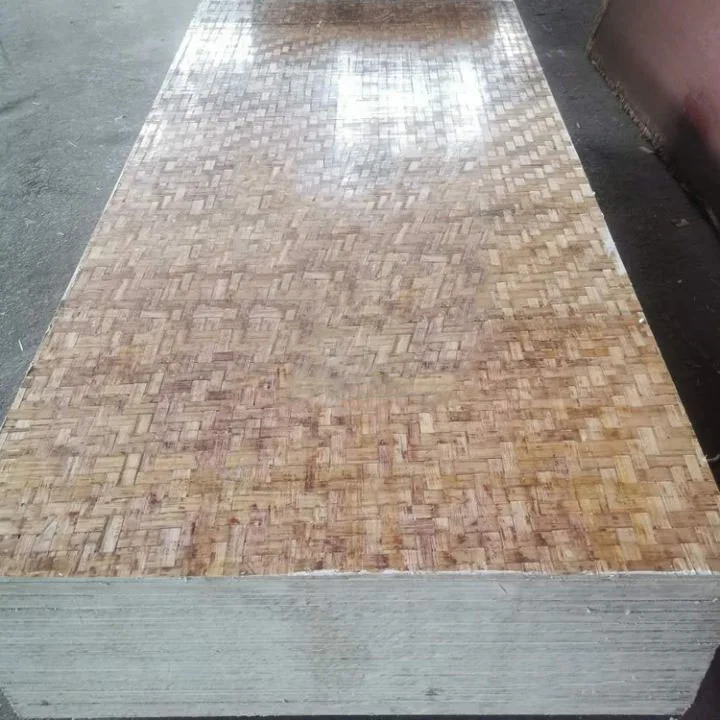
For a strip-laminated bamboo panel, distinguish the visible grain from the direction of its internal layers. Request the actual layup before selecting the panel for machining or loading.
Match the panel to formwork, furniture or industrial use
| Intended component | Define in the brief | Evaluate on a representative sample |
|---|---|---|
| Concrete formwork facing | Support arrangement, attachment, concrete finish and wet-use conditions | Working face, joints, cut edges and the specified mechanical evidence |
| Furniture or interior fit-out | Visible faces, exposed edges, colour range, hardware and finish system | A routed or drilled component with its final coating and attachment detail |
| Industrial or block-making pallet | Machine interface, operating cycle, load information and dimensional limits | Equipment-specific compatibility, flatness and attachment or wear zones |
A furniture sample does not qualify a shuttering panel, and a formwork order history does not establish suitability for a machine pallet. Where equipment or temporary works is involved, obtain the relevant manufacturer's or designer's requirements before specifying the panel.
Choose full sheets, blanks or finished components
State whether the offer covers a full raw sheet, an oversized blank or a calibrated finished component. Add the required tolerance, squareness, usable face area and the location of any permitted defects. A nominal thickness alone does not describe the machining allowance.
Supply the cutting list with grain arrows, visible-edge markings and quantities per part. A rectangular sheet may yield enough area but still fail to provide the required grain direction across matching cabinet fronts. Include trimming and saw-kerf allowances in the cutting plan rather than assuming the entire purchased area becomes finished parts.
Choose the visible face and exposed edge together
Identify one-face or two-face appearance requirements. On a furniture component, a hidden back may tolerate more colour variation than a display face, while an exposed laminated edge may be a deliberate design feature. Mark which seams, repairs or core interruptions are unacceptable in the finished part.
For an overlaid formwork panel, identify the working side and the required face condition after fabrication. Do not substitute “smooth” for an agreed concrete-finish requirement. Use the wood and bamboo formwork comparison when both materials are being considered for the same system.
Try the machining and finish on a representative sample
Choose a sample that represents the production construction and the work your component must do. For a required mechanical property or bond class, use the defined test method and its specimen conditions. A person standing or jumping on a sheet, or an unidentified offcut boiled for an arbitrary time, does not provide those design or classification results.
Specify the property, test method, specimen condition and acceptance criterion before requesting a report. Match the report to the product code and construction offered. Keep a labelled production sample for appearance and machining comparison; a laboratory report and a colour sample answer different questions.
Make a representative component containing the difficult detail: a hinge recess near an edge, a narrow strip, a routed profile or a fixing zone. Use suitable machinery and dust control. HSE's woodworking guidance explains the need to control dust at the process; a machining trial also needs a safe workshop method.
Compare the cost of accepted finished components
Record the quoted unit first: sheet, square metre, cubic metre or finished piece. For a rectangular panel, sheet area is length multiplied by width in metres; volume also includes thickness in metres. A cubic-metre rate cannot be compared directly with a sheet rate without that conversion.
Then add the operations required by the order: trimming, calibration, profiling, edge repair, coating and protective packing. Divide the relevant total by the number of accepted finished components. This exposes differences hidden by a lower sheet price without assuming that the most expensive material is automatically better.
Keep freight scope, delivery term, currency and taxes explicit. For repeated formwork use, assess accepted work and actual repair or replacement costs separately; a promised reuse count is not an invoice unit or a reliable basis for the first order.
Carry the approved sample through packing and delivery
List the product code, construction, colour reference and document revision on the purchase specification. Ask that pack labels and shipment records identify the batch. If the resin, core or layer arrangement changes, the original trial may no longer represent the supplied product.
At receipt, check pack condition before distributing the sheets. Inspect dimensions, edge damage, face contamination and colour across more than one position in the pack. Photograph any problem with its label and measurement so the issue can be traced to a defined delivery.
Start your bamboo-panel enquiry with the part you need
Start with a component photo, existing size or use description through our enquiry form. We help develop the construction, finished dimensions, sample and supplied processing, then add quantity and destination for the quotation. If you want to compare wood plywood, include it as a separate option for the same component.
For interior appearance work, add your bamboo colour and finishing requirements. For a new material specification, also review the product qualification and environmental-evidence checklist.
Bamboo-panel buying questions
Can I enquire before choosing the bamboo construction?
Yes. Start with the application, a photo or an existing part. We help identify the layers, faces and supplied processing to discuss, then develop the sample and quotation around that component.
Should the sample include an exposed edge?
Include an edge whenever it will be visible or machined in the finished part. A routed or drilled sample helps compare layer arrangement, appearance and fit alongside the face colour.
How should bamboo-panel prices be compared?
Use the same construction and finished component, then align the unit of purchase, usable yield, machining, finish, packing and delivery. Where wood plywood is an alternative, identify it as a separate construction in the comparison.