
Compare shuttering plywood and bamboo formwork panels on the concrete surface and components you need to produce. Wood-veneer plywood offers a choice of cores, working faces and cut-part supply; a bamboo option needs its own defined layer construction. With the same drawing and finish target, you can compare fit, fabrication and completed work on a useful basis.
PanelSource manufactures plywood for full-sheet orders, replacement facings and custom form pieces. Show us the current panel or the part you are casting, and we help choose a plywood construction to compare with your bamboo proposal.
Start with a plywood option for the same job
| Your requirement | Where to start | What to choose together |
|---|---|---|
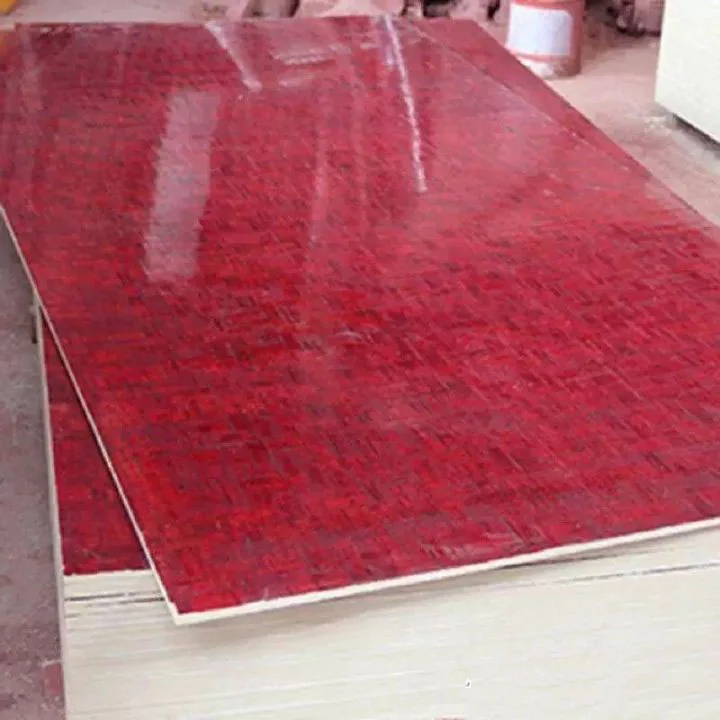
| General form faces and a range of cut components | Film faced shuttering plywood | Compare the proposed core, working face and finished dimensions with the bamboo alternative. |
| A form detail already specified at 18mm | 18mm concrete shuttering plywood | Use the same component drawing, attachment and concrete-finish target for both materials. |
| A birch-core brown-film option | Birch core brown shuttering plywood | Keep the named veneer construction with its face sample and relevant property information. |
Identify the bamboo construction you are comparing
A bamboo mat or curtain-based panel, a laminated strip panel for interiors and a densified bamboo scrimber are different products. Some panels combine bamboo and wood layers. Ask for a section description showing each material and orientation before treating two offers as equivalents.
Read the intended use alongside the bamboo construction. For a formwork comparison, use the properties and application information for the actual bamboo panel and plywood panel being offered.
Give both alternatives the same project brief
Identify the form component, drawing revision, concrete finish and planned sequence. Give each proposed panel the same dimensions and required design information. A plywood quote for full sheets and a bamboo quote for pre-cut parts are not directly comparable until processing is accounted for.
| Compare | Record for both options | Why it matters |
|---|---|---|
| Core | Materials, orientation and layer construction | Separates the actual products behind the trade names |
| Dimensions | Finished thickness, size and tolerances | Affects fit, joints and component replacement |
| Mechanical evidence | Relevant directions, test basis and design information | Supports assessment within the formwork system |
| Working face | Overlay, texture, repairs and concrete trial | Defines the result required from the casting surface |
| Processing | Cuts, holes, edge protection and attachment details | Changes fabrication effort and usable yield |
| Use and maintenance | Handling, cleaning, inspection and retirement criteria | Defines what an acceptable reuse actually means |
Compare stiffness and strength on a compatible basis
Strength concerns resistance to failure; stiffness concerns deformation under load. A higher test strength does not automatically mean a form face will deflect less. Compare the relevant properties in the relevant directions and at the conditions needed by the design.
Identify whether reported values are averages, characteristic values or another stated measure. Also check the specimen, thickness, moisture condition and method. A result for a small bamboo strip is not a design value for a full composite panel.
The qualified designer assesses the complete supports, connections and concrete-loading conditions using the relevant panel data. A useful comparison gives that designer the construction, direction and test basis behind the strength and stiffness values, so the support layout follows the actual component.
Compare the concrete-contact finish
A visible mat pattern may be acceptable on the panel yet unsuitable for the specified concrete finish. Conversely, a glossy overlay does not guarantee that joints, fixing marks or repairs will disappear from the cast surface. Inspect both the face and the assembled interface.
APA's concrete-forming guidance distinguishes panel surfaces by the concrete result they are intended to produce. Use the project's agreed finish criteria for the trial instead of assuming every coated panel produces the same appearance.
Include a joint, a typical fixing and the proposed release agent in the trial. Record the panel condition and the concrete process so a later comparison does not attribute every surface difference to the core material.
Evaluate machining on the component that will be made
Try the required cuts, drilled holes and edge details on representative material. Inspect breakout, exposed layers, dimensional accuracy and the resulting attachment zones. Confirm the appropriate tooling and processing instructions for each product rather than carrying settings across automatically.
Check the handling mass and format of the actual component. Neither bamboo nor wood plywood is universally lighter across all constructions and thicknesses. A supplier's measured mass for the proposed sheet is more useful than a general species claim.
Record any extra edge protection, sealing or repair needed after machining. Include that work in the comparison, especially where many narrow closures or irregular parts will be made from full sheets.
Plan wet use and measure accepted reuse
The bond requirement, overlay and edge protection all matter, but none alone establishes the number of acceptable pours. Wetting, stripping, cleaning, storage and the finish requirement can change the result. A panel may remain usable for one location after it no longer suits another.
Track condition and the reason for withdrawal during a representative project trial. Compare accepted work completed, labour and repair requirements alongside purchase cost. Keep reuse, cost and programme estimates tied to that observed work, then use the results to plan the next order.
Review any substitution within the formwork system
HSE emphasises planned temporary works and the use of appropriate design and equipment instructions. Changing a facing material can affect more than sheet thickness, including attachment, support and handling assumptions.
Provide the replacement product data to the responsible designer before making the substitution. Identical dimensions do not prove compatibility with a proprietary frame or an existing support layout.
Build a comparable plywood order
Begin with your existing panel, proposed alternative or form component. We help select our wood-veneer film faced plywood for the same job. As the comparison develops, bring in the drawing, dimensions, concrete finish, relevant property requirements, quantity and destination.
For the bamboo offer, use the construction and cost checklist to keep its materials, processing and supporting documents together. Send both options through our enquiry form and we can help clarify the plywood supply for a comparable order.
Shuttering plywood buying questions
Is bamboo always stronger than shuttering plywood?
Compare the properties of the actual panels in the required direction and conditions. Bamboo mat, strip and scrimber constructions differ, as do plywood cores. The formwork designer uses the relevant strength and stiffness data for the complete arrangement.
How should we compare the concrete finish?
Use the required face, release agent and a trial that includes a joint and fixing detail. Keep the panel condition and concrete process with the result so both alternatives are assessed on the same basis.
Can you quote cut plywood pieces against our bamboo schedule?
Yes. Share the part schedule or an initial sketch. We help develop the plywood construction, finished dimensions, machining and edge treatment for a comparable quotation.