
Choose paint-grade MDO for painted signs and trim, a forming-designated MDO, HDO or film face for concrete, and a suitable MDF grade for routed or painted interiors. Sanded plywood provides a veneer surface for a natural or painted finish. Compare the finish you want and the construction underneath it, then price the work needed to turn each option into your part.
PanelSource manufactures plywood and MDF. Bring a painted sign reference, concrete-finish sample or cabinet profile, and we help choose a panel and sample route around the result you want to achieve.
Start with the surface your project needs
| Your requirement | Where to start | What to choose together |
|---|---|---|
| One painted sign or trim face | One-sided MDO plywood | Select the paint-grade front and the reverse condition together. |
| Two visible overlaid faces | Double-sided MDO plywood | Compare both faces, edge treatment and the finishing work needed. |
| Concrete-contact panels and cut form pieces | Film faced shuttering plywood | Choose the face and core for the required casting result and form detail. |
| Routed interior fronts and painted blanks | Custom-size raw MDF | Compare the required profile, edges, hardware and coating preparation. |
Choose the surface and core together
A specification may need both a particular overlay and a verified load-bearing construction. Conversely, an indoor painted cabinet panel may need a finish quality and machining route without serving as a structural building panel. Write these requirements in separate fields. Our core-material guide explains plywood, MDF and particleboard; our MDO introduction explains the overlaid veneer construction.
MDO and sanded plywood for a painted face
Paint-grade MDO provides a manufactured overlay instead of exposed face grain. Sanded plywood leaves the veneer surface as the painting substrate, so grain, patches and face repairs can influence the result. A natural wood finish may favour the visible veneer; an opaque sign may favour an agreed overlay. Compare actual finished samples under the intended light. Include filling and preparation labour in the quote rather than assuming the cheaper unfinished sheet produces the cheaper painted component.

Choose MDO or HDO for the intended finish
APA's overlay guide identifies different MDO and HDO grades for general, industrial and concrete-form uses. HDO's harder surface can be useful in a specified industrial application, while painting may require a different preparation route. Neither abbreviation alone establishes scratch resistance, chemical compatibility or acceptance by a graphics-film supplier. Ask for evidence relevant to the exact surface rather than infer every property from the word high.
For concrete, compare casting faces and trial results
A paint-grade MDO panel should not be substituted for an MDO concrete-form panel. APA distinguishes concrete-form overlay options and their concrete finish. MDO forming surfaces commonly target a matte appearance, while suitable HDO can produce a smoother finish. The actual mix, release agent, placement and panel condition also matter. Specify the approved cast sample, including acceptable grain or patch transfer, joint marks and visible repairs.
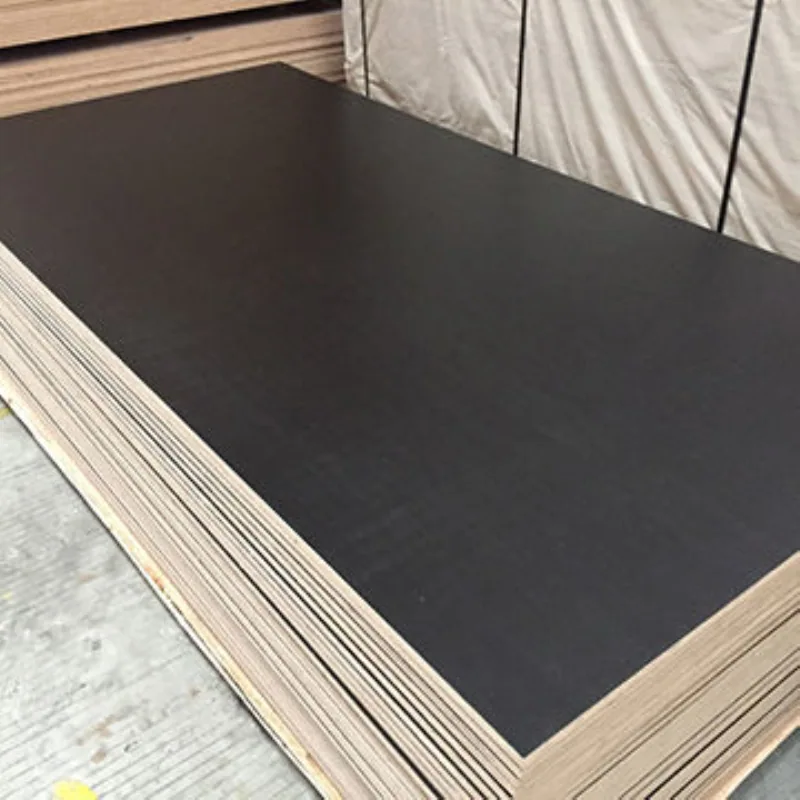
Compare film faced plywood through its full specification
Choose the coating and plywood construction together, then identify the concrete-contact face and its release and cleaning method. Our film faced plywood guide explains the layers to include in the formwork specification.
| Material option | Useful selection question | Related choice to confirm |
|---|---|---|
| Paint-grade MDO | Does the approved coating adhere and look right? | Confirm the paint system, edge finish and reverse protection |
| MDO concrete form | Does a casting trial meet the finish requirement? | Confirm the release method, working faces and accepted concrete finish |
| HDO | Which industrial or forming grade is specified? | Follow the specified HDO grade and preparation |
| Film faced plywood | What are the overlay, core and design properties? | Match the working face with the declared core |
| Sanded plywood | Will veneer grain or repairs show through? | Include preparation for the required opaque finish |
| MDF | Does the grade suit machining and exposure? | Choose the grade for the actual exposure |
MDF can suit a different component in the same project
MDF's uniform fibre structure can support routed details and a painted interior finish. MDO offers an overlay over veneers, leaving a different cut edge and machining behaviour. For a cabinet, compare the door profile, hinge fixing, shelf span and finish separately; one material need not be used for every part. Moisture-resistant MDF is not automatically exterior MDF. Our cabinet component comparison develops these decisions.
Compare measured properties under the same conditions
Nominal thickness alone cannot establish which panel is stiffer or stronger. Compare the declared construction, direction, moisture condition, test method and design values for the intended loading. A fire classification requires evidence for the relevant product or assembly; a density or resin-content ranking is insufficient. EN 636 distinguishes plywood use conditions and structural applications. Its scope does not make an overlay a universal durability treatment.
Price the finished part or accepted casting
For signs, count usable blanks, painting, edge treatment, mounting preparation and protected delivery. For forms, include fabrication, release agent, cleaning, repairs, handling and the number of uses that still meet the specified concrete finish. Record the basis of a reuse estimate rather than treating it as a guarantee. For an interior cabinet, include machining, hardware and edge finishing. Comparing these routes as raw price per sheet can hide the main costs.
Ask each sample to answer one specific question
A paint sample should include the full coating system and an edge; a formwork trial should use the proposed concrete and release method; a routed cabinet sample should include its profile and hardware. Inspect the feature most likely to decide acceptance. Keep the approved sample and specification together, so a later change in core, overlay, coating or tooling triggers a review of the affected result rather than a silent substitution.
Bring the selected panel into your factory order
Start with your component or finish reference through our enquiry form. We help compare our MDO plywood, film faced plywood and MDF options, then develop dimensions, sample criteria, quantities and delivery with you. For a painted exterior component, our MDO finishing and application guide adds the coating and installation details.
MDO, film faced plywood and MDF buying questions
Is MDO the same as MDF?
MDO is an overlay on a plywood core; MDF is a fibreboard substrate. Compare the working face and the cut or routed edge of your part. Our MDO definition guide explains the layers, while this guide helps choose between the finished options.
Should I choose MDO or HDO for concrete?
Choose a forming-designated surface against the required concrete finish. MDO forming surfaces commonly target a matte result; suitable HDO can give a smoother finish. Use the specified panel, release method and concrete conditions in the trial.
Which material will cost less after finishing?
Compare usable parts, preparation, machining, coatings, edges and delivery. For concrete work, include handling, cleaning and accepted reuse. A sample and a common supply scope make the finished-work comparison more useful than sheet price alone.