
Choose softwood plywood around the job your panel will do. For a timber-grain wall, shop fixture or packing case, start with a photo, drawing or existing part. We help compare pine or spruce appearance, core construction, handling weight and fastening details, then develop sheets or processed components in our factory. Softwood plywood uses coniferous veneers such as pine, spruce, fir or Douglas-fir; the face, core and chosen grade connect that material to your project.
Pine plywood Spruce plywood Film faced plywood
Meet the conifer veneers used in softwood plywood
Softwood generally refers to wood from conifers. Some softwoods can be harder or denser than some hardwoods, so the label is not a hardness test. US Forest Service wood science guidance explains this botanical distinction. Plywood is then made by bonding veneers into a cross-layered panel; APA describes the veneer construction. Different species and layups change appearance, mass, machining and panel performance.
Choose the right material for timber grain or cork
Cork comes from the bark of cork oak, a different raw material and product family. A stack of pine-veneer plywood and a cork-faced acoustic board should be named, sampled and specified separately so a buyer orders the right product. Neither “softwood” nor “cork” by itself proves low emissions, fire performance or allergy suitability.
Choose the visible face and core construction
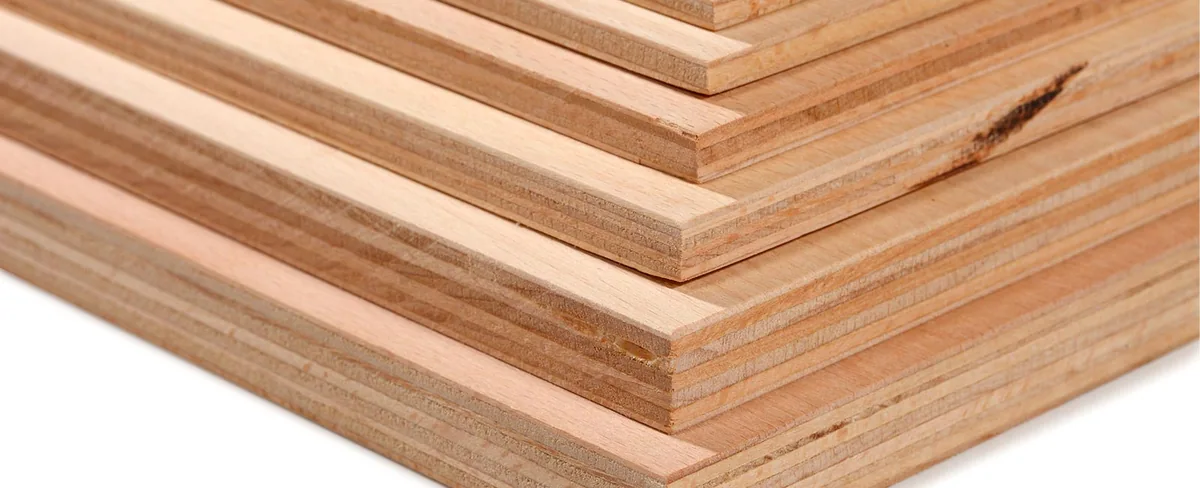
Softwood plywood may have a visible conifer face or be selected mainly for its working properties under another finish. Ask which species are on the faces and in the core, the ply construction, face grade and whether repairs, knots or open defects are acceptable. A clean decorative face is a different purchase from a utility sheathing face. The cut edge reveals layup and possible core gaps; a photograph of the top surface alone cannot establish quality. If the face will be stained, request an approved sample of the actual veneer and finish.
Write the face and back species separately from the inner veneers. A pine-faced or spruce-faced sheet may use a different core, so describe the layer construction explicitly when an all-softwood panel is required. Compare the pine plywood construction options and spruce plywood construction options against the offered sheet. Confirm species through the product declaration and construction record; use a cut edge to examine the layup and visible gaps.
Select spruce layers and the finished detail
Spruce plywood is a specific choice within the wider softwood family. State whether spruce is required on the face and back, in selected inner veneers or throughout the wood-veneer construction. Keep a mixed-core or pine alternative identified separately where your specification permits it. Connect the accepted species description and layer arrangement to the material proposal, rather than selecting by a pale face alone.
For visible parts, compare representative knots, repairs and adjoining pieces after the intended preparation and finish. Include the exposed edge, machined joint or fitting that matters to your component. Retain the accepted sample and drawing revision with the quotation, stating whether delivery comprises sheets, cut blanks or agreed processed parts and which finishing or assembly operations your workshop will complete.
Match the grade to dry, humid or exterior use
EN 636 identifies plywood for dry, humid and exterior conditions and distinguishes structural and general-purpose use. EN 314-2 addresses bonding quality. These are separate questions from the tree species. A pine face does not make a board weatherproof; an exterior bond does not mean unprotected plywood can remain indefinitely wet without design and maintenance. Ask for reports or markings relevant to the proposed product and destination.
For a US structural purchase, identify the required product standard, panel grade, thickness or performance category, bond classification and any applicable span rating with the proposed supply. APA explains these separate selection fields; its guidance is a reference, not a certification of our panel. Use the structural grade and evidence checklist to match the stated requirements to the product documents and design conditions.
Find softwood plywood for the job
Depending on its grade, softwood plywood may serve sheathing, subfloors, packaging, formwork components, shop fixtures or a visible timber-grain interior. The Wood Handbook discusses wood-based panel applications and moisture effects. Structural sheathing needs a specified structural grade and design values; packaging may prioritize weight, edge quality and handling; a visible interior panel prioritizes appearance and finish. We do not transfer a load rating or moisture classification from one use to another.
| Order field | Why it matters | How to verify |
|---|---|---|
| Face/core species | Appearance and construction | Species declaration and construction record; sample edge for layup |
| Face grade | Visible knots and repairs | Approved face sample |
| Service class | Dry, humid or exterior intention | Grade documentation |
| Bond quality | Glue-line suitability | Relevant test or certification |
| Dimensions | Machining and yield | Measured sample and tolerance |
Compare handling, machining and surface benefits
Some softwood plywood constructions suit relatively light handling, broad sheet coverage and workable faces. Compare those benefits using the proposed species, density, thickness and grade. For a shelf or wall lining, assess span and fastening; for exposed rain, include grade, detailing and maintenance; for a decorative interior, compare the face after finishing. A defined panel and assembly provide the basis for any weight, strength, dimensional or acoustic claim.
Compare softwood offers for the same component
Use the same application brief when comparing quotations. A face selected for a visible wall, a hidden crate panel and a sheet specified for construction can involve different acceptance priorities even at the same thickness. Put those priorities beside the price so the difference between proposals is clear.
Visible faces and machined parts
Compare grain, knot and repair range, sanding and the face after your intended finish. For routed or exposed edges, include a cut and fixing trial on the proposed construction. Our softwood interior guide helps define the visible face; retain an agreed appearance range rather than approving a single attractive photograph.
Working panels and construction uses
For crates and hidden components, focus the specification on dimensions, edge quality, handling and fastening. Structural use needs its own grade and design evidence. For concrete formwork, compare the release surface, core, edges and trial plan through the film faced plywood range. The softwood name alone does not settle any of these requirements.
Choose different details for different uses
Consider a pine-faced display wall in a dry shop and a softwood plywood panel used behind an exterior cladding system. Both may have a similar pale face. The display buyer might prioritize grain, patches, sanding and a finish trial. The cladding-system designer needs the specified use class, support spacing, fixing, moisture management and any structural data. A photograph and thickness alone cannot make the second sheet suitable for the first job or the first suitable for the second. The same distinction applies to formwork: a release surface, edge protection and reuse expectation must be stated separately from “softwood plywood.”
For packing crates, instead ask about panel mass, cut size, edge damage during handling, fastening and destination requirements. A face selected for appearance can add cost without improving crate performance. We can compare proposed constructions against the handling method and sample a cut edge before a production quantity is agreed.
Try the face, cut edge and working detail
Request a representative face and panel section from the proposed construction. Record the sample reference, face/back species, inner layup, thickness, sanding and accepted knot or repair range with your drawing. Test the finish, machining or fastening detail your workshop will use, and carry the approved version into the order. The plywood sample and acceptance guide sets out the checks to agree before production.
Keep the product description, sample approval and delivery inspection tied to the same construction and order reference. Use the product document brief to identify the report scope you need; a face or machining sample does not replace structural data. Agree pack identification and delivery checks for the ordered dimensions and appearance range, and review any proposed species, core or finish substitution before dispatch.
Share your use and preferred softwood appearance
Send a photo, current part or drawing through our enquiry form, and tell us whether you are making a visible interior, a crate or another component. We help select a plywood construction and a useful face, cut-edge or fixing sample. Add sizes, quantity and destination for the quotation, plus any structural or exposure requirements. Our plywood acceptance guide covers receiving checks.
Softwood plywood buying questions
Can I choose softwood plywood for a visible interior?
Yes. Compare the grain, knots and repairs on a representative sample after your intended preparation and finish. Include adjoining pieces and any exposed edge in the selection.
Can a packing panel and a decorative panel use different faces?
Yes. A visible part may prioritise grain and finish, while a packing component may prioritise handling, fastening and dimensions. Choose the face and grade for each job and keep both clear in the quotation.