
Choosing a furniture plywood manufacturer starts with the part you want to make. Show us a cabinet photo, current board or component drawing, and we help choose the face, core and finish for cutting, joining and repeat production. Our factory manufactures plywood and MDF substrates, decorative facings and custom panels, so you can compare full sheets with prepared furniture parts.
Birch plywood sheets Decorative plywood Melamine plywood
Begin with the furniture component drawing
Identify the part, finished dimensions, visible faces, exposed edges, finish and assembly method. Include the drawing revision and distinguish finished size from the blank needed for machining. State whether the panel will be painted, clear coated, veneered, laminated or supplied with a decorative face.
For a shelf, include the span, supports and load assumptions for the furniture designer's assessment. For a hinge-bearing side or front, identify the hardware and fixing arrangement. These details reveal requirements that a thickness and grade abbreviation cannot describe.
Send us the intended service environment as well. Occasional cleaning, humid storage and direct wetting are different conditions; a damp climate alone does not establish that marine plywood is the only suitable choice.
Choose the features that matter to your furniture
| Component need | Trial or check | Record |
|---|---|---|
| Groove or joint fit | Measure the supplied panel and machine the actual joint | Thickness variation, tool setup and fit outcome |
| Visible face | Inspect a representative range with the intended finish | Colour, grain, repairs and surface acceptance |
| Exposed edge | Cut and finish the required profile | Core appearance, gaps, tear-out and sanding result |
| Hardware connection | Trial the specified fitting and installation procedure | Hole layout, fixing method and assembly result |
| Repeated production | Compare material from the agreed trial or order lots | Construction identity and variation affecting the part |
Ask for a sample that can answer the real question
A small finish sample can help with colour, but it may not allow a shelf test, machining pattern or full door assessment. Agree the size and quantity needed for each purpose. Keep the sample connected to the construction and finish proposed for supply.
Where natural veneer is visible, request a representative appearance range. Decide whether repairs, mineral streaks or colour variation are acceptable before approving a finish. Separate the expectations for exposed faces, backs and parts hidden after assembly.
ISO 2426-2 concerns the surface appearance classification of hardwood-faced plywood and does not apply to overlaid panels. This illustrates the need to choose grading criteria that match the actual surface, rather than applying one face-grade rule to every furniture board.
Evaluate machining with production tools and allowances
Cut the actual orientation and include critical operations such as routed pockets, edge profiles and holes near the edge. Inspect both entry and exit faces where tear-out matters. A favourable result with a fresh tool and generous finishing allowance may not represent the intended production route.
Record the panel condition, tool, settings, clamping and finishing steps needed to obtain an accepted part. If a panel needs additional sanding or edge filling, include that work in the comparison. The cheapest sheet can be the more expensive furniture component when preparation time is counted.
Our cutting-yield and component-cost guide explains how to compare accepted output. Keep process changes visible when comparing a new panel with an established material.
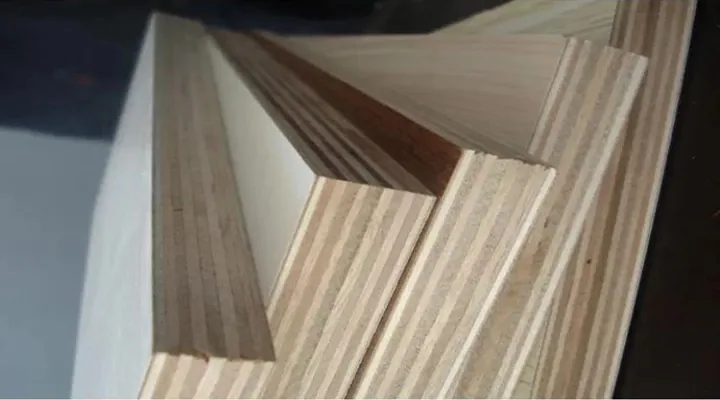
Validate the fitting with the actual panel construction
Use the hardware manufacturer's installation instructions for hole dimensions, fasteners and any specified settings. Face and edge fixing are different situations, and a generic claim of “excellent screw holding” cannot replace the relevant assembly evidence.
Qualify the panel and fitting combination you intend to use. Keep the selected hardware’s current preparation instructions with the component drawing and trial the connection in the actual substrate.
For a load-bearing or repeatedly operated furniture assembly, use the relevant product and connection assessment. A successful first installation does not establish long-term performance under every load.
Evaluate the finished surface and service environment
Apply the planned coating, stain, laminate or edge treatment to the trial part. Check repair visibility, colour consistency, surface preparation and the effect on dimensions. Agree which operations are part of our supplied panel and which belong to your furniture process.
Specify relevant emissions, moisture or fire requirements by method and scope where the project needs them. Neither a pleasant smell nor an attractive face establishes an emissions class. A coating also should not be assumed to give an untreated panel a certified fire classification.
For service conditions, consider edges, cut-outs and connections as well as the broad face. A water-resistant bonding requirement does not remove the need for appropriate furniture design and surface protection.
Connect the chosen panel with its supporting records
ISO explains that certification is performed by external certification bodies. When a certificate is relevant, check the holder, scope and validity. A management-system certificate is different from evidence that the offered panel meets a particular product requirement.
Ask how test evidence relates to the proposed construction and how the order will be identified. A factory visit, a report and a finished sample provide different information. None should silently stand in for all the others.
Our general plywood evaluation guide separates visible inspection from properties that need documentation or testing. Use that distinction when deciding which evidence the furniture project actually requires.
Carry the accepted trial into production and repeat orders
Keep one technical schedule with the accepted construction, appearance range, dimensions, trial reference and any agreed limits. Record changes before substituting a face, core or finish. A changed material may need another evaluation even if the product name remains the same.
At receipt, use identifiable samples and the agreed checks to compare supply with that schedule. Record whether any issue affects a particular batch, component or process. A useful corrective response identifies the mismatch and its extent, rather than promising that every future panel will be “perfect.”
Start with a furniture photo, part or drawing
Send a furniture photo, current part or drawing through our enquiry form. We help compare decorative plywood and melamine plywood, then develop the sample and processing details. Add sizes, quantities and destination when you are ready for pricing.
Furniture plywood buying questions
Can I begin with a furniture photograph?
Yes. Show the furniture and any visible edges. We can shortlist constructions, then use a drawing or current part to plan the machining sample.
What should a furniture trial sample include?
Include the operation that matters most to the part: a routed joint, exposed edge, fitting or finish. Review it using the tools and hardware planned for production.