
Container floor plywood production brings the veneer layup, bond, finished thickness and wear face together around the floorboard your builder or repair team needs. PanelSource manufactures plywood in our own factory and supplies full boards or parts prepared to a drawing. This guide connects each production stage with a purchasing choice, a useful sample and the records for your selected container-floor construction.
Start with a floor drawing, an existing board reference or photographs of the face and edge. We help develop the construction, processing and packing around that starting point, then connect the proposed board with the owner’s floor requirements.
Container flooring plywood Cut boards and machined parts
Choose the floorboard around its intended assembly
For a new build, use the builder’s floor drawing and panel reference to define what the factory will supply. For repeat repair stock, use the owner’s accepted replacement construction and quantities by board code. ISO 1496-1:2013 sets specification and testing requirements for general-purpose freight containers, including the floor in its assembled condition. BS 1088:2018 concerns marine plywood for craft and waterway applications. These references answer different purchasing questions; keep the container requirement with the floorboard order.
Compare the selected board’s layup, bond, faces, treatment and dimensions against the floor drawing. The builder or owner confirms the accepted floor arrangement, including supports, joints and fastenings. We help turn that arrangement into full-board or cut-part supply lines.
Select veneers for the agreed floorboard layup
Choose the species or species mix, veneer thicknesses, grain arrangement and permitted face and core features together. These choices determine the construction that will later be cut, drilled and fitted. Veneer moisture needs to suit the adhesive and subsequent panel conditioning; the US Forest Service Wood Handbook describes moisture control and plywood manufacturing principles.
During preparation, check damaged veneer, open joints and thickness variation before assembly. A sound, consistent core supports repeatable machining at panel joints and fixing positions. If your purchase includes machined parts, identify edges and openings on the drawing so the sample can show the core where the work matters.

Connect adhesive control with the required bond
Adhesive spread, veneer condition, assembly time, pressure and heat or cure time form one coordinated process. Specify the bond requirement alongside the construction and service conditions; the factory then plans the adhesive system and its process settings. EN 314-2 addresses plywood bonding quality. Include any additional bond or panel tests required by the container owner in the order.
For a repeat batch, keep the agreed adhesive system and layup connected to the production reference. Useful records identify the batch, applicable test method and the tested board construction. This makes a bond result meaningful to the purchasing team and helps compare the next delivery with the chosen sample.
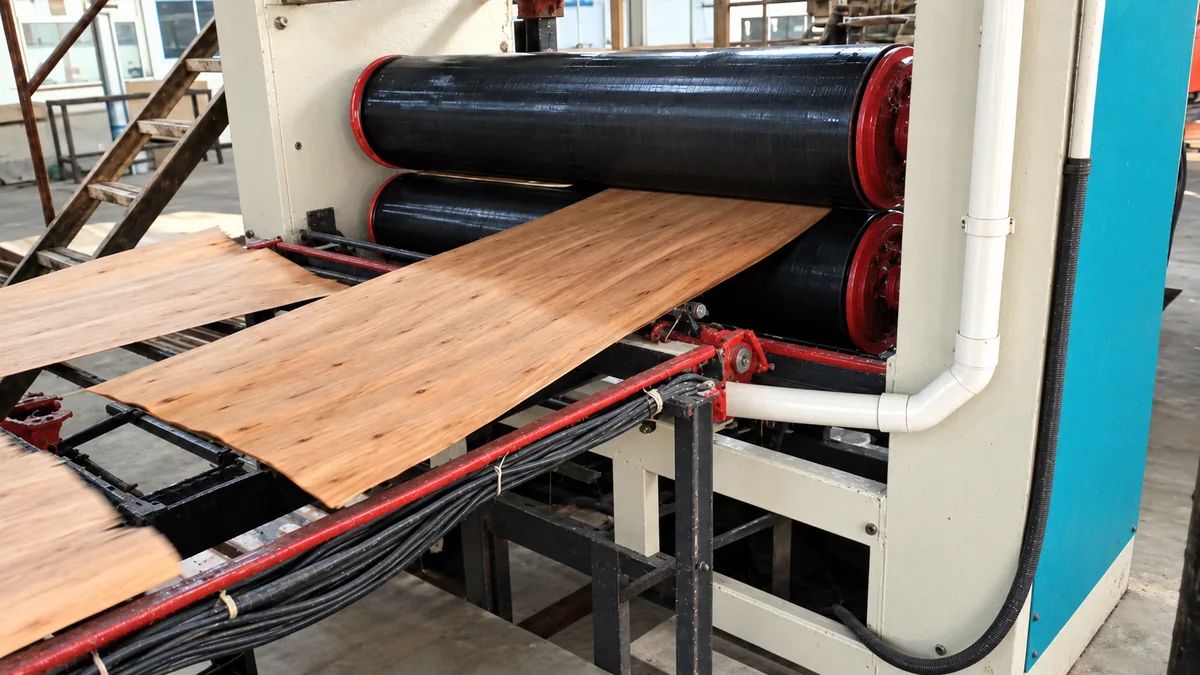
Set finished thickness and flatness for fitting
Pressing consolidates the veneer layup; conditioning and calibration establish the board supplied for machining or installation. A construction may receive its face during the main press operation or in a later facing step. Select the route around the desired finished construction, including the useful face thickness after sanding.
Write tolerances against the delivered stage: a calibrated full board, oversize blank or finished part. Include thickness at joints, edge profiles and hole positions where they affect fit. A first piece can be checked against adjoining boards and the agreed drawing before the full cutting batch proceeds.
Plan board tests alongside the floor requirement
Container floors experience rolling and concentrated loads from handling equipment. Use the owner’s load and support requirements to define the relevant verification, keeping panel bond checks and floor-performance records under their own scopes. The Container Owners Association describes short-span testing for replacement boards and connects replacement selection to the owner’s specification. ISO’s 2024 amendment to ISO 1496-1 includes floor pass/fail criteria. The owner or engineer selects the edition and tests for the actual container.
| Stage | Purchase decision | Record or sample |
|---|---|---|
| Veneer preparation | Species, ply arrangement and core quality | Layup reference and inspected cut edge |
| Bonding | Required bond and service conditions | Production identity and relevant bond result |
| Press and calibration | Finished thickness, tolerance and flatness | Measured full board or processed sample |
| Floor performance | Owner-required test and installed arrangement | Applicable board and floor verification records |
| Dispatch | Board codes, batch marking and pack order | Edge marks, packing list and receiving plan |
Choose sample pieces for visual and fitting checks, then identify any separate specimens needed for testing. Keep their construction and batch references together so the accepted appearance, dimensions and technical records describe the same proposed supply.
Make each delivered batch easy to identify
The COA replacement-floor guidance calls for permanent edge identification of maker, factory location, product reference and manufacturing date. Agree the required marking with the selected board reference and container owner. Carry the same identity onto the packing list and relevant inspection records.
For mixed sizes, label part codes and pack them in a useful installation or storage order. Flat support and protection for faces and edges help preserve the condition checked before dispatch. A depot buying repeat stock can retain the approved sample, drawing revision and marking example together for later deliveries.
Plan treatment and protection with the finished floor
Include preservative or destination treatment requirements in the construction brief, with their documents and instructions for later cutting. Identify holes, cut edges and joints that receive sealing or treatment, and agree which operations the factory completes. These details help the receiving and repair teams handle the boards consistently.
Keep the selected wear face, fastenings, support layout and any cut-outs with the complete floor requirement. The owner or responsible engineer defines the loading and acceptance criteria. A change to the face, core or treatment can then be reviewed as a clear alternative with its own construction and supporting records.
Start a quotation with the board and quantities you have
Use our enquiry form to send a floor drawing, existing product reference or photos, together with known sizes, quantity and destination. Add the owner’s board specification, treatment and required tests when available. We help complete the full-sheet or processed-part scope and quote the work included.
For repeat supply, separate the first sample or trial batch from the ongoing quantities and delivery schedule. Our replacement-board checklist covers receipt and repair purchasing, while the lamination route guide helps compare a separately applied face with a single-stage build.
Container-floor production questions
What does BS 1088 tell me when buying a container floorboard?
It describes the marine plywood requirements under that standard. For a container floorboard, also retain the owner’s selected construction, floor drawing and applicable floor-performance evidence.
Which press details matter to my purchase?
Agree the finished construction, bond, thickness and flatness first. The manufacturing route and batch settings support those outcomes, with the required test and inspection records kept under the board reference.
How should I choose the wear face?
Use the owner’s floor specification and service conditions to select the face or overlay, treatment and supplied finish. Review a representative sample together with the required records for the complete construction.