
Choose quality melamine board by the furniture you are making, the finish you like and the work the panel needs to do. A photo or colour reference is a useful starting point. PanelSource manufactures MDF and plywood and applies decorative facing in our own factory, so we can plan the core, surface and component processing together. This guide helps you compare samples, finished-part quality and usable cost as your order develops.
Melamine MDF Melamine plywood Furniture MDF components Browse colour references
Choose quality around your finished furniture
Separate appearance, core performance, dimensional fit and delivery requirements. A surface can look attractive yet be unsuitable for the component's exposure or machining. A technically suitable sheet can also be the wrong colour or have an edge treatment that does not match the furniture design.
We can develop a short comparison schedule from your furniture brief. Keep the same requirements across offers and list alternatives clearly, using the selected core, surface sample and component checks to define quality.
Compare the panel and work included
| Field | What a comparable offer should state | Why it matters |
|---|---|---|
| Core | Material, grade and relevant use conditions | The same decor can hide different substrates |
| Size and thickness | Finished dimensions, tolerances and usable format | Sheet area alone does not predict component yield |
| Face and reverse | Decor, texture, gloss and each side's construction | A one-sided and two-sided offer may cover different work |
| Edges and machining | Included operations and finished-part requirements | A sheet price is not an edged-component price |
| Evidence | Specified tests and reports relevant to the product | A sample's appearance cannot prove every property |
| Delivery | Quantity, packing, agreed destination basis and timing | Different logistics scopes change the total comparison |
Use a physical colour and texture reference that both sides can identify. Attach its reference to the enquiry and state whether a close match or a coordinated alternative is required.
Choose a sample that shows your finished part
A decor swatch shows a local colour and texture. A full-thickness sample shows the substrate and facing arrangement. A finished corner shows edge treatment, while a machined part shows the result of the proposed production operations. Request the sample that answers the unresolved purchasing question instead of treating any small piece as complete approval of an order.
Record product description, sample date or reference, thickness and proposed finish. Compare samples under the same viewing conditions. For a visible furniture front, inspect the face, edge transition, reverse and relevant machining together. Keep the agreed reference with the order records.
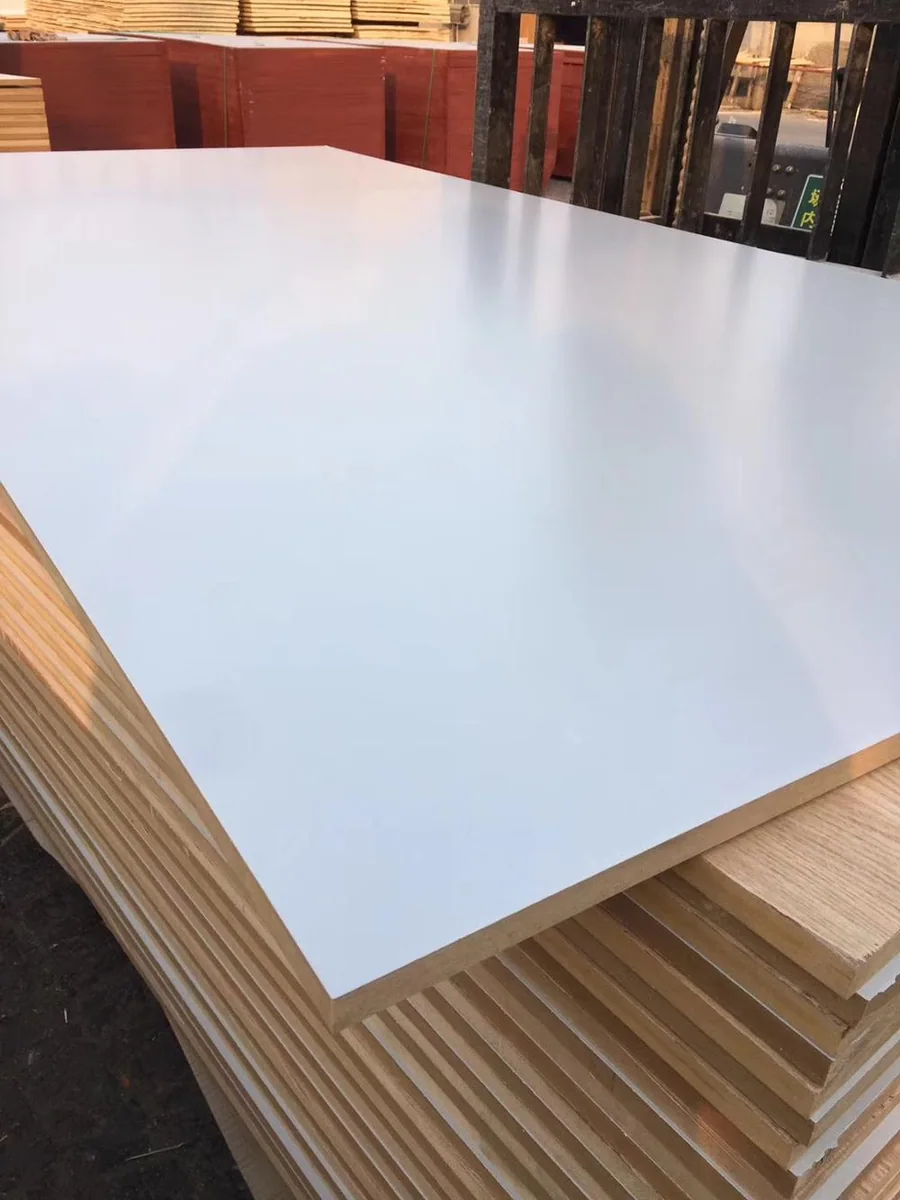
Make appearance acceptance specific
Identify visible scratches, chips, paper defects, local surface separation, contamination and inconsistent gloss. Record the affected face and location. Agree viewing conditions and acceptance criteria appropriate to the part; a hidden construction face and the centre of a door front have different visual roles.
Do not let a cosmetic concession become an undocumented change to core quality or dimensions. If a blemish can be excluded during cutting, record the affected usable area and the agreed treatment. If it affects a continuous woodgrain set, consider the group rather than assuming any offcut can replace the part.
Use test evidence for the properties your part needs
EN 14322:2021 defines requirements and classification within the scope of interior melamine-faced boards. EN 14323:2021 provides test methods for characteristics of those boards. Use the applicable full specification and the selected product's report to determine the relevant requirement.
Read the method, edition, units, tested construction and result. Abrasion, scratching, staining and dimensional properties are different questions. A successful result for one should not be expanded into an unrestricted durability claim. Also distinguish surface evidence from the mechanical properties of the substrate.
For emission or other project-specific requirements, request the relevant test method and evidence for the stated product. A pleasant smell, a green core or a resin name is not the result. When certification is required, identify its scope and product coverage rather than accepting a logo without supporting details.
Compare the cost of usable components
Start with comparable panel and delivery costs, then account for the actual cutting plan, edging, machining and agreed acceptance requirements. Keep waste allowances visible. Do not apply the same yield percentage to every sheet size or to both directional and freely rotatable parts.
Material cost per usable part = quoted material cost for the order ÷ usable parts from its cutting plan. Start with the required components, grain direction, trimming and saw kerf. Compare the resulting whole-sheet quantities with the same supplied finish and delivery scope.
| Cost item | Information to use |
|---|---|
| Panel supply | Selected core, finish, thickness, volume and current factory quotation. |
| Usable output | Accepted component counts from the proposed cutting layout, including the final partly used sheet. |
| Processing | Cutting, edging, drilling and finishing included in the quote or completed by your workshop. |
| Delivered order | Packing, transport and the number of complete furniture sets the order provides. |
Share your cutting list and preferred finish. We can price full sheets or processed parts so you can compare the cost of the components your workshop will actually use.
Keep the sample, quotation and order aligned
State which sample and drawing revision the quotation covers. Record alternatives to the requested core, finish or dimensions as alternatives, with their implications. A lower price obtained by changing the reverse face, tolerance or processing scope is a different offer and should be evaluated that way.
Identify how later changes will be recorded and which parts they affect. Confirm the packing and marking requirements for your receiving process. For repeated furniture sets, decide whether replacement components need the original decor only or a continuous pattern relationship.
Decide how discrepancies will be assessed
Before dispatch, agree the inspection basis and the information needed if a discrepancy is found. Keep affected material identifiable, with photographs and measurements linked to the lot or package. A general statement that the board looks wrong is harder to resolve than a record against a specific requirement.
Our MDF incoming-inspection guide covers lot identity, sampling and reports. Avoid attempting a hot-iron repair on a damaged decorative face before the condition is assessed. A face defect, loose edge and swollen substrate require different decisions.
Bring your furniture idea to a factory quote
Start with the furniture application, a photo or a preferred finish. We can compare melamine MDF and melamine plywood around the appearance, machining and service conditions you need.
For pricing, add your approximate sheet or part sizes, quantity and destination. We help agree the chosen sample, edges, processing and relevant documents so you can compare the complete supply scope.
Melamine board buying questions
Can you help me choose between MDF and plywood?
Yes. Tell us the part, where it will be used and the finish you want. We help compare the core, thickness, machining and sample for that use.
Should I request a colour swatch or a finished part?
Use a swatch to narrow the colour. A full-thickness piece shows the core; an edged or machined sample helps assess the component you will actually use.