
Melamine-faced MDF is produced around the needs of the finished furniture part: core grade, thickness, face finish, reverse and later machining. We manufacture MDF and apply decorative facings, helping you select this combination for doors, shelves or cabinet parts. Review the faced sheet and a representative processed detail before repeating the construction.
Start with furniture melamine MDF, 18mm white melamine MDF or moisture-resistant melamine MDF, then use the colour catalogue for the finish.
Identify the MDF grade before the decorative finish
Specify the intended use, core grade, thickness and any relevant performance or emission requirements. The melamine face describes a surface construction; it does not convert an ordinary core into a moisture-resistant or fire-specified board. If the project requires a special property, identify it explicitly for the proposed finished construction.
Keep the core lot linked to the facing run. When comparing boards, distinguish material identity from a general density label. EN 323 concerns density measurement. A density result is useful for its stated purpose but does not replace the other mechanical or dimensional properties needed for the component.
Prepare a consistent surface for contact
Inspect both faces for local damage, sanding marks, dust, oil or other contamination that could interfere with the finish. Record defects within the area intended to remain usable after trimming. A surface problem should be addressed before it is buried beneath decorative paper, when its origin becomes harder to identify.
The European Panel Federation's melamine-surfacing guidance connects MDF surface preparation, paper selection and face balance with the laminated result. Its process examples need to be applied within their material and equipment context; they are not universal settings for every modern paper and press system.
Specify surface preparation as part of a validated process, not simply a demand to sand more. Removing additional material changes thickness and the surface presented to the paper. Record the prepared-core condition so later comparisons use the material that actually entered the lamination process.
Check the core for its intended component
| Check | Information to retain | Why it matters |
|---|---|---|
| Identity and grade | Core specification and lot | Similar-looking boards can have different intended uses |
| Thickness and shape | Individual readings, method and condition | An average can conceal a local variation |
| Surface condition | Defect location and usable area | A local scratch or particle can affect the face |
| Moisture condition | Measurement procedure and storage context | The facing process does not erase prior handling conditions |
| Machining suitability | Representative profile, edge or fixing trial | A flat sheet face does not reveal the finished component |
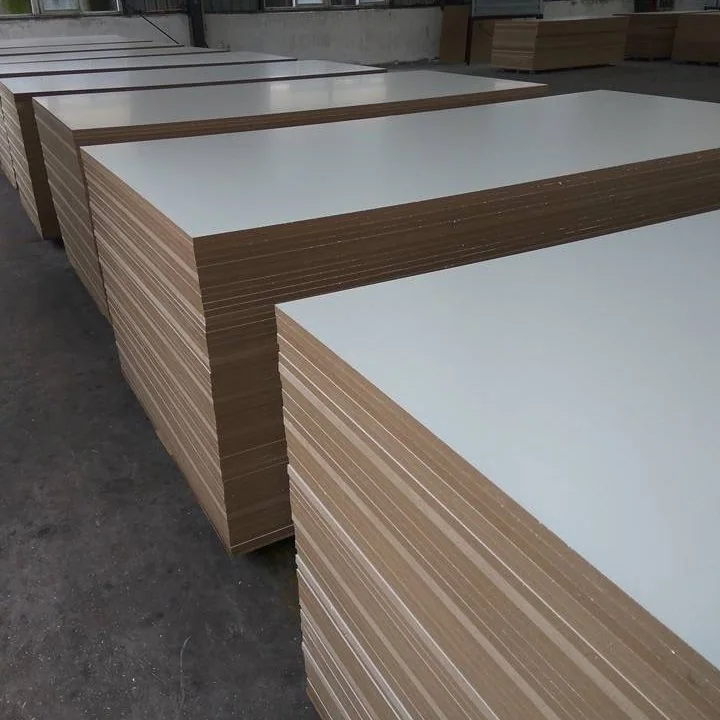
Check pale and white decor on the intended core
A decor paper sample viewed on its own does not show the final face on a particular substrate. For pale finishes, evaluate coverage and uniformity on the actual proposed MDF-and-paper combination. Look for local show-through or tonal differences without assuming that every colour difference comes from the print batch.
The EPF guidance notes that substrate colour can affect the appearance beneath lightweight pale papers. For that reason, retain a finished-board reference as well as the decor identity. If the core source or paper construction changes, compare the new finished combination with the reference.
Review the panel under consistent lighting, including the normal viewing orientation. Separate a local spot from a whole-panel tone difference. Our colour and texture guide covers the sample and lighting details that belong in the order.
Define both faces and assess flatness after conditioning
The reverse face should be part of the construction schedule even if it is hidden after installation. Record its paper specification, orientation and intended appearance. Selecting both surfaces together supports a controlled panel construction; merely stating double-sided does not establish that every material combination behaves identically.
Use an agreed method and condition to assess flatness. A bowed delivered panel may require investigation of the incoming core, facing balance, processing, cooling and later storage. Review the complete history to identify the relevant change.
Protect the laminated sheet before machining
Preserve flat support, face protection and traceability as panels cool and move into storage. Record any change in pack arrangement or environmental conditions relevant to a subsequent dimensional complaint. Sheets that have been stored differently should not be treated as an identical comparison without considering that history.
EPF's handling and storage guidance discusses support and protection for MDF. In an order specification, connect those principles to the pack format and receiving arrangements. Careful pressing cannot prevent a scratch added during an unprotected transfer.
Measure the complete faced panel
Identify whether the quoted thickness refers to the substrate or the complete faced product. Record how the final length and width are established after trimming. Where edged parts are required, distinguish the cut blank from the final component dimensions after edging.
EN 324-1 addresses board dimension measurement. The measurement method and the acceptance tolerances still need to be specified separately. A correctly measured value is not automatically acceptable unless it satisfies the relevant order requirement.
Check a representative furniture part
For a furniture front, include the actual visible edge, hinge or connector location and any nearby rebate in the trial part. Inspect after cutting, edging and drilling. A defect that first appears after a particular operation should be investigated with that operation's settings, tooling and support conditions recorded.
For example, a clean laminated sheet may show chipping when converted into a narrow shelf with a visible edge. Compare the same board before and after cutting and after edge finishing. This helps distinguish a supplied-face defect, a cutting problem and a finishing problem instead of replacing the core without evidence.
A representative component trial supports manufacturing decisions. It does not replace formal testing of strength, surface properties or other specified requirements. Our furniture production guide defines the handoff between sheets, blanks and machined parts.
Order the finished MDF sheets or components
Send the part drawing or sheet sizes, quantities and destination. We can define the furniture MDF core, both faces and factory processing around your chosen sample, including white and moisture-resistant options.
Buying questions
Should my drawing show the cut or finished size?
Identify both when edging changes the size. Use the final component dimensions for the required fit.
What should a pale finish sample show?
Review the actual proposed core and paper combination for coverage and colour under consistent viewing conditions.