Choose Gurjan plywood around the furniture or component you want to make. Start with a current part, drawing or finish reference, then compare the core, weight, screw positions and visible surfaces. We manufacture plywood and develop custom facings and panels, helping you connect the requested Gurjan construction with a useful sample and quotation. Keep the face and inner layers clear in the selection, especially when comparing a Gurjan-faced panel with Gurjan veneers throughout.
Plywood and panel options Decorative faces Compare birch plywood
Understand Gurjan and Keruing trade names
Gurjan is associated with woods in the genus Dipterocarpus; common and trade names vary across regions. CIRAD's timber reference links regional Gurjan and Keruing names to Dipterocarpus woods. US Forest Service guidance discusses Keruing/Apitong as Dipterocarpus. Ask for botanical identity or the agreed species group on the order and sourcing documents. The name should not be treated as one uniform wood with one density and durability value.
Choose the face and full-core construction
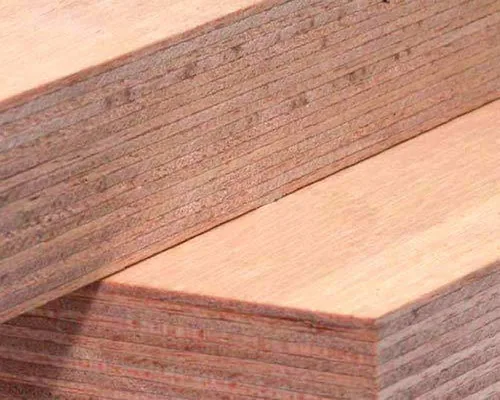
A Gurjan-faced panel, a mixed hardwood core and a panel specified with Gurjan veneers throughout are different constructions. Record face, back and core separately, along with allowed substitutions and the ply arrangement. Request a representative cut-edge sample and product description. A red core is a visual observation, not a species identification method; colour can vary and other woods can look similar. Resolve any ambiguous “100%” claim by stating exactly which layers it describes.
Compare panel weight and stiffness for the part
Some Dipterocarpus woods are used where substantial hardwood properties are useful, but species variation, veneer thickness, moisture and layup affect the finished sheet. EN 636 classifies plywood properties independently of a species name alone. For a shelf, door, formwork panel or other loaded part, use the proposed board's data with the real support and fixing design. We do not infer performance from a maturity-age claim or assume that every heavier sheet is a better construction.
Match bonding to the intended exposure
A hardwood veneer does not create a waterproof glue line. EN 314-2 addresses plywood bonding requirements; the relevant grade and evidence should match the service and destination. Ask which conditioning and test method a report uses, and which product it identifies. A bare statement such as “72-hour boiled” is incomplete without a method, acceptance criteria and product scope. Kitchens, humid interiors, exterior joinery and formwork are different uses.
Plan any required termite or decay protection
US Forest Service guidance notes that natural durability varies among Keruing species. A plywood panel also combines veneers and adhesive, with sapwood, exposed edges and moisture conditions affecting performance. A blanket termite-proof, fungus-free or lifetime promise cannot be derived from the trade name. If protection is required, ask for the treatment, target organism, exposure, test basis and product documentation. Termite resistance and fungal-decay resistance address different mechanisms and should not be combined into one unsupported label.
| Claim or field | Clarification | Evidence to compare |
|---|---|---|
| Gurjan | Which botanical species/group? | Product and sourcing identity |
| Full core | Which layers and substitutions? | Layer schedule and edge sample |
| Strong | Which property and direction? | Panel data for design |
| Water-resistant | Which bond and use class? | Applicable test or declaration |
| Termite-resistant | Natural or treated; which organism? | Specific protection evidence |
Choose construction around furniture and working parts
For a furniture carcass, compare core quality at screw positions, flatness and face finishing. For a door, include weight, hinges and the finished edge. For concrete formwork, include the working surface, design loads and reuse conditions. A Gurjan construction may suit one component, while another plywood choice may offer a better balance of weight, machining and cost for the next; compare both against the finished part.
Connect the selected wood with its sourcing record
Record the actual species/group, source and supply documents relevant to the order. “Natural,” “tropical” or “biodegradable” does not by itself establish responsible sourcing. When a certification claim is requested, verify its scope and order documentation instead of relying on a logo in a brochure. Our plywood sourcing guide explains the distinction between a material description and verifiable evidence. Destination requirements should be checked for the actual shipment and species.
Try the panel in your fabrication detail
Check both faces, the full edge, measured thickness and flatness against the agreed grade. Include a pilot-hole or machining trial where hardware or a visible cut edge is critical. Retain the sample identity with the quotation. For a decorative finish, approve the coating on the actual veneer because species variation and surface preparation can change the result. Our plywood acceptance guide covers inspection records and the limits of visual checks.
Share your Gurjan panel project
Send a drawing, existing part or wood reference through our enquiry form. We help develop the Gurjan face and core construction, finish and useful sample within our panel range. For pricing, add the sizes and quantity you have, destination and any named species, sourcing or performance requirement. Our hardwood-plywood comparison explains the face and core choices.
Gurjan plywood buying questions
Can I start with a part instead of a complete specification?
Yes. A photo or drawing helps us understand the joints, visible faces and weight priorities. Share any named-species requirement already set for the project, and develop the remaining panel details with us.
What should a Gurjan sample include?
Choose the detail your project depends on: a full cut edge, pilot hole, machined joint or finished face. Keep its construction and sample reference with the quotation so the order follows the selected version.