
MDF is used for painted cabinet doors, drawer fronts, furniture panels, wall linings, mouldings and retail displays. Its smooth fibre surface supports decorative finishes, while the fine core suits repeated routed profiles. Plain, melamine-faced and veneered MDF offer different routes to the finished part. We manufacture the MDF substrates ourselves and help develop the grade, surface, cut sizes and processing around your furniture or interior project.
Plain MDF for painted parts Melamine MDF for furniture Veneered MDF for interiors
MDF construction in brief
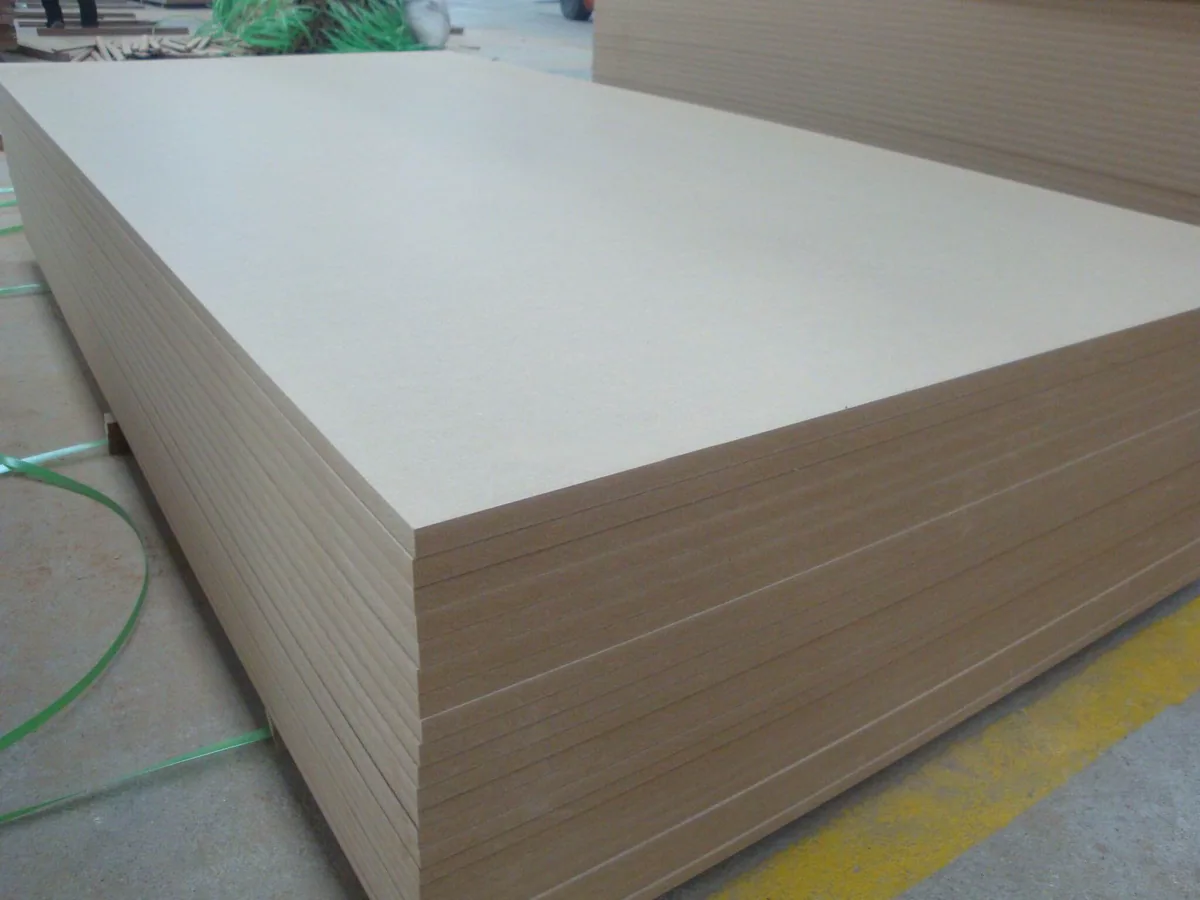
MDF is a dry-process fibreboard made from refined wood fibres and binder, pressed into a panel. The European Panel Federation describes the fibre, resin, forming and pressing route. Its fine texture differs from layered plywood and coarser particleboard; a decorative face can hide all three. Our basic MDF explanation covers the material itself. This page focuses on where a correctly specified MDF panel goes in a finished product.
Painted and routed cabinet fronts
For a routed door, MDF's even structure can help maintain a consistent profile. The raw edge is usually more absorbent than the sanded face, so the paint system needs edge preparation, primer and a physical sample. EPF explains why MDF edge finishing needs attention. Define door size, profile depth, colour, gloss, hinge cup, edge radius and allowable flatness. Include the deep groove and hinge drilling in the sample so you can review coating coverage and the material remaining around the fitting.
Shelves, carcasses and partitions
Raw MDF can be faced with melamine paper, wood veneer, foil or a coating. For cabinet sides and partitions, check the substrate grade, finish on each face, edge treatment and fastener detail. For shelves, span, depth, load and supports determine deflection; the selected grade and complete support detail provide the basis for that assessment. EN 622-5 defines MDF product requirements, but a furniture designer must still check the finished component and its fittings.
Veneered furniture and interior wall panels
A real wood veneer over MDF offers natural grain with a smooth, uniform substrate. Species, veneer cut, matching pattern, back-face balance and finish affect the result. EPF describes veneering MDF and the role of matching face and back construction. For a run of adjacent wall panels, share the full layout and numbering plan so grain direction and sequence are agreed before cutting. Plan the veneer face together with the MDF service grade and the finish on any exposed edge.
Skirtings, kitchens and bathroom furniture
Moisture-resistant MDF provides a useful starting point for kitchen fronts, bathroom furniture and interior trim exposed to humidity. EPF distinguishes MDF.H for humid use and MDF.HLS for load-bearing humid use under EN 622-5. Choose the appropriate product, then protect plumbing holes, cut edges and floor contact. Include the joints and any newly machined surfaces in that protection plan. Direct weather or recurring water contact calls for its own product and assembly assessment.
Mouldings and detailed machining
MDF can be machined into profiles used for interior trim and display elements. Profile radius, coating coverage, abrasion and impact exposure determine whether an edge detail is practical. EPF notes that slightly rounded sharp edges improve coating coverage and resistance to chipping. Trial the actual profile before approving a large run; very thin lips and deep grooves may be fragile or hard to finish. Machining also produces fine dust, so processing plans should include appropriate extraction.
| Part | Why MDF may fit | What to check |
|---|---|---|
| Painted routed front | Even machining and paint base | Edge primer, profile, hinge bore |
| Veneered wall panel | Smooth veneer substrate | Matching, back balance, joint layout |
| Flat cabinet part | Repeatable factory face | Grade, edging, fixing, load |
| Kitchen or bathroom trim | Machinable profiles | Humid-use grade, sealed edges |
Match special applications to the right construction
For structural loads, repeated wetting, heavy edge impact or a continuous natural timber profile, consider the specific construction and assembly the job needs. Our team can help compare MDF with a plywood or other appropriate panel route around those requirements. Our MDF-versus-plywood cabinet guide compares individual parts. For a product already selected as MDF, our MDF specification guide covers purchasing checks.
Approve the detail that matters before you order a full run. Use an identified component sample to check the profile, edge and fixing that could determine acceptance, after the intended primer, coating or facing and with the actual fitting. For adjoining veneered panels, trial the visible joint and approved layout rather than a single leaf. Record the sample identity, drawing revision and finishing stage; fit and appearance observations remain separate from any required material or completed-product assessment.
Quote the supplied stage alongside the work your workshop will complete: raw sheets, faced panels, cut blanks or machined parts. Carry the selected MDF grade, thickness, finish on each side, edge detail and accepted sample reference into the order schedule, with documents for that configuration. Keep part and pack identities with the receiving checks, and identify remaining coating, drilling or assembly work in the quotation. Review the affected detail if the grade, profile, finish or hardware changes on a repeat order.
Bring your MDF application to our factory
Share a furniture photo, wall-panel layout or moulding idea through our enquiry form. We help complete the grade, thickness, surface, edging and machining choices as the design develops. We can compare our raw and custom-size MDF, melamine MDF and veneered MDF routes for that part. A sample can then show the specific visible face, cut edge and assembly detail, with sizes and quantities developed for the quotation.