
Looking for fireproof board for a wall, furniture or public-space interior? Start with the appearance and component you want. We make plywood and MDF substrates, decorative facings and custom panels, so the comparison can begin with a wood finish, painted profile or laminate surface. We help connect that choice with your project fire rating and the relevant finished-panel documentation.
Fireproof plywood Fire-retardant MDF Decorative plywood faces
First identify what the board actually is
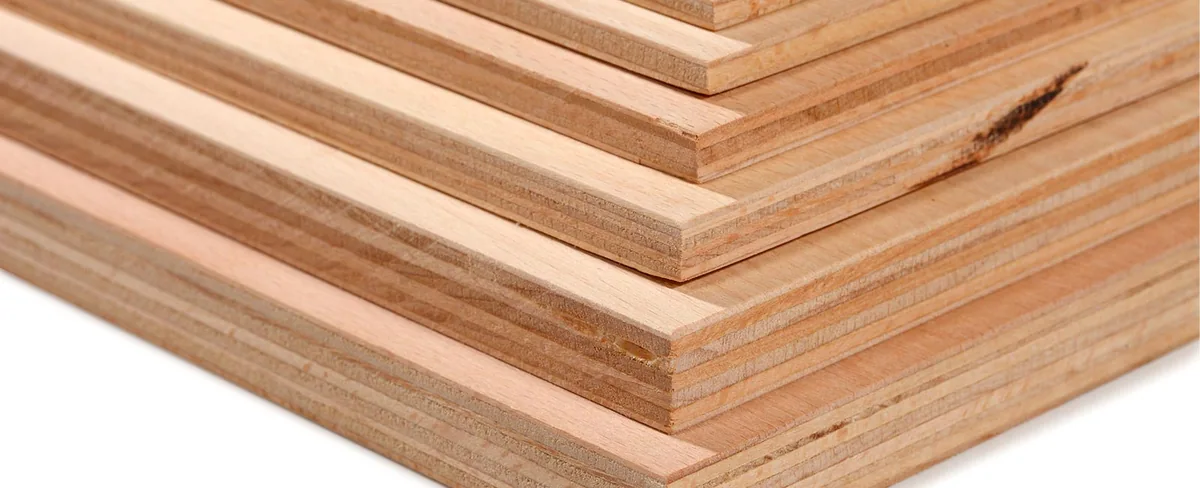
Plywood is assembled from veneers whose grain directions are usually crossed. MDF is formed from wood fibres; particleboard from particles. These are separate substrates with different machining, fixing and moisture behaviour. A decorative laminate is a surfacing material, not automatically a plywood or MDF substrate. A metal-faced sandwich panel is a different construction again. Compare those constructions by the component they need to make.
In an RFQ, list the substrate, treatment or facing, thickness, density or grade where relevant, and intended finish. Ask whether the offered evidence belongs to the finished composite panel or only one component. A report on bare core does not automatically describe the bonded laminate, added coating or installed wall.
Reaction to fire is different from fire resistance
EN 13501-1 covers reaction-to-fire classification of construction products using defined tests and end-use conditions. It concerns how a product contributes to fire development. Smoke and flaming droplets can be separately expressed in the European classification. A class is meaningful only with the named product construction, mounting and field of application.
EN 13501-2 concerns fire resistance of building elements and assemblies. A wall’s resistance period depends on its framing, layers, joints, fasteners and tested configuration. A plywood sheet cannot inherit a “60-minute wall” claim from another assembly merely because the face material looks similar.
| Term in an enquiry | What to verify | Common mistake |
|---|---|---|
| Flame-retardant plywood | Treatment, finished-panel reaction-to-fire result and permitted use | Assuming the sheet cannot burn |
| Decorative “fireproof” board | Whether it is a laminate, mineral board or faced wood panel | Applying facing data to the whole panel |
| Fire-rated partition | Complete tested assembly and installation detail | Applying a board certificate to any wall |
| Noncombustible board | Material and applicable classification evidence | Calling treated timber noncombustible |
How treatment changes wood behaviour
The US Forest Service Wood Handbook fire-safety chapter distinguishes reduced surface flammability from noncombustibility: treated wood can still decompose and char in fire. Treatment type, amount and penetration matter. So do the face veneer, adhesive, edge details, finish and mounting used in the assessment.
A treatment selected for a dry interior may not retain the same properties after prolonged wetting or leaching. If the board will be exterior, regularly damp or repeatedly cleaned, state those conditions in the request. “Marine” concerns a separate moisture and bond question; the marine plywood guide explains why that designation cannot stand in for fire data.
Read a classification report with the installation in mind
Check the report holder, product name, substrate, thickness range, facing and treatment, test or classification standard, date, mounting method and field of application. Is the panel installed with an air gap? On what backing? Are joints, adhesives and surface coatings included? A small-flame test is one input, not a universal class: ISO 11925-2 defines a controlled ignitability test rather than a complete installed-wall rating.
Destination rules vary. The project designer or authority should set the acceptance criterion; our role is to match the offered panel and its documentation to that criterion. If the report covers a different thickness or finish, we flag the gap instead of rewriting the class on a sales sheet.
Choose by the actual application
For a decorative wall lining, appearance, substrate, fastening, indoor emissions and reaction-to-fire may all matter. For structural sheathing, load, exposure, fixing and fire design must also be addressed. For a furniture component, the whole furniture item may be assessed under different destination rules, and a construction-product class may be irrelevant. A mineral board may suit an area where a wood surface cannot meet the specification; adding a decorative veneer then requires its own assessment.
We keep these requirements in separate lines of the specification so that improving one does not silently waive another. Our fireproof plywood selection page compares starting points for interiors and furniture. The related product page identifies a possible panel family; we develop the core, facing and custom sizes around your project.
A clear fire-performance enquiry
For a detailed discussion, share the information you have: the destination country, drawing, use location, required standard and classification, panel size and thickness, visible finish, exposure, quantity and whether a complete assembly is already designed. Ask us to identify the precise product construction and the documents that can be supplied for it. Where the project calls for an assembly-level rating, include the tested wall or ceiling detail from the designer.
We can then discuss the board and documentation against the actual requirement, or explain where an alternative material or additional assessment is needed. Use our enquiry form to attach the project specification.
Common terminology questions
What should I include when asking for fireproof board?
Start with the use and desired finish, then add the required fire rating when known. The finished-panel report identifies the measured performance; treated wood can still char under fire exposure.
Does a high-pressure laminate make the plywood fire-rated?
Only testing or a valid classification covering the finished composite and application can support that claim. A facing report cannot be copied to every substrate.
Can one reaction-to-fire class prove a wall’s resistance time?
No. The reaction of a product and the resistance of an installed element are different assessments.
Can I ask for fireproof board without knowing the substrate?
Yes. Tell us where it will be used and the appearance you want. We help compare suitable plywood, MDF and decorative face options.
Can I choose a decorative finish as part of the panel?
Yes. We manufacture substrates and facings together and can develop the finished sample and custom processing around your project.