
Order formwork plywood around the parts needed at the same time, then add the cutting allowance, replacements and spares your programme requires. PanelSource manufactures full sheets and cut parts for project orders. Send an existing size list, a sketch or a photo of the forms to start; we can help turn it into a supply schedule. The calculations below connect sheet area with the usable pieces, delivery groups and stock you actually need.
- Film faced shuttering plywood sheets: A flexible starting point when your workshop or site will do the cutting.
- 18mm black film faced plywood: Use as a candidate when the design specifies 18mm; keep thickness and construction on each quantity line.
- Factory cut parts: Choose identified blanks or machined parts when the finished sizes and drawing revisions are settled.
Measure the concrete-contact faces in each work area
Separate slab soffits, beam sides, beam soffits, wall faces, column faces and closure pieces in the take-off. State which faces are included so that an area is neither omitted nor counted twice. A wall with formwork on both sides requires a different facing quantity from one formed against an existing surface.
For openings and recesses, distinguish the face area removed from any reveal, box-out or closure pieces needed to form the detail. Deducting every opening from the main area without adding those components can understate the requirement.
Use the current drawings and list the relevant zones. Our drawing-change guide explains how a revised opening should flow through the cut list and quantities.
Plan the working stock needed at the same time
Total concrete-contact area across the project and plywood area required on site at one time are different quantities. Repeated geometry may allow parts to move between pours, but only when the project sequence and authorised release make them available.
A quantity schedule should show installation demand, expected release, cleaning or inspection time and the next required use. If two zones need the same parts concurrently, the purchase plan cannot count those parts twice.
HSE's temporary-works guidance emphasises planned management and appropriate design. A plywood stock target must not drive an unauthorised early removal of formwork. Resolve the permitted sequence through the project team before relying on recovered material.
Convert sheet quantities into gross area
A nominal 1220 × 2440 mm sheet has a one-face area of 1.220 × 2.440 = 2.9768 m². One hundred such sheets represent 297.68 m² of gross one-face area before trimming, cuts and unusable portions.
Do not double that area because both sides carry film. The two faces belong to the same physical sheet. Any later use of its other face is a separate use decision, not extra simultaneous coverage.
Confirm the ordered format, usable dimensions and tolerance before finalising a tight cutting layout. Show the required face-grain direction when parts cannot be rotated.
Check part yield with kerf and edge trimming
An area calculation cannot prove that parts fit. Consider an illustrative 1220 × 2440 mm sheet and four required parts measuring 600 × 1200 mm. With an assumed 3 mm cutting kerf between parts, a two-by-two arrangement needs 1203 × 2403 mm before perimeter trimming.
If the example also requires 10 mm trimmed from every original sheet edge, the remaining rectangle is 1200 × 2420 mm. That arrangement no longer fits across the width, despite the apparently sufficient gross area. These numbers demonstrate the calculation; they are not machining allowances prescribed for your order.
Check the actual kerf, finished tolerances, required orientation and accepted edge condition with the fabricator. The formwork fabrication guide connects those decisions to a revision-controlled cut list.
Choose full sheets or identified finished parts
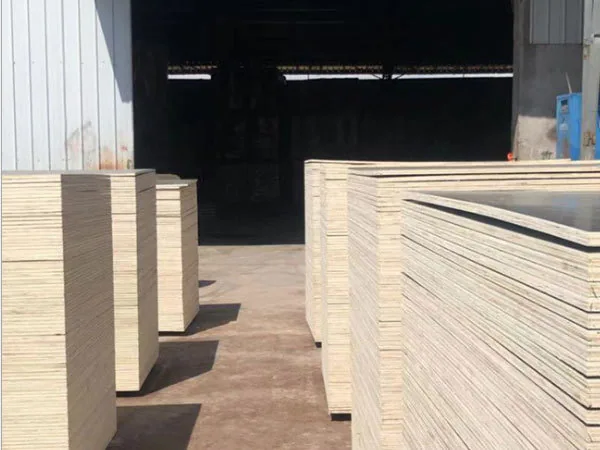
Full sheets provide flexibility when dimensions are still being coordinated or local cutting is appropriate. Finished parts can simplify site allocation when the drawings, orientation and machining scope are settled. Compare the complete delivered scope, including edge treatment, identification and packaging.
Distinguish straight cut blanks, shaped parts, box-outs and complete assemblies. State which operations are included in the plywood supply.
A sketch or existing part is enough to begin a custom-size discussion. As the order develops, we agree the finished part schedule and drawing, then show cutting, drilling or other processing on the quotation. We identify whether the deliverable is a rectangular blank, a machined plywood component or another agreed supply scope.
Check a representative cut-part set before locking the order quantity. Use the current part IDs and drawing revision, with the intended face direction, finished dimensions, holes and edge treatment. Record the fit and any processing left to the site team, then update the cutting layout and part schedule together. For full-sheet supply, confirm the usable format and the fabricator's layout; a small material sample cannot verify whole-sheet cutting yield. Keep sample approval separate from the project's approval of the assembled form and release sequence.
Build separate lines for cutting, replacements and spares
A single percentage added to net area can hide several unrelated assumptions. Separate each allowance so that changes can be explained and adjusted without rebuilding the entire estimate.
| Quantity line | Basis to retain |
|---|---|
| Initial working set | Parts required concurrently in the agreed sequence |
| Cutting allowance | Verified layouts, kerf, trimming and unsuitable offcuts |
| Planned replacements | Condition or geometry changes expected within the programme |
| Contingency stock | Identified disruption scenarios and replenishment lead time |
| Reusable stock credit | Verified suitable material available by the required date |
Keep contingency assumptions visible. Extra full sheets may not solve an urgent shortage of a complex drilled part, while a small stock of the correct components may be more useful. Avoid applying a universal spare percentage to every project.
Allocate suitable recovered pieces to their next use
Record an offcut's dimensions, construction, face condition, holes and required orientation. Count it against an identified part only after confirming that those attributes meet the new requirement. A pile of mixed remnants is not equivalent to the same area of new full sheets.
Also record where the material is and whether it is available. A piece already allocated elsewhere or needing unresolved repair should not reduce the immediate order quantity.
Our reuse allocation guide explains how to move suitable material between zones while preserving its identity and intended use.
Turn the quantity schedule into a delivery and packing plan
List each panel specification, format, thickness, quantity and unit of purchase. For finished parts, add part IDs, drawing revisions, face direction and quantities by delivery group. Identify initial stock and later replenishment separately.
State the destination and required delivery stages, together with any constraints on bundle handling or identification. Review proposed pack quantities against the exact order rather than assuming one pallet always contains the same number of sheets.
Carry that approved drawing and sample reference into the quantity lines, quotation, order and packing list. State whether the price and count refer to sheets or identified parts, and keep the initial set, replacements and contingency stock separate rather than counting the same piece twice. Match each delivery group to its part IDs, quantities, panel construction and required documents. At receipt, count the supplied items and record damaged or missing pieces before updating available stock; a received part is not automatically ready for another pour.
Send us your formwork plywood schedule to discuss our film faced panel options, dimensions and packing scope. This gives the quotation a clear quantity basis that can be checked again at dispatch.
Formwork plywood quantity questions
Can I start with an approximate quantity?
Yes. Share your current dimensions, form layout or rough count. We help develop a supply basis, then confirm the quantity against the cutting plan and work sequence before the order is finalised.
Can both film faces be counted as twice the coverage?
One physical sheet provides one area of simultaneous coverage. A later use of the other face is a separate allocation after the panel has been inspected and released for its next use.
Can I order full sheets and cut parts together?
We can prepare separate quotation lines for full sheets and identified parts. Keep each construction, thickness, drawing reference and delivery group clear so the packing list follows the order.