
Inspect birch plywood around what your finished part will show and do. A clear-finished door, routed edge and fitted joint each call for a different close look. Start with a photo, drawing or current component; we help select the face, core and useful sample for your project. Once those choices are agreed, the receiving checks below help keep appearance, dimensions and performance aligned with the order.
Birch plywood Decorative plywood Compare poplar plywood
Keep your selected sample and order details together
Keep the chosen face and edge samples, confirmed specification, drawings and packing list together for inspection. Identify the expected face and back grades, core construction, nominal dimensions and tolerances so the checks relate directly to the parts your workshop will make.
Record the delivery date, pack identifiers, quantities and visible packaging damage. Photograph wet wrapping, crushed corners or displaced straps before unpacking where present. These observations help distinguish transport condition from a later machining issue.
Use a sampling plan agreed for the order. Include material from different relevant packs and positions rather than judging the whole delivery from the top sheet. No universal number of inspected sheets can represent every lot size and acceptance requirement.
Compare both faces with your chosen appearance range
Inspect clean faces under consistent lighting, identifying which side is the specified face and which is the back. Record repairs, knots, splits, open joints, sanding marks and colour variation by location and extent.
EN 635-2 classifies hardwood plywood by surface appearance. Where it is the agreed reference, use its applicable requirements together with the purchase specification. A permitted repair is not automatically a defect merely because it is visible.
For a clear-finished interior, compare against the approved appearance range after the intended finishing trial. A natural veneer can vary in colour without being incorrectly supplied. Conversely, a sheet can meet a general appearance class yet fail an additional matching requirement agreed for the project.
Check thickness and fit for the intended component
Check the measuring equipment and record the measurement locations. Multiple thickness readings can reveal variation that a single corner reading misses. Keep individual results as well as the average, especially where a routed groove or fitted joint depends on the thickness range.
Measure length, width and squareness using the specified procedure. Assess bow and twist on suitable supports, recording the panel condition rather than forcing it flat beneath a load. Note storage conditions if they may affect the result.

Examine the core at accessible edges and cut sections
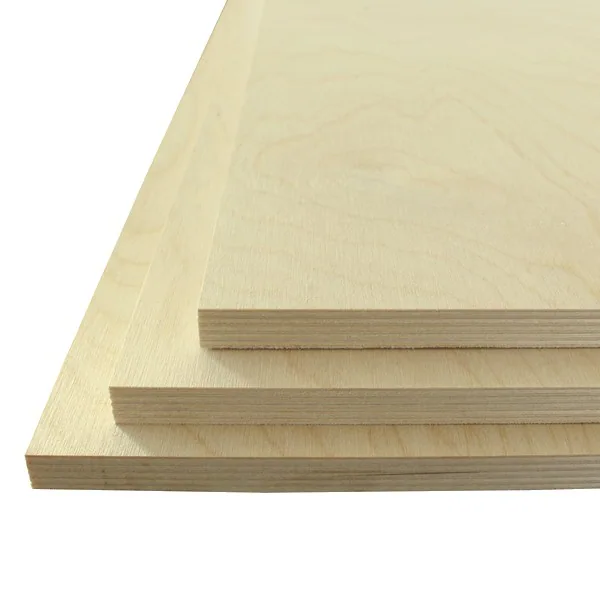
Look for open gaps, overlaps, separated glue lines and inconsistent construction at accessible edges. Where agreed, examine representative cut sections from the lot and retain their panel identities. A freshly cut edge may reveal features hidden at a filled or painted perimeter.
Use a cut edge to understand the construction at that section, and examine additional agreed locations where the component needs it. A clean section provides useful local evidence; tapping may highlight a local difference for further review. Core species and bonding questions need the appropriate identification or test method.
Likewise, sheet mass depends on dimensions, moisture, construction and coatings. An unexpected weight can justify checking those factors; it does not by itself prove that poplar has been substituted for birch. Our species-identification guide explains the evidence needed for identity questions.
Combine practical checks with relevant product reports
| Check | Useful finding | Remaining limitation |
|---|---|---|
| Face inspection | Observed repairs, damage and appearance variation | Does not establish bonding or emissions |
| Dimensional measurement | Results at recorded locations and conditions | Does not prove structural capacity |
| Cut-edge examination | Construction and defects at that section | Does not reveal every internal area |
| Matched test report | Results for the identified sample and method | Must be relevant to the supplied construction |
For bonding, EN 314-2 specifies requirements for plywood bonding classes, with testing in EN 314-1. A casual soaking trial without a defined method is not equivalent to a class assessment.
Follow the checks in a CP birch plywood inspection record
Our CP birch plywood inspection case shows how board condition, dimensions, moisture and export packing were recorded before shipment. The accompanying ECQA report covers 2500 × 1250mm full-birch sheets in 21, 24 and 30mm thicknesses, with 80 boards inspected and an overall PASS result. Use the report and photographs to plan the checks you need on your own order. Share the face-grade reference, dimensional tolerances and packing requirements when arranging your inspection scope.
Review emissions with the method and product identified
Do not use smell as a pass-or-fail test for formaldehyde. Odour observations do not provide a measured emission value. Request the test method, units, result, applicable limit and identification of the tested product.
ISO 12460-1 describes a one-cubic-metre chamber method under defined conditions. Other methods measure release differently, so a chamber result cannot be compared directly with a desiccator value by ignoring their methods or units.
Labels such as E0, ENF or F-star need their governing standard and scope. Check the destination requirement separately rather than treating every label as a worldwide equivalence. Keep any coating or construction difference between the tested sample and supplied panel visible in the review.
Try the routed edge, joint and finish
Where the project includes visible routed edges, tight-fitting grooves or repeated hardware connections, inspect a representative trial component as well as the raw sheet. Use the planned tooling and record its condition so tool wear is not mistaken for a panel defect.
Check edge breakout, internal gaps exposed by routing, fit after finishing and the appearance of the intended coating. A successful trial addresses that component and process; it does not replace structural assessment for a different load-bearing use.
Our birch joinery and exposed-edge guide develops those application decisions. Retain a labelled trial piece to support comparison when repeat material arrives.
Use clear observations to resolve a delivery question
Separate affected packs or sheets while the finding is assessed. Record the requirement, observed result, location, quantity and photographs with scale. Keep offcuts or samples where they are needed to investigate a core or bond issue.
Distinguish an isolated damaged corner, a recurring appearance mismatch and a confirmed performance failure. Each needs a different response. Do not extend a conclusion to uninspected material without supporting evidence or the agreed acceptance rule.
For a new order, send your component photo or drawing so we can help select birch plywood and a representative face-and-edge sample. For a delivery question, send the pack reference and inspection details through our enquiry form. We can connect the observation with the agreed sample, order and production information.
Birch plywood quality buying questions
Which sample is most useful for a visible routed edge?
Choose a sample at the intended thickness and route the actual profile. Compare the exposed core, finish and permitted gaps or repairs, and keep the accepted piece with the order reference.
Do concealed and visible faces need the same appearance grade?
Choose each side for its role in the assembled part. A concealed back may allow a different appearance range while the whole panel still needs the dimensions, construction and performance required for the job.