Lighter furniture parts. The face and finish your project needs.
Build cabinets, displays and interior fittings with poplar plywood made in our own factory in Jiangsu, China. Choose all-poplar sheets or decorative faces over a poplar core, with cut sizes and machining planned around your production.
Send a sketch, cutting list or finish reference. We’ll help select the construction, prepare samples and quote the sheets or finished parts your workshop needs.
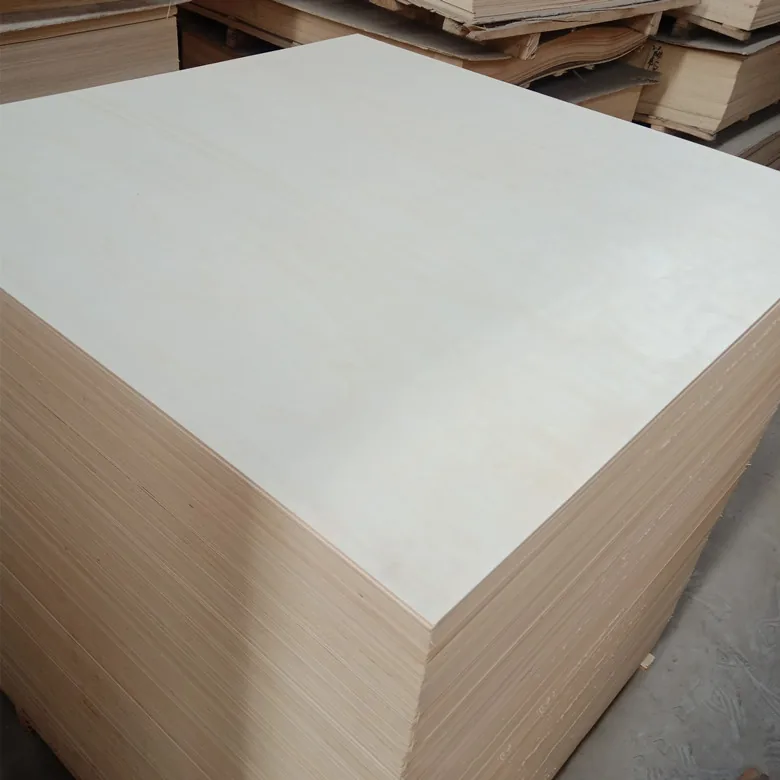
Poplar plywood sheets showing the pale veneer face and layered edges.
ConstructionAll-poplar or a named poplar-core build
Supply scopeFull sheets, cut blanks and agreed machining
Supply statusAvailable to order · 10–15 day production
FULL SHEETS · CUT PARTS · CUSTOM PRODUCTION
Choose the poplar panel your workshop can put straight to work.
Start with the furniture part and its visible surfaces. Our all-poplar technical-sheet range gives you a clear starting point; decorative faces and supplied machining can be selected around your drawing.
Poplar plywood supply choices
Choose for your order
Our starting range
All-poplar construction
Poplar face, reverse and whole-piece poplar core, with natural white or bleached faces selected for the finish.
Thickness choices
3, 4, 6, 9, 12, 15, 18, 21, 25 and 30mm in the technical-sheet range; select the thickness and tolerance for your component.
Full-sheet formats
1220 × 2440mm, 1250 × 2500mm, 1525 × 3050mm and 1830 × 3660mm; compare them with your cutting list.
Face and surface
B/BB, BB/BB or BB/CC, with calibrated, fine-sanded faces. Decorative veneer or overlay routes are quoted with their own face and reverse.
Handling and use
All-poplar density 430–490kg/m³. Start with the dry-interior configuration for furniture and displays; send any different exposure requirement with the enquiry.
Factory processing
Full sheets, cut blanks or agreed routed and drilled parts, with part codes, direction, finishing stage and packing matched to your workshop.
For the all-poplar construction, the loading table lists an 18mm, 1220 × 2440mm sheet at about 24.6kg using its 460kg/m³ planning density. Use the selected panel and actual finished-part weight when planning handling.
TECHNICAL DATA · TDS-PS-04 · Rev 2.0 (Oct 2026)
Poplar Plywood technical data
Keep furniture backs, interior components and transportable fittings light with all-poplar plywood. The configuration below uses poplar throughout, at 430–490 kg/m³, with sanded faces and a choice of interior bonds. At the 460 kg/m³ planning density, an 18mm, 1220 × 2440 mm sheet weighs about 24.6 kg.
Open the complete poplar specification, properties and loading tables
Declared values from our technical data sheet TDS-PS-04, Rev 2.0 (Oct 2026). The values for your order are confirmed in the quotation.
Face / Back Veneer Species
100% Bleached or Natural White Poplar (Populus spp., 0.45–0.80 mm)
Surface Appearance Grade
B/BB, BB/BB, or BB/CC (EN 635-2)
Surface Finishing
Double-side calibrated and fine sanded (150#–180# grit)
EN 636-1 / EN 636-2, EN 314-2 Class 1, EN 635-2, EPA TSCA Title VI
Harmonized System (HS) Code
4412.39
Physical and mechanical properties (declared values)
Density, kg/m³
430 – 490 Test method: EN 323
Moisture Content at Dispatch, %
8.0 – 11.0 Test method: EN 322
Bending Strength — Longitudinal (MOR //), MPa
≥ 32.0 Test method: EN 310
Bending Strength — Transverse (MOR T), MPa
≥ 22.0 Test method: EN 310
Modulus of Elasticity — Longitudinal (MOE //), MPa
≥ 3,900 Test method: EN 310
Modulus of Elasticity — Transverse (MOE T), MPa
≥ 2,800 Test method: EN 310
Bonding Quality (Shear Strength), MPa
≥ 1.0 (Class 1 Interior / Class 2 MUF) Test method: EN 314-2
Screw Withdrawal — Face / Edge, N
≥ 1,150 (Face) / ≥ 820 (Edge) Test method: EN 320
Thermal Conductivity (lambda), W/(m·K)
0.11 Test method: EN 12664
Formaldehyde release — E0 option, mg/m³
≤ 0.05 mg/m³ · EN 717-1
Formaldehyde release — CARB P2 / TSCA Title VI option, ppm
≤ 0.05 ppm · ASTM E1333
Thickness, ply count, weight and container loading
Nominal Thickness
Ply Count
Area Weight
Sheet Weight (1220x2440)
Est. Load / 40HQ
3 mm
3 plies
1.38 kg/m²
4.1 kg
~5,374 pcs
4 mm
5 plies
1.84 kg/m²
5.5 kg
~4,031 pcs
6 mm
5 plies
2.76 kg/m²
8.2 kg
~2,687 pcs
9 mm
7 plies
4.14 kg/m²
12.3 kg
~1,791 pcs
12 mm
9 plies
5.52 kg/m²
16.4 kg
~1,343 pcs
15 mm
11 plies
6.90 kg/m²
20.5 kg
~1,074 pcs
18 mm
11 plies
8.28 kg/m²
24.6 kg
~895 pcs
21 mm
13 plies
9.66 kg/m²
28.8 kg
~767 pcs
25 mm
15 plies
11.50 kg/m²
34.2 kg
~644 pcs
30 mm
19 plies
13.80 kg/m²
41.1 kg
~537 pcs
The loading table uses 1220 × 2440 mm sheets at a 460 kg/m³ planning density and approximately 48 m³ of panel volume. Quantities are approximate; the selected construction, packing, container payload and route limits determine the final loading plan.
Use the options below to compare the face, core and supplied condition for your furniture or interior part. Share the choices you know and we will help complete the construction, dimensions and finish requirements in the quotation.
Poplar plywood specification and supply options
Item
Define for your order
Why it affects the component
Veneer construction
All-poplar, or poplar core with separately named face and reverse; veneer arrangement and layer thicknesses.
Weight, exposed edges and directional properties belong to the complete build-up.
A painted back panel and a clear-finished door need different appearance limits.
Thickness & format
Required nominal thickness and tolerance; full-sheet or finished-part dimensions in mm; quantity per item.
Fit, cutting yield and pack design depend on the actual dimensions. Include any inch-based drawing dimensions separately.
Core quality
Limits for gaps, overlaps and repairs at routed pockets, exposed edges and fixing positions.
An internal defect can matter locally even when the face looks suitable.
Bond & exposure
Dry or humid interior, temporary wetting or another exposure; named bond and use specification where required.
Species and glue description do not, on their own, establish a service grade.
Surface & processing
Unfaced, decorative veneer or overlay; sanding, cutting, routing and drilling scope; grain direction on the cut list.
The supplied thickness and finish route must match the next operation.
Assembly & acceptance
Hardware, support positions, drawing revision, critical fits, shape limits and the stage at which each is measured.
Inspection can then follow the features that control your assembly.
Documents & delivery
Required test or certification scope, quantity, destination, packing restrictions and requested timing.
Approval and receiving teams need evidence and pack identity for the ordered construction.
For a thin decorative route, our 3mm Okoume-faced plywood with a poplar core is a separate product configuration. Its dimensions and face specification should stay with that product. For other thicknesses or formats, send your requirement and we will define the matching build-up in the quotation.
Put lighter handling to work in your furniture and interiors.
For cabinet parts, movable displays and fitted interiors, handling weight matters alongside appearance and assembly. Our factory team helps connect the poplar construction to your surface, supports and fittings so the trial reflects the finished part.
Furniture & cabinet components
For backs, sides, partitions and drawer components, define the supported span, fitting position and visible edge. A thin back captured in a groove has a different job from a free-spanning shelf or a hinge-bearing door.
Use a finished component trial for the connection and appearance details that control assembly.
Displays & demountable interiors
Partitions, exhibition furniture and parts moved repeatedly can benefit from reduced handling mass. Plan the connector, corner protection and repair route alongside the weight target, and include the assembly cycles in the component trial.
Check the connector after repeated assembly in the intended location.
Vehicle & mobile interior components
Work from the vehicle or equipment maker’s component requirements: support, vibration, fittings, finish and any applicable fire or emissions specification. Compare finished mass with the reinforcement and hardware included.
Include the maker’s applicable fire, emissions and component requirements in the sample and document plan.
Faced panels & interior joinery
A named poplar core can be paired with a decorative face for interior panels and fitted furniture. Specify the reverse and perimeter as carefully as the show face, especially on larger doors or panels.
Evaluate the completed facing process before agreeing flatness and fit.
For a shelf, floor, load-bearing part or another demanding application, obtain the properties and assessment relevant to the complete panel and assembly. Our birch versus poplar component comparison helps compare alternative constructions without treating either species as a universal winner.
ALL-POPLAR · POPLAR CORE · POPLAR FACES
Choose the construction, then choose the face.
Choose all-poplar for a poplar construction throughout, or pair a named decorative face with a poplar core. We identify the face, reverse and inner veneers separately, keeping your appearance selection connected to the material your workshop will machine.
What the construction terms mean
Construction
What it describes
Where to focus the decision
All-poplar plywood
Poplar veneers throughout the face, reverse and core.
Face quality, actual veneer arrangement, component weight and the edge exposed by machining.
Poplar-core plywood
Poplar inner veneers with a separately specified face and reverse.
Decorative appearance together with core continuity, final thickness and a balanced facing arrangement.
Poplar-faced plywood
Poplar on the face or faces, with the core separately identified.
Identify the inner veneers alongside the face so weight and fitting choices follow the complete panel.
Mixed-core plywood
More than one species or material in the inner construction.
Name the materials and arrangement; compare it as its own configuration.
We keep veneer thicknesses, direction and ply count together on the selected construction. For background on plywood build-up, the USDA Wood Handbook chapter on wood composites explains how the wood elements and layer arrangement influence panel properties.
Okoume faces with a poplar core
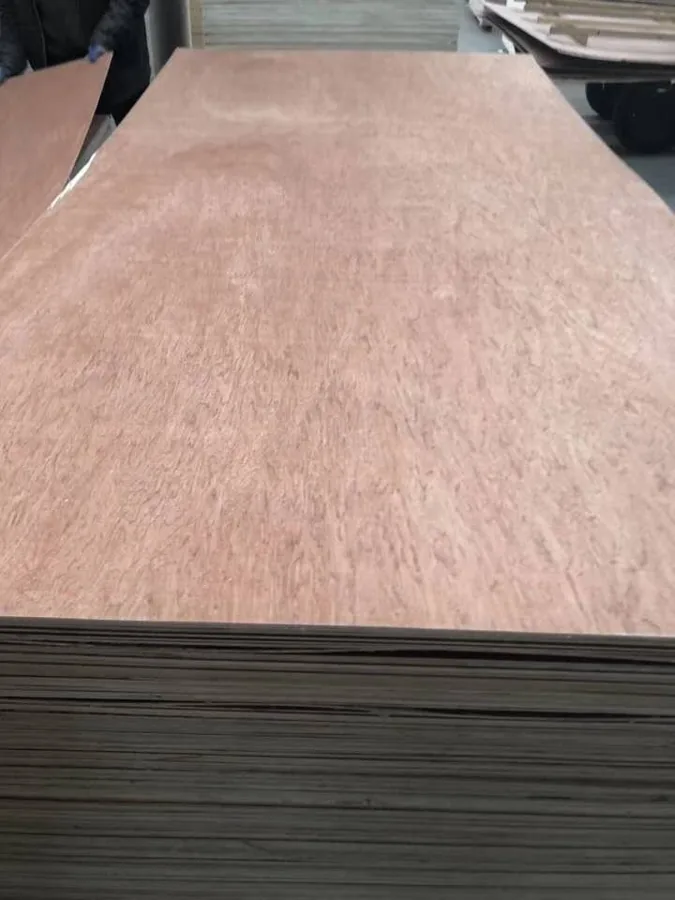
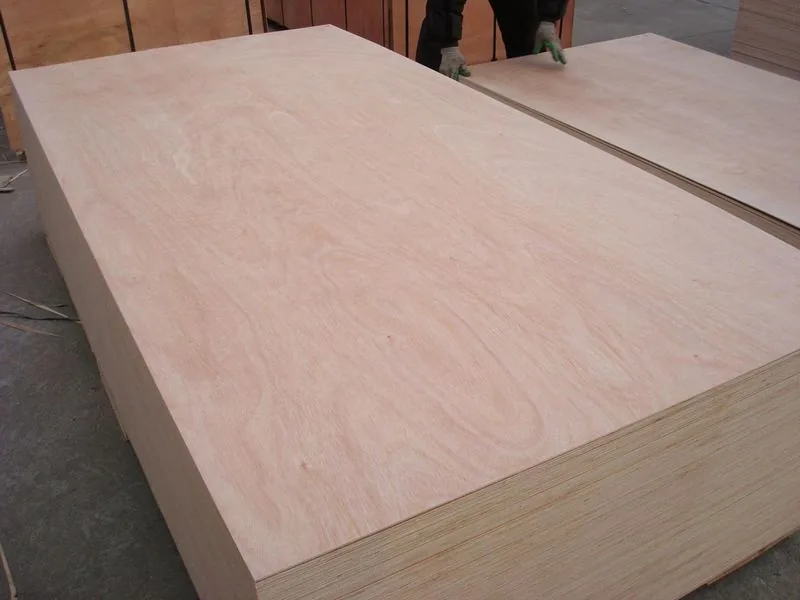
For a warmer decorative face, these product photographs show the Okoume-faced route offered on our 3mm Okoume plywood page. Compare them with the pale poplar view above when choosing your face; the quotation keeps each face-and-core combination clearly identified.
Okoume-faced plywood with a poplar core, showing the veneer face on thin sheets.Okoume-faced plywood with a poplar core, stacked with the veneer faces exposed.
For a clear finish, agree the colour range and permitted repairs. For opaque paint, concentrate on preparation, local repairs and edge treatment. An additional veneer or laminate becomes part of the finished construction, including its adhesive, reverse and effect on dimensions.
SHEET WEIGHT · FINISHED WEIGHT · PACK WEIGHT
Keep the weight advantage through to the finished part.
For furniture that is carried, assembled or moved, compare the weight your team will actually handle. Start with the selected sheet, then include its facing, edging, fittings and any reinforcement in the component trial.
Weight information for sheets, components and delivery
Planning stage
Use this information
All-poplar sheet
The technical sheet gives 430–490kg/m³. Its thickness table uses 460kg/m³ and 1220 × 2440mm sheets, including approximately 24.6kg at 18mm.
Your supplied panel
Record the selected dimensions, all-poplar or faced construction and measured sheet weight or configuration-specific density.
Finished component
Check the completed part after machining, facing and assembly, with hardware and reinforcing pieces included.
Packed shipment
Keep net panel weight, protective boards, pallets and other packing separate; use recorded gross weight and pack dimensions for transport.
The loading table’s approximate counts use its stated 48m³ panel-volume basis. We plan your shipment around the actual product mix, protective packing, container payload and destination requirements.
Mark the unsupported span and loading direction on the drawing. The veneer arrangement gives plywood directional properties, so keep the required panel direction with each part when nesting it. Use the applicable directional bending and stiffness information for the selected construction when assessing the design.
For a cabinet shelf, describe support at the ends and back, concentrated loads, edge stiffening and the deflection your design permits. For a door, show hinge spacing, fixing positions and the finished face arrangement. Use the intended supports and fittings when checking the completed component, so the result follows its installed use.
APA’s plywood selection guidance distinguishes directional properties, exposure and rated-panel design information. For a load-bearing design, send the required panel rating and project specification with the enquiry so we can address the appropriate configuration and evidence.
THE DETAILS YOUR WORKSHOP WILL SEE
Make machining and connections part of the material choice.
Open pocket, fixing and finished-fit details
Cut edges, grooves and routed pockets
Review the core at the deepest pocket and at any exposed finished edge. Gaps, overlaps, tear-out and local damage can affect a fitted joint or a decorative perimeter. Use the intended tooling, support and cutting sequence on a representative part, and distinguish a tool-setting issue from a panel-construction issue.
Show the actual groove or pocket depth, board thickness tolerance, remaining material and nearby fixings on the drawing. We can prepare the critical section in the selected panel so your workshop can check machining and assembly together.
Screws, inserts and connectors
Face-entry and edge-entry fixings engage different veneer arrangements. Record the hardware model, pilot preparation, embedment, distance from edges and whether the part will be disassembled. A hinge cup, screw or threaded insert should be evaluated with the intended fitting and actual local core, including any routed recess.
Agree what the connection trial must demonstrate: assembly without splitting, the specified service load, repeated tightening, or retention after the required conditioning. Keep the fitting reference, preparation and result with the accepted part. USDA fastening guidance provides background on how the wood and connection geometry work together.
Hold the fit after coatings and facing
Dimension the supplied board, facing build-up and finished component separately. Show the slot or mating part and its tolerance, then measure the completed thickness after the intended pressing, sanding or coating process. Keep that finished fit with the drawing revision used for production.
PAINT · CLEAR FINISH · DECORATIVE FACING
Approve the surface after the process it will receive.
Choose the finish your customer will see: clear-coated veneer, opaque paint or a decorative facing. For clear finishes, compare colour, grain, repairs and edges; for paint, review preparation and primer coverage. A finished material sample under the intended light gives the workshop a useful appearance reference.
For veneering or laminating, develop the show face and reverse together with the facing materials, adhesive, pressing process and moisture condition. Agree when thickness and flatness are measured so the supplied panel and your finished door or interior panel can be checked at the right stage.
Measure thickness and shape after the relevant sanding, pressing or finishing stage. Where the workshop adds its own facing, record the incoming-panel limits separately from the workshop’s final-part limits. Protect the agreed visible face during cutting, stacking and shipment so that the approval standard survives the next operation.
Compare the complete supply for your cutting list.
A cut list should show the grain or required panel direction, finished and machining-blank dimensions, edging allowance and permitted rotation. Include saw kerf and trimming before comparing sheet formats. If a part needs a larger blank for profiling, nest the blank rather than its final outline.
Information for your cutting and component quotation
Order line
Include with the drawing
Full sheets
Selected format, construction, thickness, visible-face criteria and quantity.
Part code and revision, profiles, pockets, holes, surface finish and quantity of each part.
Repeat assembly groups
Parts that belong together, packing sequence, sample pieces and separately agreed spare quantities.
Cost comparison
Quoted material volume, included processing, usable part quantities, packing and freight on the same supply scope.
Compare the cost of the accepted parts your workshop needs. Cost per accepted part = total material, processing and packing cost ÷ accepted part count. Use the quoted panel volume, your cutting layout and the results of the intended machining process. We can quote full sheets or cut components with the face, finish and packing scope clearly listed.
Use your own cutting trial to estimate yield, edge rework, finishing time and usable parts. A different format or better matched surface may earn its value through the workshop even when its initial sheet price is higher.
Try the detail that matters most to your component.
Start with a face sample for colour or a machined detail for an edge, pocket or fitting. We can help plan a component trial when finished shape, load or handling needs a larger piece. The sample scope follows the decision your workshop needs to make.
01
Identify the construction
Record faces, core, thickness, supplied condition and drawing revision. Keep the trial linked to the proposed order.
02
Run the operation
Cut the intended direction, route the critical pocket and prepare the hardware with the workshop’s planned process.
03
Finish & assemble
Include the reverse, perimeter and fittings. Measure finished thickness, weight and the fits that affect use.
04
Retain the decision
Keep the accepted detail, measurements, method and any remaining changes together for repeat production.
For a weight-led display part, weigh the completed assembly and inspect it after the planned handling cycle. For a door, check finished shape and hinge detail; for a faced panel, use the intended adhesive and pressing sequence. Keep appearance, fit and performance criteria with the sample so the result can guide production.
ONE APPROVAL PLAN FOR THE ORDER
Keep the order records useful to purchasing and production.
State the exposure, destination and named specification once in the panel schedule. That gives your team a single place to review the quotation, sample identity and applicable documents.
Different evidence answers different approval questions
Buyer question
Relevant record
Scope to check
Will it meet appearance and fit limits?
Agreed face criteria, approved finished detail and dimensional inspection.
Drawing revision, visible sides, measuring stage and acceptance limits.
Does the bond meet the specified use?
Bond-class evidence and the named plywood use specification.
Construction, thickness scope, method, classification and intended exposure.
Does an emissions requirement apply?
Applicable report and certification or declaration requested for the destination.
Manufacturer and product identity, test method, class and configuration covered.
Can it carry the specified load?
Relevant directional properties, design assessment and component evaluation.
Actual build-up, support, loading, moisture condition and connection design.
Is there an order-specific certification claim?
Applicable certificate scope and the claim on transaction documents.
Product, organisation, validity and the exact goods covered.
The EN 636 plywood specification and EN 314-2 bonding-quality requirements concern different aspects of selection. We connect the required use, bonding class and emissions requirement to the face-and-core configuration on your order, with the relevant records for purchasing approval.
Use our production and inspection information to plan the records your receiving and workshop teams need. Keep factory information, management-system certificates and panel test reports identified by their scope, with the selected construction linked to the applicable evidence.
Connect your poplar order with its supporting records
Record
Keep it linked to
Technical sheet and panel reports
TDS-PS-04 for the all-poplar range, or the data for your selected decorative-faced build; retain thickness, core, face, bond and test scope.
Samples and workshop review
Accepted face sample, critical machined part, fitting, finish and drawing revision.
Production and inspection
Order and lot reference, selected build-up, dimensions, face criteria and agreed machining checks.
Packing and dispatch
Part codes, pack identities, quantities, recorded weights and shipment documents.
Make receiving and sorting easier with packs that follow your cutting list. We agree support, face and corner protection for full sheets, and item codes, revisions and orientation for cut parts. Identify different faces and thicknesses clearly so the workshop can find the next part.
Plan receiving around transport damage, pack identity, count and agreed dimensional checks. Support sheets flat, protect them from rain and wet floors, and follow the preparation needed for your workshop conditions before machining or finishing. Record the condition and measuring stage when checking flatness or thickness.
Tell us the destination, receiving equipment and requested delivery timing. We can review protective packing and export delivery alongside the sheet or part quantities, using shipment gross weight and packed volume to define the transport scope.
For repeat orders, keep the accepted construction, drawing revision, facing process and packaging reference together. Record any change to face, thickness, machining or hardware so the next delivery follows the component your workshop accepted.
Plan production, delivery and after-sales support.
Available to order. Production takes 10–15 days, with the schedule recorded in the order confirmation. Panels ship by container; freight and delivery terms are agreed for your order and destination. Allow transit time separately when planning your project.
Supply includes a 180-day warranty. Contact our team with the order reference, photographs and issue details; we’ll agree the return or replacement arrangement and related freight for the order.
POPLAR PLYWOOD QUESTIONS
Get the construction right before the first cut.
Is poplar plywood always poplar throughout?
We offer all-poplar panels with poplar face, reverse and core, and decorative faces over a named poplar core. The technical table covers the all-poplar range. The Okoume-faced photographs show the separate decorative route; your quotation identifies both the face and inner construction.
Is poplar plywood lighter than birch plywood?
It can offer a useful route to lower mass, but compare the identified panels rather than assuming a fixed percentage. Use the actual thickness, construction and density or measured mass, then include finish, fittings and reinforcement in the finished-part comparison.
What thicknesses and sizes should I specify?
Our all-poplar technical-sheet range lists 3, 4, 6, 9, 12, 15, 18, 21, 25 and 30mm. Sheet sizes are 1220 × 2440mm, 1250 × 2500mm, 1525 × 3050mm and 1830 × 3660mm. Send your thickness, sizes and quantities for full sheets or custom components, including the finishing stage where dimensions apply.
Can I use it for cabinets, furniture or displays?
Yes, these are useful component routes to discuss. A supported back, door, shelf and repeatedly assembled display have different requirements. Include the drawing, supports, hardware and finish so the proposed board and trial focus on the actual part.
Does the grain direction matter when nesting parts?
Yes. Appearance and directional panel properties can constrain rotation. Mark the permitted direction on each cut-list item and nest machining blanks with kerf and trim included. Do not rotate a part solely for yield if that changes an agreed surface or design requirement.
Will screws and inserts hold in a poplar core?
We can prepare a sample with the fitting and local panel section your assembly uses. Send the hardware model, face or edge fixing, pocket depth, pilot preparation and repeated-assembly requirements. Keep the accepted fitting detail with the construction and production drawing.
Can it be painted or given a decorative face?
Yes. Define preparation, the show face, reverse and perimeter with the coating or facing process. Approve appearance and dimensions after finishing, and measure the completed panel where flatness or a close fit matters.
Does more ply count always mean a better panel?
No. Veneer thickness, direction, quality, species and bonding also influence the result. Record the complete construction and use relevant properties or component assessment instead of selecting only by the number of veneers.
Is poplar plywood waterproof or marine grade?
For waterproof or marine projects, tell us where the panel will be used and any required grade. We’ll help select the bond, core and face route for that exposure, with supporting documents and edge or finish requirements. The all-poplar technical configuration on this page starts with dry-interior use.
Can I request emissions or certification documents?
Yes. Share the destination, approval checklist and selected face, core and thickness. We’ll connect the applicable panel reports and certification scope to that configuration, alongside the sample, inspection and packing records your team needs.
Can you supply cut blanks and machined components?
Include the cutting list, units, drawing revision, direction, profiles, holes and tolerances in the enquiry. Separate the operations supplied by PanelSource from those performed by your workshop, and define whether dimensions apply before or after facing and finishing.
How do I get a useful quotation quickly?
Start with construction, dimensions, quantity and destination. Add the drawing, finish and any fixed approval requirements. Tell us which choice remains open—weight target, decorative face or cutting format—so the response can compare the alternatives that matter to your order.
How much does an 18mm poplar plywood sheet weigh?
Our all-poplar table lists approximately 24.6kg for an 18mm, 1220 × 2440mm sheet, using its 460kg/m³ planning density. The declared density range is 430–490kg/m³. Keep the actual construction, sheet size and measured weight with your handling plan, and include finish and hardware when comparing complete parts.
What are your production, shipping and warranty terms?
Production takes 10–15 days according to the confirmed order. We ship by container, with freight and delivery terms agreed for the destination. Supply includes a 180-day warranty; returns, replacements and related freight are agreed for the order and issue.
YOUR DRAWING. A CLEAR PRODUCTION BRIEF.
Tell us about the poplar plywood part you want to make.
Send a photo, drawing, cut list or known dimensions. A handling-weight target, decorative face or fitting detail helps us focus the discussion, and we can work through the open material choices with you.
Our factory team will help define the face and core, sample trial, processing and export delivery for your quotation. Add approximate quantity and destination when available.
Optional Google Analytics and Ads cookies measure visits and enquiries. Reject keeps these cookies off; basic cookieless measurement continues. Enquiry details are never sent to Google. Privacy details.